Full story
{
"articleTitle": "Cyprus Executives Urge Vigilance Amid AI-Driven Strategic Shifts",
"articleDescription": "Senior executives at the Limassol Economic Forum 2026 warned that geopolitical instability, rising borrowing costs, and artificial intelligence are forcing companies to rethink strategies for 2027.",
"articleBody": "
Panelists Outline Economic Challenges for 2027
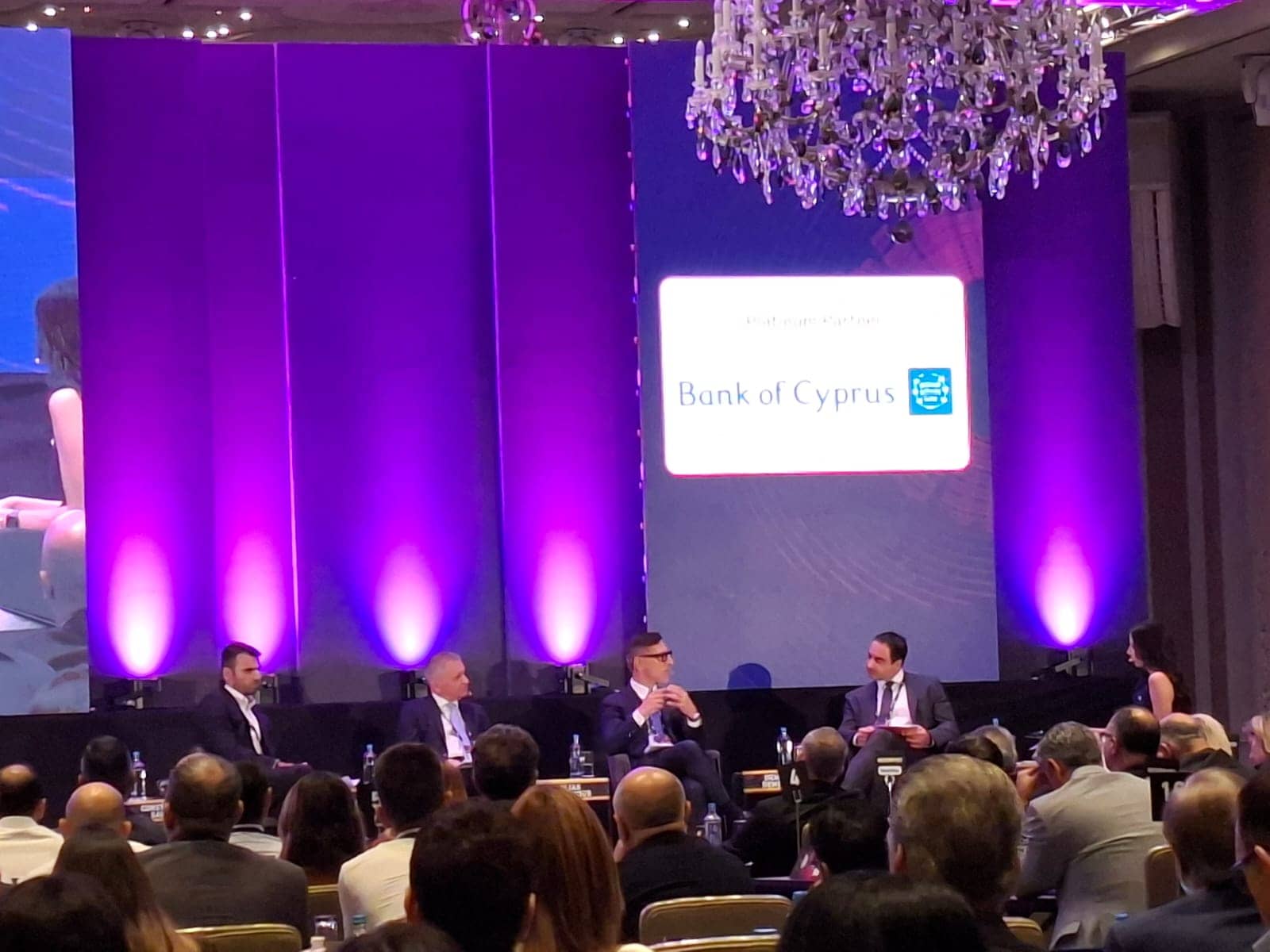
\n\nCyprus business leaders have warned that geopolitical instability, rising borrowing costs, and the rapid development of artificial intelligence (AI) are forcing companies to rethink their strategies. Investment in technology, workforce skills, and resilience has emerged as a key priority for 2027.\n\nSenior executives from the banking, consulting, law, and property sectors addressed these challenges during a chief executives’ panel discussion titled “Leading Through Uncertainty: How CEOs Are Preparing for the World of 2027.” The event took place at the Limassol Economic Forum 2026. The panel was moderated by Emilia Papadopoulos.\n\nThe discussion featured Demetris Demetriou, chief risk officer at the Bank of Cyprus; Pieris Markou, chief executive of Deloitte Cyprus; Elias Neocleous, managing partner at Elias Neocleous & Co LLC; and Constantinos Savvides, chief executive of bbf. The group outlined specific economic pressures facing Cypriot businesses as they prepare for the coming year.\n\nBorrowing Costs and Capital Competition
\n\nDemetris Demetriou linked increased borrowing costs to higher government debt, ongoing instability, and the need to fund defense spending. He noted that governments and businesses are currently competing for capital with the AI industry, which seeks to raise trillions of dollars.\n\nDemetriou stated that if technological progress promises are fulfilled, economic growth should remain positive and interest rates should return to normal levels. However, he questioned whether advances would materialize on the anticipated scale.\n\nElias Neocleous stressed that businesses are increasingly interconnected and share risks across borders. He argued that this reality requires companies to understand vulnerabilities affecting partners, clients, and the international environment.\n\nNeocleous cited his law firm’s substantial additional costs for cybersecurity insurance when providing services to international businesses as an example of how security risks affect commercial operations. He said security, predictability, and stability are essential foundations for business, but added that Cyprus must continue investing in strong institutions and the rule of law.\n\nTechnology Investment and Market Resilience
\n\nPieris Markou argued that businesses across Europe, the Middle East, and Africa (EMEA) must collaborate on substantial technology investments to avoid falling behind. He stated that technology is expected to improve efficiency and reduce staffing needs while giving companies access to capabilities previously available mainly to larger players.\n\nMarkou warned against cyber risks and emphasized upskilling employees for higher-value tasks. His comments highlighted the dual nature of AI adoption, which offers operational advantages while introducing new security liabilities.\n\nConstantinos Savvides addressed the impact of these macroeconomic factors on the real estate sector. He said the property market was not immune to geopolitical turbulence, though Cyprus benefited from strong domestic conditions.\n\nSavvides noted that local housing market activity stood €3 billion above its pre-C