


India’s Diplomatic Reach in a Shifting Global Order
\n\nSonipat, Haryana — Delhi Lieutenant Governor Taranjit Singh Sandhu stated on November 3 that India possesses the strategic autonomy to develop independent international partnerships as the global landscape undergoes significant transformation.
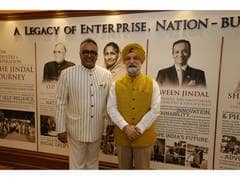
\n\nSpeaking at a distinguished public lecture titled “India’s Role in Evolving Geopolitics” at O.P. Jindal Global University, Sandhu described the current era as one reshaped by strategic competition, regional conflicts, and contests over economic and resource security.
\n\n“Countries are reassessing their partnerships. They are diversifying their supply chains and looking for reliable economic and strategic partners in this changing environment,” Sandhu said, according to ANI News.
\n\nThe lecture, held on Tuesday, November 3, focused on how nations are navigating a complex international system. Prof. (Dr.) C. Raj Kumar, the founding vice chancellor of O.P. Jindal Global University, welcomed Sandhu to the event.
\n\nPartnerships Across Geopolitical Divides
\n\nSandhu asserted that India’s foreign policy is guided by national interest and strategic autonomy. This framework allows the country to assess international developments independently and engage with nations that may not agree with one another.
\n\nHe highlighted India’s existing partnerships with the United States, Europe, Russia, Japan, Australia, and countries across the Global South as a distinctive diplomatic reach and strategic asset.
\n\nAccording to Sandhu, this ability to maintain relationships across different geopolitical groupings is particularly significant during crises when communications are difficult. He noted that such connectivity allows India to protect its interests and contribute to addressing international challenges.
\n\nTranslating Strengths into Capabilities
\n\nThe Lieutenant Governor emphasized that India’s geopolitical influence depends on translating national strengths into tangible capabilities. He cited continued investment in education, research, infrastructure, defense, manufacturing, energy security, and advanced technology as essential components of this strategy.
\n\nSandhu noted that many developing countries are seeking affordable technology, reliable healthcare, infrastructure investment, and market access. He suggested that India can share its expertise and facilitate technology partnerships with these nations rather than merely providing assistance.
\n\nConcluding his remarks, Sandhu stated that India must approach its role in the global system with ambition and confidence. He argued that the country should aim to help shape the rules, institutions, technologies, and economic partnerships of the international order, rather than simply adapting to decisions made by others.