


Formal Conclusion of the Deployment
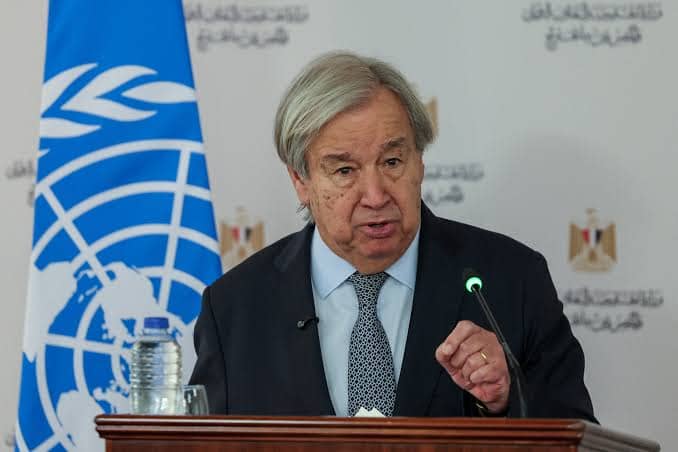
The United Nations peacekeeping operation in Western Sahara has ended after 35 years following a failure by the Security Council to renew its mandate. UN Secretary-General António Guterres announced that Sunday marked the formal conclusion of the long-running deployment, initiating an immediate unwinding of operations across the disputed territory.
UN spokesperson Stéphane Dujarric confirmed the transition process in an official statement. "This 1 November 2026 marks the start of the liquidation period," Dujarric said. "A smaller team reporting to the United Nations’ Department of Operational Support will oversee the orderly transportation of assets belonging to troop-contributing countries to their respective nations, and the appropriate disposal of equipment belonging to the United Nations."
The dissolution leaves the region without international observers for the first time since the early post-colonial era.
Diplomatic Stalemate at the Security Council
The termination followed a diplomatic stalemate at UN headquarters in New York between the United States and Russia. The collapse occurred a year after the Security Council adopted a US-drafted resolution accepting Rabat’s plan to grant the territory autonomy under Moroccan sovereignty as the “most feasible” path toward resolving the conflict.
Tensions peaked on Friday when Russia vetoed a new US-backed resolution intended to cement the preference for Morocco’s autonomy plan while scaling back the peacekeeping force over time. The Security Council subsequently voted down a competing Russian draft resolution that sought to extend the existing mandate without those political conditions, leaving the mission without authorization to continue.
Reactions from Regional Powers
Morocco welcomed the outcome, seeing the shift as alignment with its territorial claims. A spokesperson for the Moroccan royal palace characterized the non-renewal as a “significant development” toward withdrawing the Western Sahara issue from consideration by the Security Council and described the former peacekeeping mission as an “instrument to internationalize the dispute.”
Moroccan Foreign Minister Nasser Bourita told state media that the mission’s original mandate regarding a referendum was an “anachronism.” Bourita noted that while Rabat had been informed of Russia’s intent to block the US draft, the kingdom viewed the standoff as “an opportunity to review certain rules of the game.”
Algeria’s Foreign Ministry voiced “deep regret” over the non-renewal, citing the “excessive bias” of the United States toward Rabat’s position. The Algeria-backed Polisario Front called the outcome “an unacceptable decision” and stated that it was “concerned at the deadlock in the Security Council meeting.”
Historical Context of the Dispute
The UN classifies Western Sahara, a mineral- and fishery-rich desert territory spanning an area roughly the size of Colorado along Africa’s northwestern Atlantic coast, as a “non-self-governing territory.” Critics of Moroccan administration view it as Africa’s last colony.
The dispute escalated into armed conflict after former colonial power Spain departed in 1976 and Morocco annexed the region. The subsequent war between Moroccan forces and the Polisario Front lasted more than 15 years and claimed over 16,000 lives.
Morocco currently administers the vast majority of Western Sahara as its southern provinces, while the Polisario Front controls a narrow eastern strip known as the “free zone,” separated by a Moroccan-built sand wall.