


Legislation Advances Amid Stalled Opposition Talks
The ruling Democratic Party of Korea and the government have agreed to push a bill this year that raises floor area ratios for both public and private redevelopment projects, according to Sedaily (Oct. 28, 2026). The measure aims to expand housing supply by increasing density limits, with the final version allowing private projects up to 100% of the legal ceiling and public projects up to 130 percent.
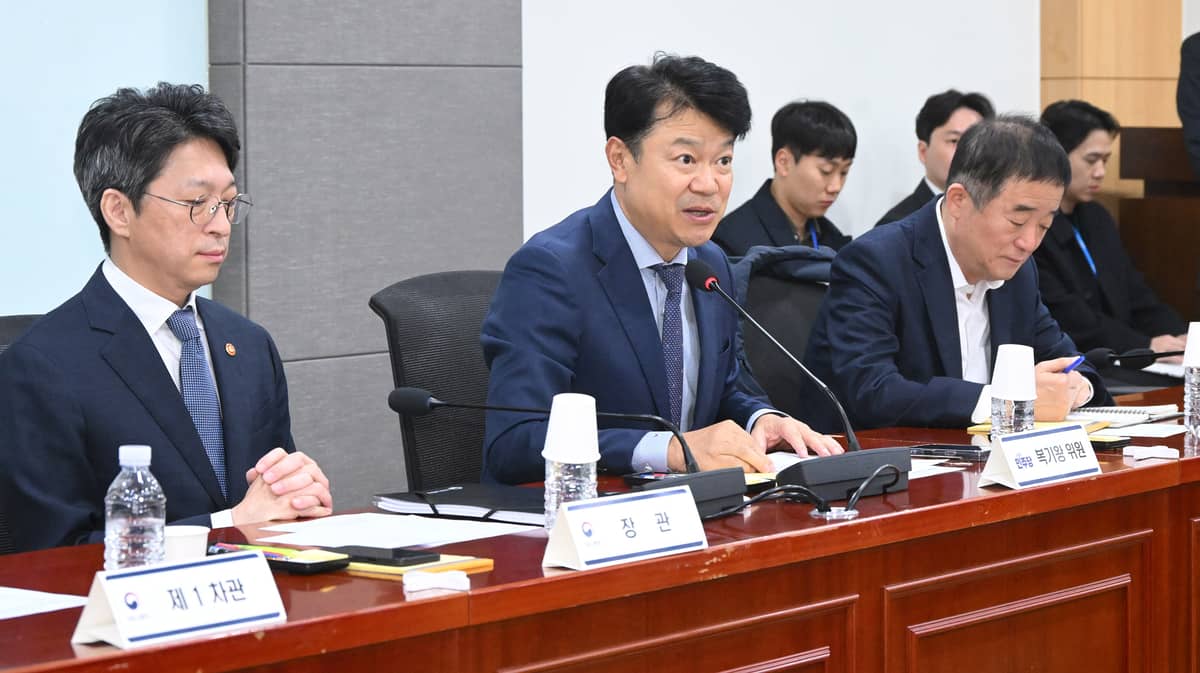
Rep. Bok Ki-wang, the ruling party's secretary on the National Assembly's Land, Infrastructure and Transport Committee, stated that the main agreement is to pass the amendment to the Act on the Improvement of Urban Areas and Residential Environments when the bills come up for a vote (Sedaily). The party and government aim to complete the legislation by the end of the year at the latest (Sedaily).
The decision to move forward comes after the ruling party was unable to narrow differences with the opposition People Power Party regarding how far to ease density limits on private projects. Unable to reach an agreement, the Democratic Party and the government decided to proceed with legislation rather than pursue further negotiations (Sedaily).
Proposed Density Limits and Negotiation Breakdown
The version of the bill awaiting a floor vote establishes distinct caps for different types of redevelopment. Private redevelopment projects will be allowed up to 100 percent of the legal density ceiling, while public projects can reach 130 percent (Sedaily).
Previously, the Democratic Party had proposed raising the private figure to 120 percent. This proposal took into account the opposition's demand that private projects also be allowed 130 percent, according to Sedaily.
Bok Ki-wang said the party had offered the opposition's committee secretary a revised version of the bill but received no response. He concluded that they could no longer wait for an answer from the opposition (Sedaily).
The Democrats stated they delayed action on the bill twice to gather input from the People Power Party and the Seoul Metropolitan Government. However, they argued that further postponement is untenable because nothing has progressed in talks with the city government (Sedaily).
Administrative Capital Bills Also Prioritized
Land Minister Hong Ji-sun attended the party-government consultative meeting held at the National Assembly Members' Office Building in Yeouido, Seoul, on Oct. 28 to review legislation for people's livelihoods and growth (Sedaily).
Bok Ki-wang expressed that even if the People Power Party cannot agree with the density bill, they are unlikely to go as far as a filibuster (Sedaily).
Alongside the redevelopment measures, amendments to the special act on the administrative capital and the special act on the construction of the Multifunctional Administrative City were presented as top legislative priorities (Sedaily).
The administrative capital bill would define Sejong's legal status as the administrative capital. The amendment to the Multifunctional Administrative City act calls for relocating five government ministries to Sejong starting next year (Sedaily).