


India Suspends Indus Waters Treaty After Security Breach
India has placed the Indus Waters Treaty in abeyance following the 2025 Pahalgam attack. This decision marks a significant shift in how New Delhi manages its water relations with Pakistan, moving from a framework of detailed cooperation to one of suspended engagement.
Contrary to popular impression that India lacked the infrastructure or storage capacity to stop Pakistan’s water supply, Delhi chose to suspend cooperation instead. The suspension includes the halting of data sharing, the cessation of commission meetings, and the freezing of treaty processes.
The Indus Water Treaty was originally evaluated based on water-sharing scenarios and topography. It was never designed to address situations involving armed terrorism or attacks by Pakistan. The decision to suspend the treaty reflects a prioritization of security concerns over established hydrological agreements.
A Hague tribunal subsequently held that India could not unilaterally suspend the treaty. India rejected this ruling, disputing the arbitration process itself. This legal conflict highlights the tension between international judicial mechanisms and national security actions in transboundary water disputes.
Upstream Control and the Brahmaputra
In contrast to the Indus situation, India faces a different challenge regarding the Brahmaputra River. On paper, rivers belong to no single country once they become transboundary systems. Treaties, international principles, arbitration mechanisms, and expectations of cooperation are supposed to govern these shared resources.
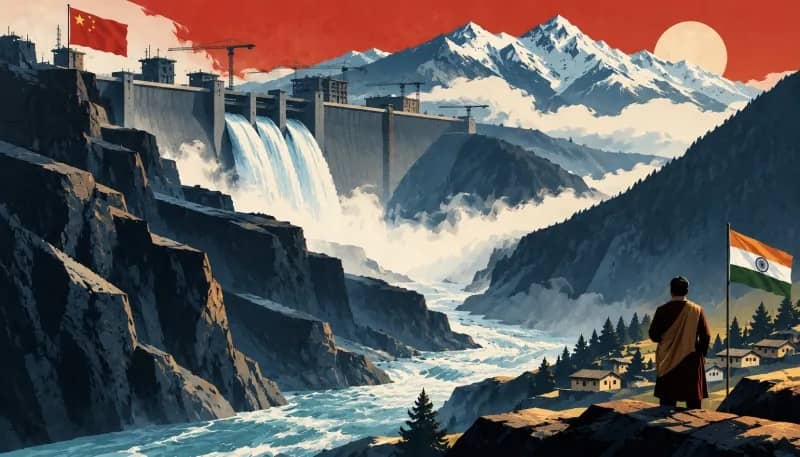
However, geography creates a reality where upstream countries possess the tangible ability to build dams. China’s enormous hydropower project on the Yarlung Tsangpo illustrates this upstream control. Decisions made hundreds of kilometers upstream affect the river's behavior by the time it enters Arunachal Pradesh as the Siang and becomes the Brahmaputra.
India has no binding river-water treaty with China capable of regulating construction. The two nations have only limited mechanisms for hydrological cooperation. This lack of a formal agreement leaves India vulnerable to upstream actions that can alter water flow downstream.
Geography and Infrastructure as Determinants of Power
The dynamics of river ownership are increasingly defined by physical infrastructure rather than legal frameworks. Countries naturally emphasize downstream rights when they are downstream and territorial sovereignty when they are upstream. Laws without the physical capability to build upstream infrastructure can be insufficient.
The Brahmaputra, Indus, and Nile rivers demonstrate how quickly infrastructure can transform negotiating power for a country sharing a river. In the case of the Nile, Ethiopia built the Grand Ethiopian Renaissance Dam (GERD) despite opposition from Egypt. This construction shifted the balance of power regardless of prior diplomatic positions.
The Himalayas are called the Third Pole of the world. International law may tell countries how rivers ought to be shared, but geography determines who encounters the water first. Infrastructure increasingly determines what happens to it next.
Strategic Adjustments for India
For India, the lesson involves independently monitoring Himalayan rivers through satellites and seismic data. This technological approach aims to compensate for the lack of binding treaties with upstream neighbors like China.
Additionally, India is focusing on creating storage and flood-management capacity to mitigate the risks posed by upstream infrastructure projects. These physical adaptations are critical given that geography dictates initial access to water resources.
Negotiating stronger arrangements with neighbors remains a priority, alongside designing future treaties with clear provisions for extraordinary security situations. Such provisions would address gaps in existing frameworks like the Indus Water Treaty, which was not conceived for scenarios involving armed conflict.