


Stability as a Global Economic Asset
The concept of stability has transitioned from a political precondition for economic activity to an economic asset in its own right, according to King Abdullah II. This perspective is set to shape Jordan’s presentation to investors ahead of the Jordan-EU Investment Conference scheduled for November 19.
The King outlined this view at the United Nations General Assembly, emphasizing that a crisis in the Middle East does not remain contained within the region. He noted that the costs of regional instability manifest in energy and grocery bills far beyond the immediate geographic area.
Recent geopolitical events underscore this linkage. The war in Iran demonstrated how quickly instability can disrupt trade, investment, and daily life across borders. These disruptions affect global supply chains, influencing monetary policy and investment flows worldwide.
Jordan’s economy is directly exposed to these regional developments through multiple channels, including trade, energy imports, tourism, remittances, and foreign investment. Consequently, regional stability functions as a direct economic variable affecting national growth and employment figures.
Macroeconomic Resilience Amidst Global Volatility
Jordan’s recent economic data highlights resilience amidst global volatility. Real GDP growth reached 2.9 percent in the first quarter of 2026. During the first eight months of the year, inflation averaged 2.2 percent.
Financial stability metrics also show strength. The current account deficit stood at 2.2 percent of GDP in the first quarter. Foreign reserves reached approximately $28.4 billion in August, providing coverage for more than eight months of imports.
The global economy is increasingly linked to geopolitics, with wars affecting energy and food prices, trade, investment flows, and monetary policy globally. This interconnectedness means that Jordan’s economic performance is closely tied to the broader stability of its region.
EU Support and Strategic Positioning
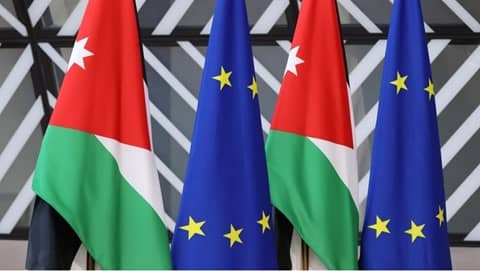
International support further anchors these figures. The European Union has committed a €3 billion package for Jordan covering the period from 2025 to 2027. This commitment combines financial assistance, grants, and investment mobilization efforts.
As Jordan prepares for the upcoming conference, the focus remains on how investors evaluate risk. Investors weigh regional stability, supply-chain security, transport costs, energy security, and policy predictability when deciding on new projects.
To address these criteria, King Abdullah II stated that Jordan is strengthening connections from the Gulf to the Mediterranean. The kingdom aims to position itself as a hub for trade, industry, and technology.
The upcoming conference in November will serve as a platform to demonstrate how this strategic positioning translates into economic security for potential partners.