


Allegations of Party Disconnection
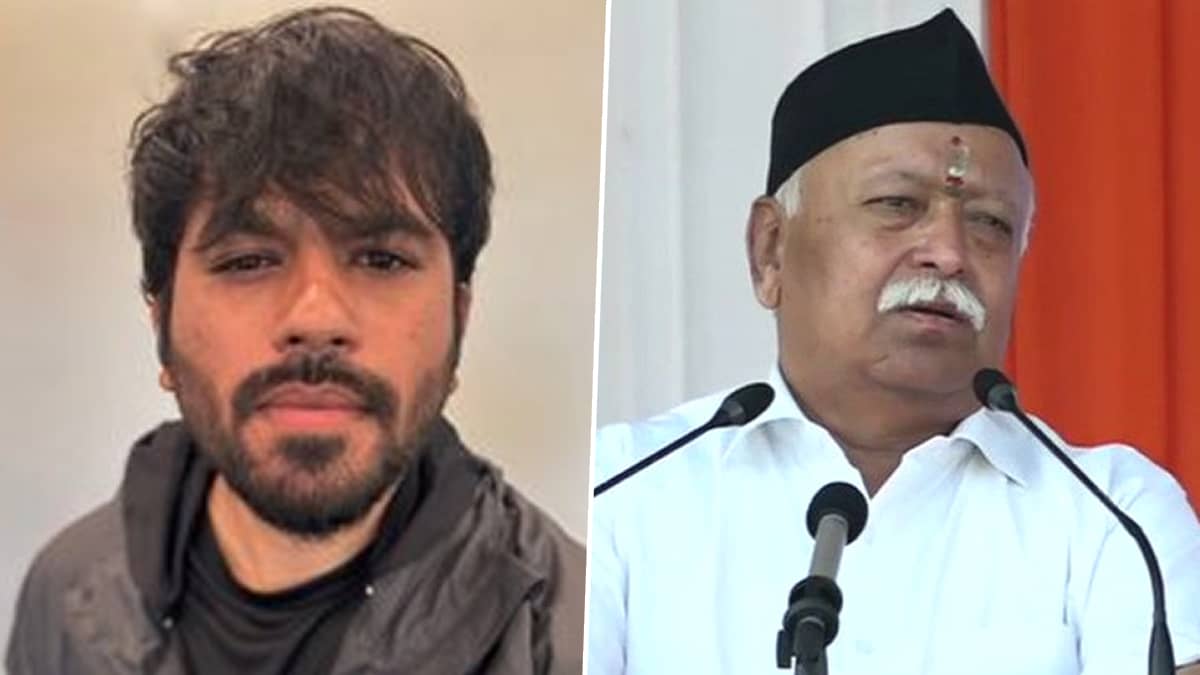
Cockroach Janta Party (CJP) founder Abhijeet Dipke issued a critique of the Bharatiya Janata Party (BJP) on Sunday, according to reports published by Latestly. Dipke asserted that the ruling party has developed a perception that it has grown larger and more significant than its ideological mentor, the Rashtriya Swayamsevak Sangh (RSS). The comments were reported in the Times of India (TOI).
Dipke’s statement positioned the BJP as having moved away from the guidance of the RSS. He suggested that the political party no longer views itself as subordinate to or dependent on the ideological framework provided by the RSS. This assertion formed the basis of his call for the BJP to reconsider its stance and listen to the RSS leadership.
Specific Directives on Inclusivity and Protesters
In his remarks, Dipke specifically urged the BJP to heed the advice of RSS Chief Mohan Bhagwat. He highlighted two particular areas where he believed the party should align its actions with Bhagwat’s guidance: inclusivity and the treatment of young protesters.
Focus on Social Inclusivity
Dipke pointed to Bhagwat’s recent comments made in New York as a reference point for the BJP. These remarks included views on Muslims, which Dipke cited as relevant to the broader topic of inclusivity. The CJP founder indicated that the RSS chief’s perspective on these matters should be taken seriously by the ruling party.
Handling of Youth Dissent
Beyond social inclusion, Dipke emphasized the manner in which young protesters are treated. He argued that the BJP should pay attention to Bhagwat’s views on this issue, implying that current policies or actions may not align with the RSS chief’s recommendations. The specific details of how young protesters should be handled were attributed to Bhagwat’s broader advice rather than a standalone statement in the provided text.
Context of Recent RSS Remarks
The criticism came in response to questions regarding Bhagwat’s recent activities abroad. The RSS chief had made remarks in New York that touched upon the status and perception of Muslims. Dipke utilized these comments to reinforce his argument that the BJP should return to the ideological roots emphasized by the RSS.
By linking the party’s current trajectory to Bhagwat’s specific observations on Muslim inclusion, Dipke sought to draw a contrast between the RSS’s stated values and the BJP’s perceived behavior. The CJP leader did not provide a detailed timeline of when this shift in perception occurred within the BJP, but rather stated it as a current belief held by the party.
Political Implications of the Critique
Dipke’s comments highlight the ongoing dynamic between the BJP and the RSS. As the ideological mentor, the RSS traditionally plays a significant role in guiding the political party’s direction. Dipke’s assertion that the BJP believes it has surpassed the RSS suggests a potential tension or shift in this relationship.
The call for the BJP to listen to Bhagwat serves as a direct challenge to the party’s current approach. By citing specific areas such as inclusivity and the treatment of protesters, Dipke provided concrete examples where he believes the party is deviating from RSS advice. The source context does not include a response from the BJP or the RSS regarding these allegations.
The timing of Dipke’s remarks, reported on Sunday, follows the recent events in New York involving Bhagwat. This sequence suggests that the CJP founder is using the RSS chief’s international statements to critique domestic political strategies. The article does not indicate whether other political figures or parties have responded to Dipke’s comments.
Role of the Cockroach Janta Party
Abhijeet Dipke acts as the founder of the Cockroach Janta Party, a political entity that has positioned itself to critique major national parties. His public statements serve to highlight perceived ideological inconsistencies within the BJP. The CJP’s engagement with these issues places it in the role of an observer and critic of the ruling party’s alignment with its traditional ideological partners.
The specific allegations made by Dipke regarding the BJP’s self-perception relative to the RSS remain unverified by independent sources in the provided text. They are presented as Dipke’s assertion. The article does not offer data on the actual size or influence of the BJP compared to the RSS, only Dipke’s claim that the BJP believes it has grown larger.
No further details were provided regarding potential consequences of this perceived disconnect between the BJP and the RSS. The focus remains on Dipke’s call for the party to adhere to Bhagwat’s advice on specific social and political issues.