


Mandate Granted Amid Political Gridlock
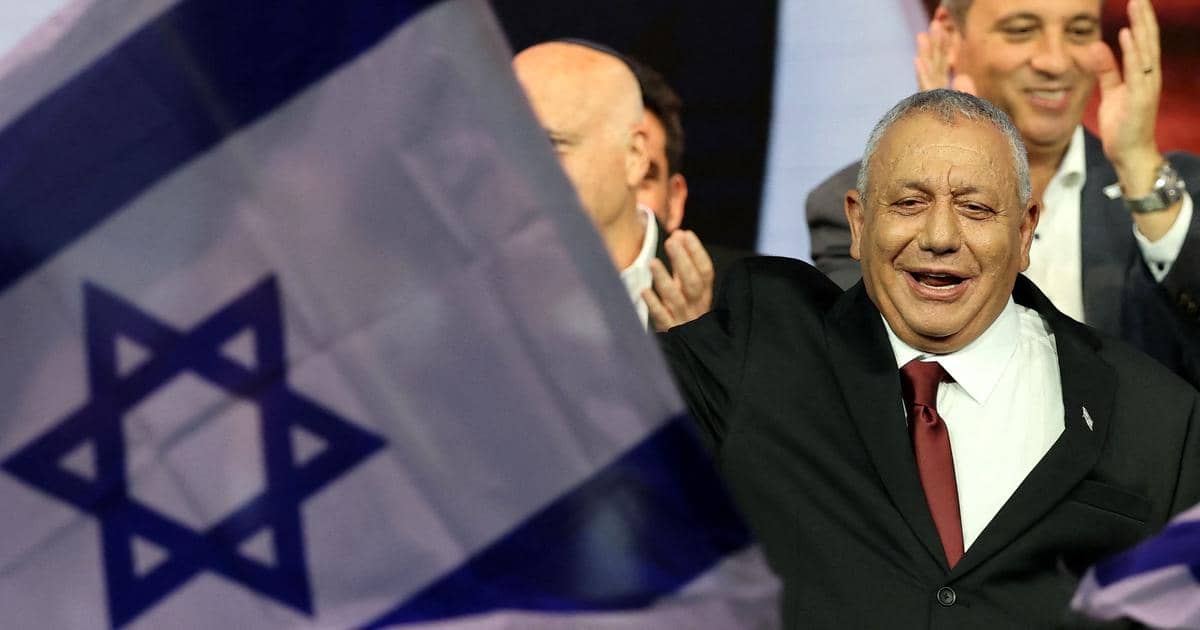
Israeli President Isaac Herzog announced on Monday that he would grant Gadi Eisenkot, the main challenger to Prime Minister Benjamin Netanyahu, the opportunity to form a new government in Israel. This decision follows nearly two weeks of political gridlock after an election described as the "most consequential election in Israel's history" failed to produce a clear winner.
Eisenkot now has 28 days, with a possible 14-day extension, to attempt to convene a stable coalition government. The deadline marks a critical juncture for the country's political landscape, as previous attempts to form a governing body have stalled due to the fragmented nature of the Knesset.
Seat Counts and Coalition Mathematics
The election held on October 27 resulted in Netanyahu's Likud party winning the highest number of seats. However, its coalition lacked the 61 seats required for a majority in Israel's 120-seat parliament. Similarly, the parties in opposition to Netanyahu, led by Eisenkot, also lacked the numbers to form a governing coalition without additional support.
To achieve a parliamentary majority, Eisenkot's Yashar party would need to join with Naftali Bennett's B'Yachad, Yair Golan's Democrats, and Avigdor Liberman's Yisrael Beytenu. Crucially, this alliance would also need to secure support from at least one of the two Arab parties: the Joint List and Ra'am.
The two Arab-majority parties received 19 seats between them, representing more than ever before in Israeli parliamentary history. This increase in representation provides the numerical leverage necessary for Eisenkot's bloc to reach the threshold for governance, but it introduces significant political hurdles regarding coalition composition.
Breaking Campaign Pledges
Joining a coalition with Arab parties would require Eisenkot, Bennett, and Liberman to go against campaign promises not to enter into coalitions with Arab parties. These pledges were central to the campaigns of several major right-wing and centrist factions, making any alliance with the Joint List or Ra'am a departure from their stated platforms.
Eisenkot has emphasized that "all of us will need to compromise" to address the political deadlock. This statement underscores the necessity for his bloc to set aside previous ideological boundaries to secure a working majority in the Knesset.
Legal and Political Obstacles
The path to coalition building is further complicated by Israel's 2018 Nation-State Law, which states that "the right of national self-determination in the state of Israel is unique to the Jewish people." This legal framework complicates cooperation with Arab parties, as it legally enshrines a distinction between Jewish and non-Jewish citizens regarding national identity.
Tensions remain high between the opposing factions. Members of Netanyahu's Likud party have referred to their opponents as "the disaster bloc," highlighting the deep divisions within the political landscape. These rhetorical attacks reflect the broader struggle to form a government that can command broad support across Israel's diverse political spectrum.