

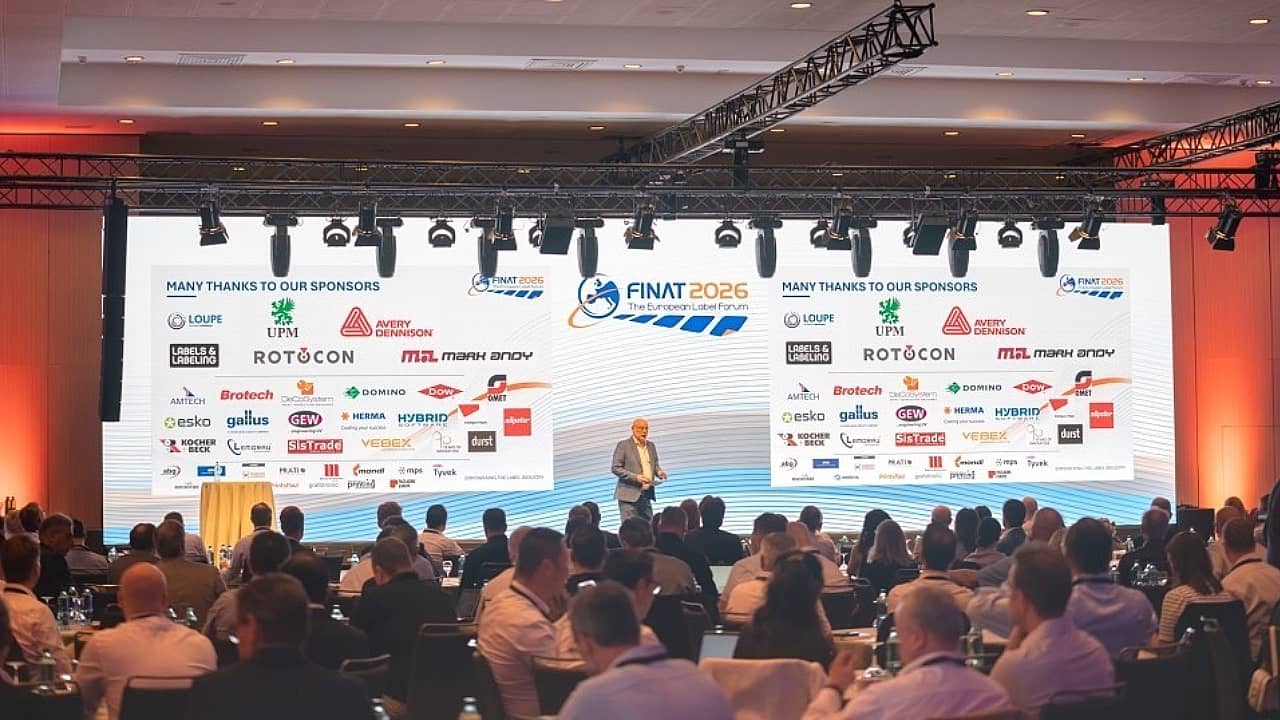

Industry Leaders Gather Amid Economic Pressures
Representatives from the European label industry convened in Seville, Spain, for Finat’s annual European Label Forum (ELF) from May 27 to 29, 2026. The event brought together stakeholders to address the sector's current operational landscape, which attendees described as a "transformation moment" rather than an acute crisis.
While the city provided a scenic backdrop for the gathering, the industry itself is navigating a complex environment characterized by significant economic headwinds. According to reports from the forum, the sector is currently grappling with economic instability and sluggish growth. These financial pressures are compounded by rising operational costs and mounting regulatory pressure that affect manufacturing and distribution processes across the continent.
Additionally, geopolitical uncertainty remains a central concern for attendees. The convergence of these factors has prompted industry associations to re-evaluate standard operational frameworks. The forum served as a platform for discussing how these overlapping challenges impact the viability and strategy of label manufacturers and suppliers throughout Europe.
Keynote Addresses Strategic Adaptation Over Crisis Management
Dr. Ilke Toygür, director of the IE Global Policy Center and professor of geopolitics at IE University in Madrid, delivered the kickoff keynote address at the forum. She distinguished the current industry climate from previous disruptions, explicitly stating that the situation is not a crisis moment comparable to past events.
"This is not a crisis moment like the ones that we have been going through for years and decades in Europe, but it's a transformation moment," Toygür said. She referenced specific historical challenges to contextualize her argument, noting that the industry had previously endured the COVID-19 pandemic and the Finnish paper workers’ strike, which resulted in what was termed the "Great Destocking." Unlike those acute disruptions, the current phase requires adaptation and a re-thinking of business models.
Toygür outlined a shift in the geopolitical landscape that underpins these economic challenges. She noted that Europe has historically relied on free trade rules, clear definitions of security, and established relationships defining economics and trade relations. According to her assessment, those structures are currently undergoing significant change. In this new environment, she argued that interdependency among nations must be utilized as a strategic weapon.
EU Strategy and Economic Interconnectedness
The keynote speaker emphasized the European Union's capacity to leverage its economic relationships and interconnectedness with other countries as a source of power. Toygür stated that the EU must unite to take care of its own defense and security. This unification is presented as a prerequisite for maintaining economic stability in the face of external uncertainties.
Furthermore, she advised that the continent must invest in technologies and energies that will fuel its economy. Citing a speech by EU President Ursula von der Leyen, Toygür continued to elaborate on the necessity of internal cohesion and strategic investment. The message conveyed at the forum was that Europe is changing, and the label industry's response must align with broader geopolitical shifts toward leveraging interconnectedness for stability.
Implications for Business Models
The designation of the current period as a "transformation moment" signals a departure from reactive crisis management to proactive structural adjustment. Industry attendees were encouraged to view economic instability and regulatory pressure not merely as obstacles but as drivers for re-evaluating how business models function within a shifting geopolitical order.
By focusing on adaptation, the forum highlighted the need for European label manufacturers to align their strategic planning with the broader EU directive of utilizing economic interdependency. This approach suggests that future resilience in the sector will depend on how effectively companies integrate these geopolitical realities into their operational and investment decisions.