

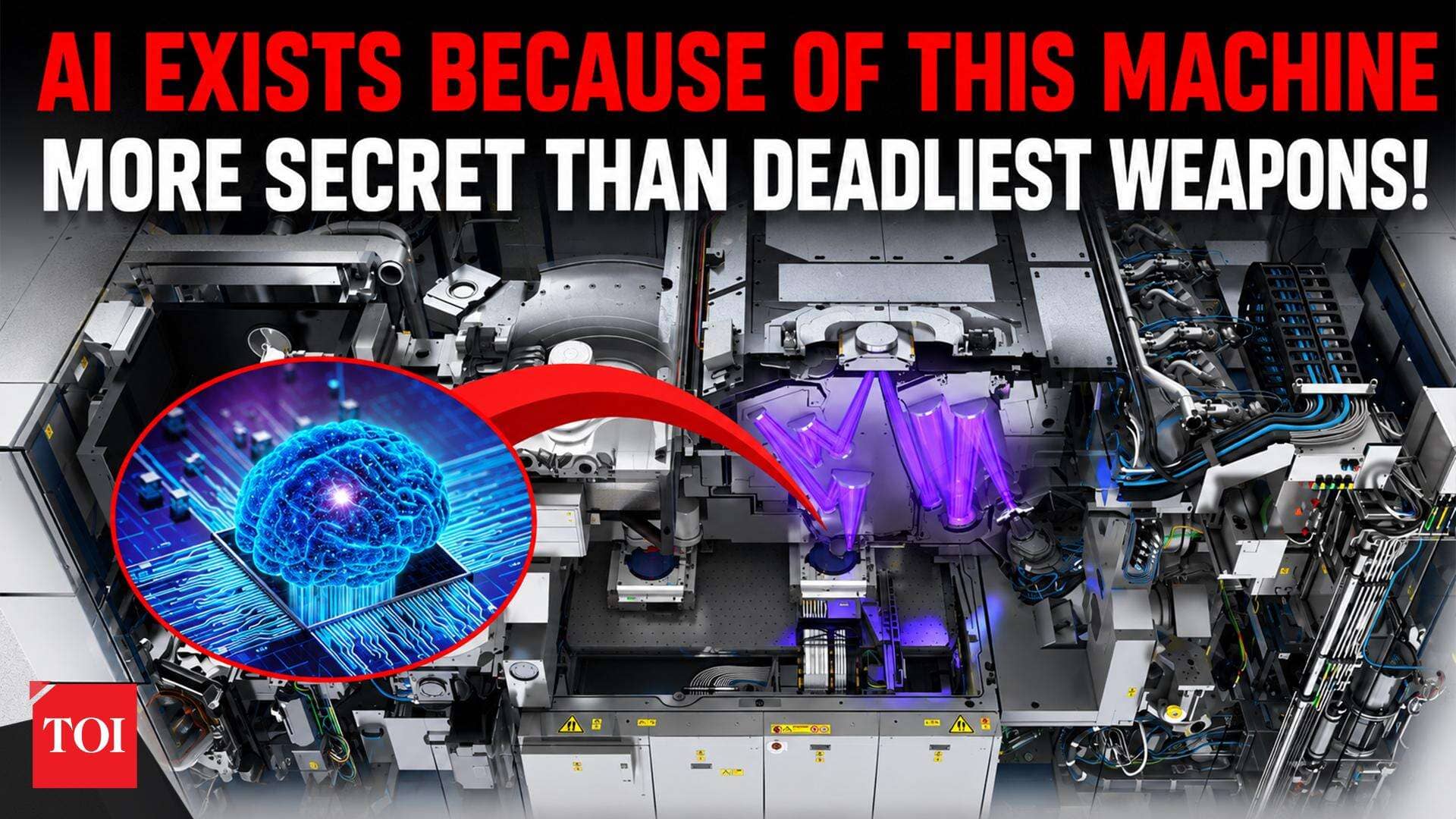

The Mechanics of Extreme Ultraviolet Lithography
Extreme ultraviolet (EUV) lithography stands as the foundational technology enabling the production of the world's most advanced semiconductors. This intricate process is indispensable for manufacturing the cutting-edge chips that power a vast array of modern technologies, including sophisticated processors, high-performance artificial intelligence accelerators, critical satellite systems, and advanced precision weapons. Its development has been crucial for pushing the boundaries of miniaturization, allowing for the creation of transistors at scales previously unimaginable.
The operational mechanism of an EUV system is a marvel of extreme precision engineering and complex physics. It involves firing high-powered lasers at microscopic droplets of molten tin within a meticulously controlled vacuum environment. This energetic interaction generates plasma that reaches temperatures hotter than the surface of the sun—an astonishing feat of controlled energy. The resulting extreme ultraviolet light is then precisely directed by a series of mirrors, polished to near-atomic perfection, to accurately pattern silicon wafers. This allows for the creation of features on chips that are exponentially smaller and denser than those achievable with previous lithography techniques, thereby enabling more powerful and efficient microprocessors.
Far from being a singular invention, EUV technology is accurately described as a vast ecosystem. This encompasses an array of highly specialized components, including advanced optics, novel materials, sophisticated software algorithms, and a rigorous industrial discipline that spans decades of research and development. This intricate interplay of diverse elements makes the production of EUV systems one of the most challenging and consequential endeavors in modern manufacturing, requiring unparalleled levels of precision and integration.
ASML's Unique Position in Advanced Chip Manufacturing
ASML, a company based in the Netherlands, holds an unparalleled position as the primary manufacturer of these highly advanced EUV systems. Each of these cutting-edge machines represents a monumental investment, carrying a cost of up to $400 million. This extraordinary price tag, coupled with the immense technical complexity and decades of specialized research required for their development, effectively creates an insurmountable barrier to entry for potential competitors. No other company has successfully replicated ASML's capabilities in this domain.
The production and distribution of this equipment constitute what is widely recognized as a strategic choke point in the global technology supply chain. Control over the manufacturing of EUV systems is concentrated within this single company, supported by a limited number of countries that contribute critical components and expertise, and sustained by incredibly intricate international supply chains. This unique concentration of capability dictates which nations and corporations can advance their computing capabilities, directly influencing the pace of innovation in areas from consumer electronics to supercomputing and advanced military systems.
The de facto monopoly held by ASML signifies that access to this pivotal technology is far from universally available. Instead, it is meticulously regulated by a complex interplay of geopolitical considerations, national security interests, and commercial constraints. This centralized control grants significant leverage to the nations hosting ASML's operations and its key suppliers, enabling them to shape the global technological landscape and influence the strategic balance of power.
National Security and Economic Power Hinges on EUV Access
The ability to either produce or acquire EUV lithography equipment directly and profoundly influences a nation's standing in several critical domains: artificial intelligence, defense capabilities, and overall industrial power. Nations that control access to this foundational technology effectively determine the upper limits of computational power available for both their military and commercial applications. This includes the development of advanced AI algorithms that require immense processing power for training and deployment, sophisticated guidance systems for precision weapons, secure communication networks, and the computing infrastructure necessary for cutting-edge scientific research and economic innovation across all sectors.
Conversely, nations denied access to EUV systems face significant and escalating vulnerabilities in these same critical domains. Without the capacity to produce state-of-the-art chips, they risk falling behind in the global technological arms race, facing severe economic disadvantages due to reliance on older or less efficient technology, and potentially compromising their national security by lacking access to the most advanced defense systems. This disparity in access creates a stark and widening divide between countries capable of developing and deploying next-generation technologies and those restricted from doing so, fundamentally shaping future global hierarchies and power dynamics.
China's Ambitious Drive for Technological Self-Sufficiency
Recognizing the strategic imperative of semiconductor independence, China has designated the development of indigenous EUV technology as a paramount national priority. Reports indicate that the country is allocating significant financial resources, mobilizing national research institutions, and operating with a high degree of secrecy in its concerted efforts to create home-grown alternatives. The goal is not merely to compete but to break the existing foreign monopoly and achieve complete self-sufficiency in this critical area, thereby mitigating its vulnerability to external controls.
This national priority reflects the exceptionally high stakes associated with advanced semiconductor manufacturing capabilities, which are seen as fundamental to China's long-term economic growth, technological sovereignty, and national defense. The relentless pursuit of indigenous EUV systems by China underscores the technology's central role as a defining element in contemporary geopolitical competition and the broader struggle for global technological leadership, characterizing it as a consequential and intensely contested field.
The Intricate Global Supply Chain and Its Vulnerabilities
The complexity of EUV technology extends far beyond the final assembly of the lithography machine itself. It is underpinned by an extraordinarily intricate global network of highly specialized suppliers, each contributing unique components and expertise. This network provides everything from the ultra-precise mirrors, developed over decades by companies like ZEISS, to the advanced laser systems and exotic optical materials essential for the EUV process. Each component often represents a pinnacle of engineering, requiring proprietary knowledge and manufacturing processes that are themselves concentrated in a few specialized firms worldwide, making the supply chain exceptionally fragile and difficult to replicate.
This deeply interconnected and geographically dispersed supply chain inherently carries significant vulnerabilities. Disruptions in any single part of this complex network—whether due to trade disputes, export controls, natural disasters, or geopolitical tensions—can have cascading effects, impacting global semiconductor production and, by extension, numerous high-tech industries. The profound reliance on a single manufacturer, ASML, for the core EUV system further amplifies the strategic importance of its operations and the regulatory environments in which it operates, making it a critical point of global leverage and a target for strategic competition.
The unparalleled concentration of capability and expertise within this sector has fundamentally rewritten aspects of the global technological order. As advanced computing power becomes an ever more critical determinant of national security, economic competitiveness, and societal advancement, the control over EUV technology remains a defining and intensely contested factor in international relations, shaping alliances, trade policies, and strategic competition for decades to come. The intricate web of dependencies and the high stakes involved ensure that EUV lithography will continue to be at the forefront of global technological and geopolitical discourse.