


Market Valuation and Growth Projections
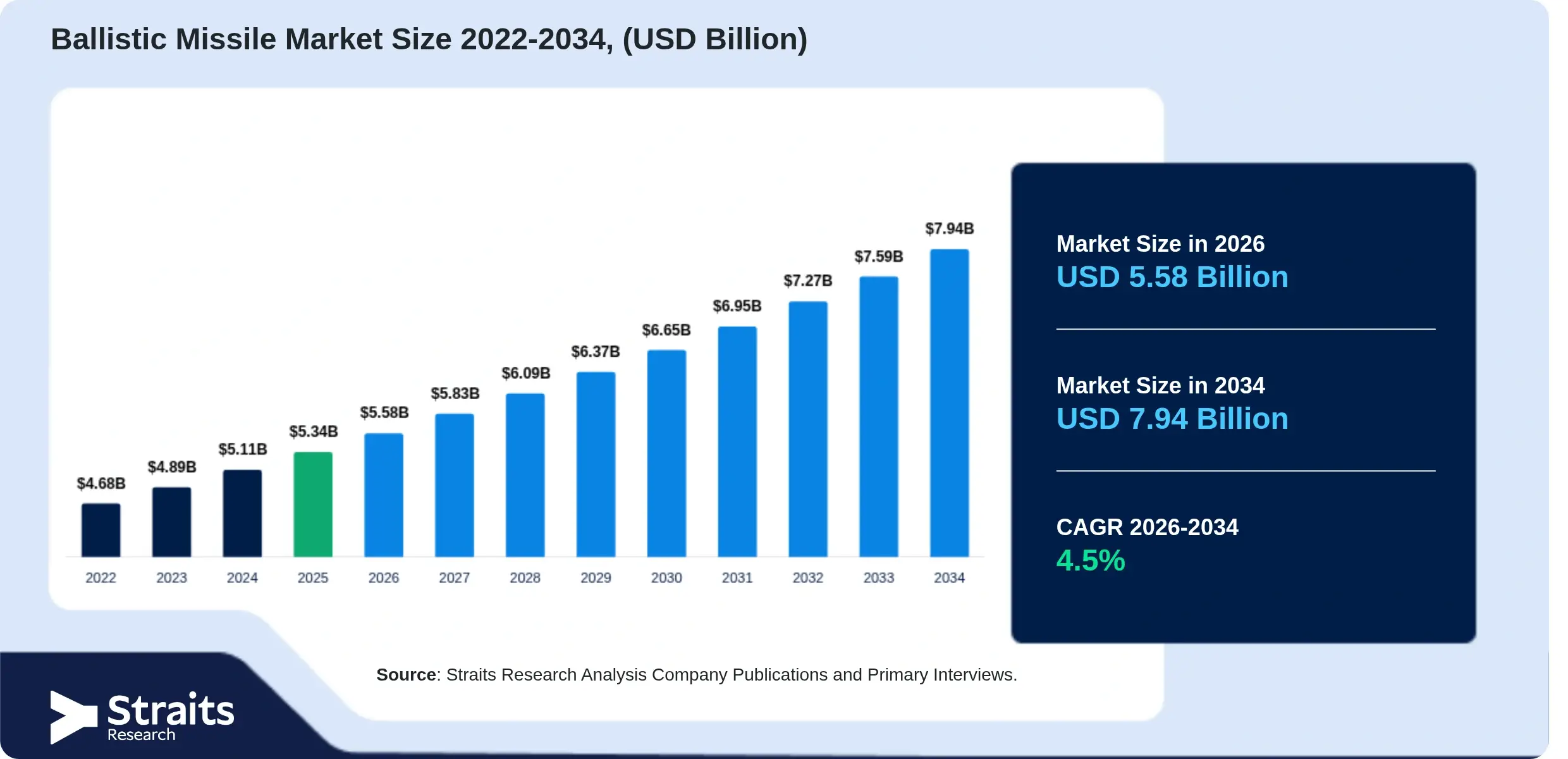
The global ballistic missile market is projected to expand significantly over the next decade, with valuations expected to rise from $5.58 billion in 2026 to $7.94 billion by 2034. This growth trajectory represents a compound annual growth rate (CAGR) of 4.5% during the forecast period from 2026 to 2034, according to data from Straits Research.
In 2025, the market was valued at USD 5.34 billion. The industry is currently experiencing substantial growth, a trend that research attributes primarily to rising military and defense expenditures worldwide. Nations are increasingly investing in advanced systems to bolster their security in response to escalating geopolitical tensions arising from territorial disputes, regional conflicts, and ideological differences.
Regional Dominance and Military Spending Trends
North America dominated the ballistic missile market with a market share of 36.4% in 2025. This regional leadership correlates with broader global trends in defense spending. From 2019 to 2023, military spending increased from $2,087 billion to an estimated $2,443 billion, reflecting a 17% growth over five years.
The United States accounts for the largest portion of global military expenditure at 37%, followed by China at 12% and Russia at 4.5%. These figures highlight the concentration of defense budgets among major powers, which drives demand for ballistic missile technologies.
Technological Advancements in Hypersonic Systems
A key component of the evolving ballistic missile landscape is the development of hypersonic technology. Hypersonic missiles are capable of traveling at speeds greater than Mach 5. The U.S. Department of Defense has made significant investments in hypersonic programs, with the goal of deploying operational hypersonic systems by the mid-2020s.
These technological advancements are part of the broader investment strategies employed by nations to address security challenges. The integration of high-speed capabilities into ballistic missile systems represents a shift in how military forces are equipped to meet modern defense requirements.