

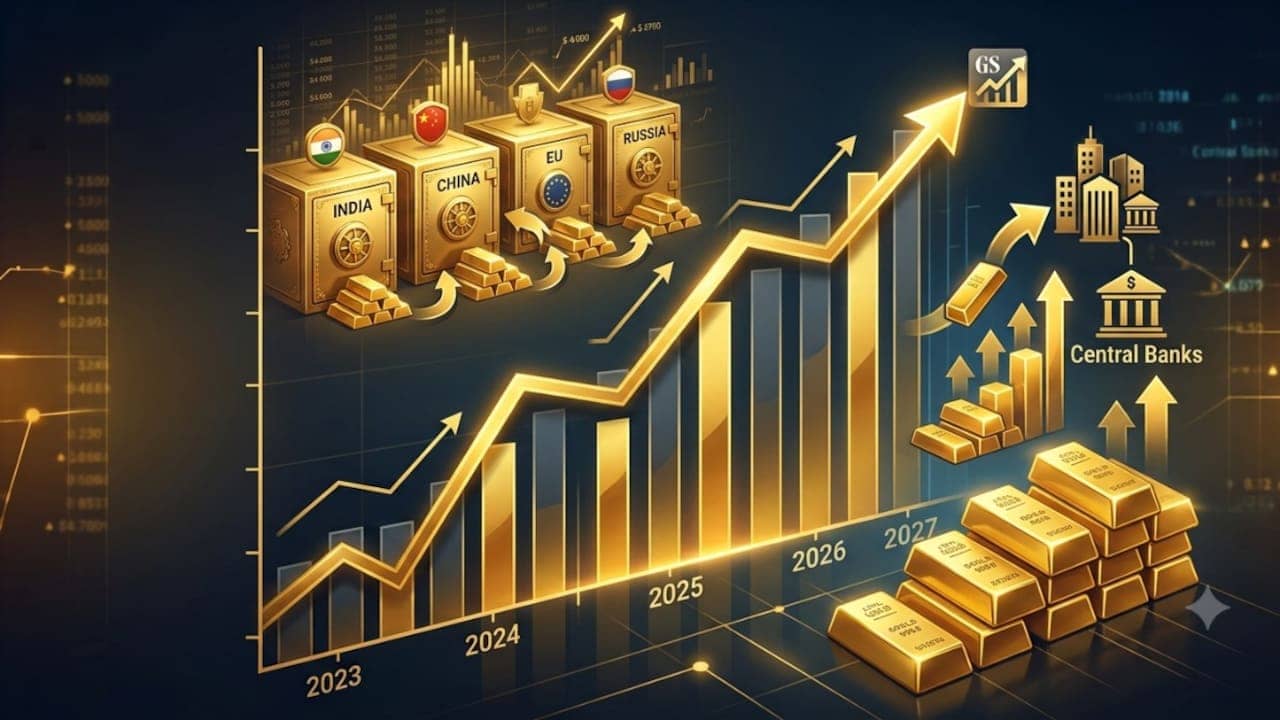

Gold Prices Break Through $4,600 Threshold
The price of gold has officially crossed the $4,600 per ounce mark, marking a significant milestone in the precious metal's recent market trajectory. This price level was reached amid a broader rally driven by multiple converging factors, including sustained demand from central banks and shifting global economic dynamics. The commodity's movement past this psychological barrier has drawn attention from financial institutions and market analysts alike.
Goldman Sachs, a major global investment banking firm, has issued a forecast suggesting that the current upward trend may continue further. According to the firm's analysis, gold could potentially reach $4,900 per ounce by the end of 2026. This projection indicates that the recent surge in prices is not merely a short-term fluctuation but part of a larger structural shift in how the precious metal is valued and held within the global financial system.
The latest rally in gold prices is not being driven by a single factor alone, according to market observations. Instead, it reflects a complex interplay of monetary policies, geopolitical tensions, and strategic asset allocation changes by major institutional players. The crossing of the $4,600 level serves as a tangible indicator of these underlying forces at work in the commodities market.
Central Banks Shift Away From Traditional Currencies
A primary driver behind the current gold market dynamics is the behavior of official sector buyers. Since 2022, there has been a significant increase in the acquisition of gold by central banks and other government entities. This surge in buying activity suggests that reserve diversification is no longer a temporary response to specific economic conditions but has become a sustained strategic trend.
Countries are increasingly looking to gold as a mechanism to reduce their dependence on traditional foreign-currency assets. By accumulating physical gold, nations aim to safeguard their reserves against geopolitical risks that may affect the stability or utility of fiat currencies held in other jurisdictions. This shift represents a fundamental change in how sovereign wealth is managed and protected.
The trend toward diversification is evident in the volume of transactions conducted by the official sector. Data indicates that central banks are actively purchasing gold at rates significantly higher than historical norms. This behavior underscores a growing consensus among global monetary authorities regarding the need for alternative store-of-value assets that are less susceptible to the political and economic policies of any single nation.
Projected Demand Increases in 2026
Goldman Sachs has provided specific quantitative forecasts regarding future central bank purchases. The investment bank expects central banks to purchase an average of 50 tonnes of gold per month in 2026. This projected volume represents a substantial increase compared to historical averages.
To illustrate the scale of this anticipated growth, the pre-2022 average for monthly central bank gold purchases was approximately 17 tonnes per month. The forecasted jump to 50 tonnes per month in 2026 highlights the intensity of the expected demand from the official sector. This threefold increase in monthly acquisition rates signals strong institutional confidence in gold's role within reserve portfolios.
Implications for Global Reserve Management
The combination of rising spot prices and increased official-sector buying has reshaped the landscape of international finance. As countries continue to acquire gold to protect reserves from geopolitical risks, the demand side of the market remains robust. This sustained interest supports the higher price levels observed in recent months.
Goldman Sachs' prediction of a $4,900 target by the end of 2026 is directly linked to these underlying fundamentals. The forecast assumes that the trend of reserve diversification will persist and potentially accelerate as geopolitical uncertainties continue to influence global economic strategies. The anticipated monthly purchase volume of 50 tonnes serves as a key metric in this projection.
Market participants are now monitoring official sector activity closely, as it provides a clear signal of long-term institutional sentiment toward the precious metal. The divergence between current central bank buying rates and the pre-2022 baseline of 17 tonnes per month illustrates the magnitude of the structural change in global reserve management practices.
Contrasting Historical Norms With Current Trends
The contrast between past and present acquisition patterns is stark. Prior to 2022, central banks acquired gold at a relatively steady pace, averaging around 17 tonnes monthly. The current environment, characterized by a post-2022 surge in official-sector buying, marks a departure from this stability.
Experts note that the move toward gold is not just about price appreciation but about strategic security. By lessening reliance on traditional foreign-currency assets, countries are attempting to insulate their economies from external shocks and sanctions. This strategic pivot is expected to continue influencing gold prices well into 2026, supporting the bullish outlook provided by Goldman Sachs.