

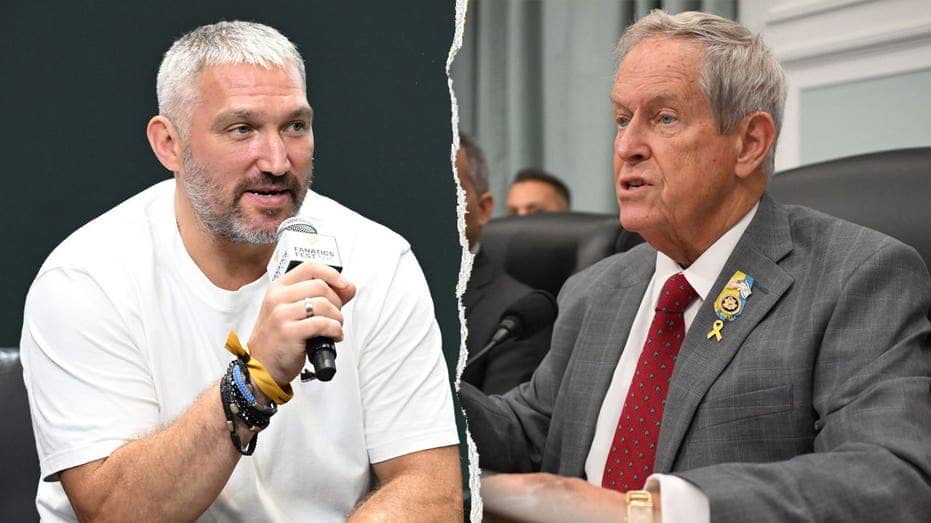

Congressional Scrutiny of Player's Political Ties
Republican Congressman Joe Wilson has formally contacted the National Hockey League (NHL) regarding the involvement of Washington Capitals star forward Alex Ovechkin in a political campaign advertisement. The advertisement in question promotes United Russia, the dominant ruling political party within the Russian Federation.
In his direct communications with the league, Congressman Wilson did not mince words, characterizing Ovechkin’s participation in the campaign material as "shameful." This strong condemnation was directed squarely at the league’s leadership, with Wilson specifically urging NHL Commissioner Gary Bettman to undertake a thorough review of the situation. The congressman's appeal calls for the league to address the implications of one of its most prominent players associating with a foreign political entity, particularly one that governs a nation currently under significant international scrutiny.
The intervention by a sitting member of the United States Congress elevates the matter beyond a typical sports controversy, highlighting a complex intersection of professional athletics and international geopolitical tensions. Congressman Wilson’s actions represent a direct appeal to the NHL's highest governance structures, compelling them to evaluate the appropriateness of their athletes engaging in political activities abroad, especially when those activities align with the government of a nation facing widespread global attention and diplomatic challenges.
As a long-standing and highly visible player for the Washington Capitals, Alex Ovechkin holds a significant public profile both within the United States and internationally. His appearance in the United Russia campaign advertisement therefore carries weight, drawing attention from political observers and lawmakers who monitor the influence of sports figures in global political landscapes.
Ovechkin's Role in United Russia's Campaign
At the heart of the controversy is a specific campaign advertisement created for United Russia, the political party that currently holds power in the Russian government. Alex Ovechkin, widely recognized as one of the most prominent and influential figures in professional ice hockey globally, featured prominently in this promotional material. His participation is seen as a direct political endorsement for the party, lending his considerable public image to its electoral efforts.
United Russia has long established itself as the dominant political force within the Russian Federation. A common strategy employed by the party in its political campaigns involves enlisting high-profile cultural and athletic figures. This tactic is designed to bolster public support, enhance the party's legitimacy, and project an image of national unity and strength. Ovechkin’s inclusion in this particular advertisement aligns with this established pattern, leveraging his celebrity status to resonate with a broad segment of the Russian populace.
The decision by Ovechkin, a celebrated athlete with a career largely spent in North America's premier hockey league, to appear in such an ad has inevitably drawn significant attention. Political observers and lawmakers outside of Russia have specifically noted this partnership as a clear example of the convergence of sports influence with state-sponsored political messaging. For critics, this collaboration raises questions about the ethical boundaries for athletes operating on an international stage, especially when their endorsements are perceived to support political agendas with far-reaching global implications.
NHL Faces Policy Review Amid Geopolitical Concerns
With Congressman Wilson’s direct appeal to Commissioner Gary Bettman, the National Hockey League now confronts a significant challenge regarding its established policies on player conduct, political expression, and the broader implications of its athletes' international engagements. The league operates within a complex regulatory framework that, on one hand, aims to uphold players' personal freedoms and rights to expression. On the other hand, it must also navigate intricate international relations, particularly concerning athletes who compete in a global league and maintain ties to foreign governments.
The situation places the NHL in a delicate position, requiring a careful balance between respecting individual player autonomy and upholding the league's reputation and relationships on an international scale. The potential for an athlete's political actions to impact the league's standing, its teams, and its other players is a critical consideration for Commissioner Bettman and his administration.
As of the initial reports following Congressman Wilson’s inquiry, neither the NHL nor Alex Ovechkin has issued an immediate public response. This silence suggests that league officials are likely in the process of thoroughly evaluating the situation. The congressman’s explicit request for a review places a considerable onus on these officials to determine several key points:
- Whether Ovechkin’s appearance in the United Russia campaign advertisement violates any existing internal codes of conduct established by the NHL.
- How such an endorsement might be perceived in terms of external diplomatic sensitivities, especially given the "significant international scrutiny" currently faced by the Russian Federation.
- The precedent such an action might set for other players within the league who may have similar ties or opportunities for political engagement in their home countries.
The outcome of this review could have far-reaching implications, potentially influencing how the NHL addresses future instances of player political involvement and how it balances its global presence with the complexities of international politics.