


Texas Congressman Seeks Treasury Probe of ISNA
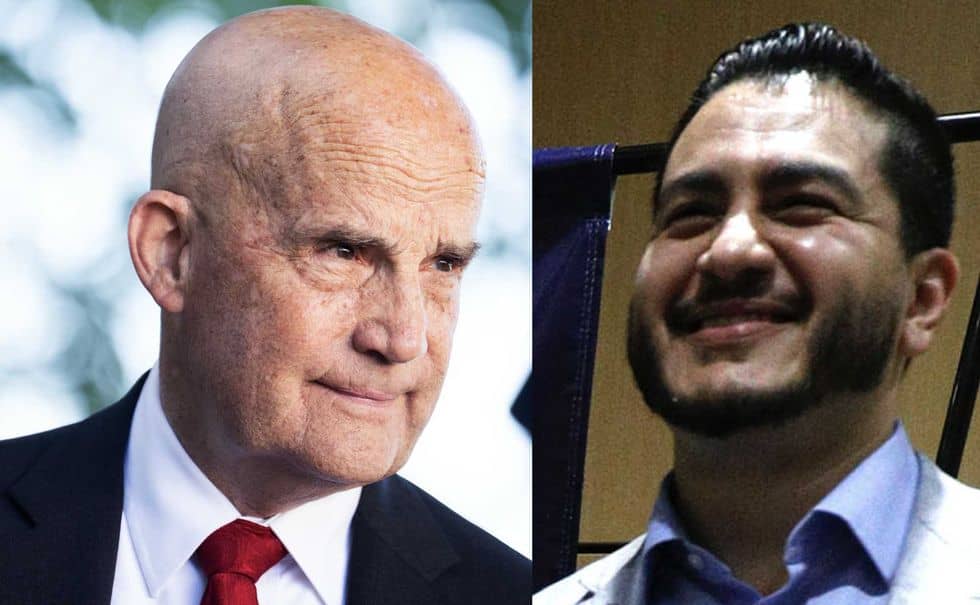
Republican Rep. Keith Self of Texas has formally requested the U.S. Treasury Department to launch a comprehensive investigation into the Islamic Society of North America (ISNA). In a detailed letter addressed to Treasury Secretary Scott Bessent, Congressman Self alleged that the prominent nonprofit organization engaged in illegal campaign activity, specifically by supporting Abdul El-Sayed, a Democrat candidate vying for one of Michigan’s two U.S. Senate seats. Self’s request underscores growing scrutiny over the political activities of tax-exempt organizations.
The core of Self's accusation is that ISNA, a 501(c)(3) organization, violated federal financial regulations by effectively operating as a campaign committee, rather than strictly adhering to its status as a tax-exempt entity. He argued that American taxpayers should not be compelled to subsidize a nonprofit that, in his view, functions as a political campaign arm. The congressman explicitly referred to this alleged collaboration as the “Red-Green Alliance,” a term he used to characterize the perceived alignment of certain progressive and Islamist groups. Self urged Secretary Bessent to not only investigate ISNA’s activities but also to thoroughly review its tax-exempt status to determine if federal laws governing political intervention by 501(c)(3) organizations were indeed breached.
Allegations of Campaign Intervention at ISNA Convention
Congressman Self cited a report from the Middle East Forum as the primary basis for his claims, detailing specific instances of alleged campaign support that transpired during an Islamic Society of North America convention held at Huntington Place. According to Self’s letter, ISNA permitted a dedicated campaign booth for Abdul El-Sayed to be prominently set up within the convention venue, a move he contends goes beyond permissible engagement for a tax-exempt organization.
Direct Campaigning and Solicitation Efforts
The congressman’s letter specified that the booth featured large, conspicuous banners proclaiming “Abdul for U.S. Senate” and “Muslims for Abdul,” clearly designed to encourage attendees to vote for El-Sayed. Self further noted that campaign personnel were reportedly active participants throughout the convention, engaging directly with attendees. These individuals were observed waving campaign posters and distributing flyers, actively promoting El-Sayed’s candidacy.
The allegations extend to more direct forms of campaign support. Self detailed that volunteers for the El-Sayed campaign were seen placing campaign materials on seats within the convention hall and distributing literature to attendees as they exited after a speech delivered by El-Sayed. Beyond mere promotion, the letter alleged that campaign personnel actively solicited donations, specifically promoting a $50 contribution in exchange for campaign T-shirts. Attendees were reportedly provided with QR codes that directly linked to pages for campaign donations and volunteer sign-ups. Furthermore, invitations to a specific campaign fundraiser were allegedly distributed, blurring the lines between an educational or religious event and a political rally.
Strictures on Nonprofit Political Activity
Rep. Self emphasized the crucial legal distinction between a candidate’s permissible attendance at an event and a 501(c)(3) organization’s prohibited endorsement or facilitation of campaign fundraising. He clarified that while Abdul El-Sayed, as a candidate, was within his rights to attend the ISNA convention, the rules governing tax-exempt organizations are stringent. Section 501(c)(3) of the Internal Revenue Code explicitly prohibits organizations from participating in, or intervening in, any political campaign on behalf of (or in opposition to) any candidate for public office. This prohibition includes the publication or distribution of statements, as well as direct or indirect financial support. The congressman underscored that the array of activities described in the Middle East Forum report, if substantiated, would represent a clear transgression from permissible candidate presence into unlawful political intervention and campaign support.
ISNA's Prior Federal Scrutiny
In his appeal for a Treasury investigation, Congressman Self also drew attention to ISNA’s past entanglements with federal authorities, suggesting a pattern of concern regarding the organization’s compliance with U.S. laws. He specifically highlighted ISNA’s designation as an unindicted co-conspirator in the Holy Land Foundation for Relief and Development (HLF) case. This high-profile case involved allegations of providing financial support to Hamas, a designated foreign terrorist organization.
The Holy Land Foundation case, which concluded with convictions for several individuals involved, saw ISNA named by federal prosecutors as an organization that allegedly aided the HLF. While ISNA itself was not charged, the designation as an 'unindicted co-conspirator' in such a significant terrorism financing trial has long been a point of contention and scrutiny for the organization. By bringing this historical context into his current request, Self aimed to underscore broader concerns about ISNA’s operational integrity and its adherence to federal regulations, beyond just the alleged campaign finance violations. The congressman’s letter concluded with a direct appeal for robust federal oversight, urging Secretary Bessent to thoroughly examine whether the nonprofit’s recent actions warrant further scrutiny, potential penalties, or even the revocation of its valuable tax-exempt status. This request marks a formal and significant escalation in political pressure on ISNA concerning its financial and political activities.