

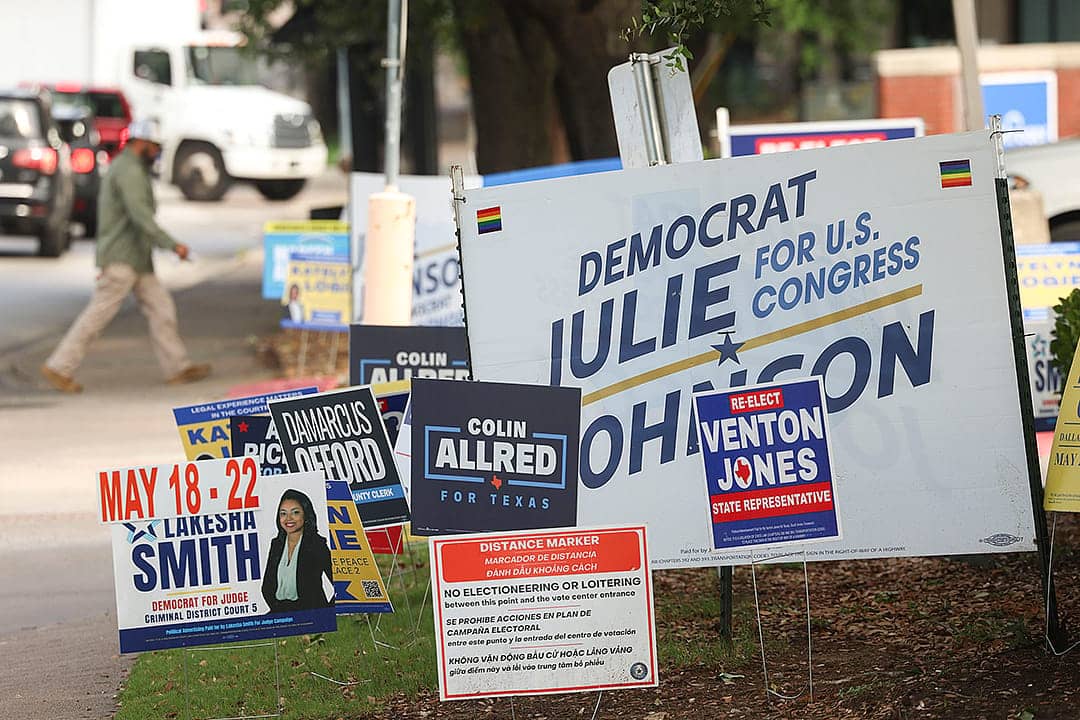

Survey Results Challenge Digital-First Assumptions
A recent survey has identified Generation Z as the demographic most receptive to displaying political yard signs, a finding that diverges from long-held assumptions about how younger voters engage with electoral campaigns. The data suggests that despite the widespread belief that digital platforms are the primary arena for youth political participation, physical signage remains a significant point of engagement for this group.
The survey results indicate a shift in how political advertisers might need to approach younger voters during the upcoming election cycle. While it has been a standard strategy for campaigns to target older demographics through direct mail and traditional advertising, the new findings suggest that Gen Z individuals are more likely than other age groups to put up yard signs supporting candidates or causes.
This information comes from UPrinting, which released the survey data regarding the 2026 election cycle. The company’s analysis highlights a specific behavior among younger adults that contrasts with the typical narrative of online-only activism. The presence of political signage in residential areas is often viewed as a tangible indicator of grassroots support, and the survey suggests this form of expression is particularly strong among Gen Z voters.
Record Spending Targets Traditional Channels
The 2026 election cycle is projected to see record-breaking financial investment from political advertisers. According to AdImpact, total spending by political advertisers will reach an estimated $11.6 billion during this period. This surge in funding reflects the intense competition among campaigns to capture voter attention across all demographics.
Historically, the allocation of these funds has been guided by the assumption that younger voters are primarily engaged online, while older voters are more responsive to traditional mail and physical advertising. Political advertisers have long operated on the premise that digital media is the most effective tool for reaching Gen Z and Millennial voters, whereas direct mail remains the superior method for connecting with Baby Boomers and older generations.
The projected $11.6 billion spending figure underscores the high stakes of the 2026 election. AdImpact’s projection indicates that advertisers are chasing this long-running assumption about media consumption habits. The massive influx of capital suggests that campaigns are preparing to deploy a multi-channel strategy, but the new survey data introduces a complication for those relying solely on digital targeting for younger audiences.
Implications for Campaign Strategy
The convergence of record spending and shifting voter behavior creates a complex landscape for political strategists. If Generation Z is indeed the most receptive group to yard signs, campaigns may need to reallocate resources from purely digital efforts to include more traditional, physical outreach methods in residential neighborhoods.
UPrinting’s survey data provides specific evidence that Gen Z voters are willing to display political support in their immediate physical environment. This behavior contradicts the generalized view that younger demographics ignore physical mail and signage in favor of social media feeds.
The 2026 election will likely see advertisers testing these assumptions as they deploy their $11.6 billion budgets. The tension between the digital-first strategy for youth and the traditionalist approach for older voters is a central dynamic of modern campaigning. The survey findings suggest that this dichotomy may be less distinct than previously thought, with younger voters demonstrating a willingness to engage with physical political materials.
Demographic Divides in Political Expression
The survey highlights a specific demographic divide in how different age groups express their political preferences. While older voters have traditionally been the primary recipients of direct mail campaigns, the new data indicates that younger voters are not exclusively confined to digital spaces.
Gen Z’s receptiveness to yard signs suggests that physical visibility remains a powerful motivator for this group. This finding adds nuance to the understanding of youth political engagement, which is often characterized by online activism and digital organizing.
The 2026 election cycle will provide a real-world test of these survey results. As advertisers spend record amounts to reach voters, the effectiveness of yard signs among younger demographics will be closely monitored. The $11.6 billion spending projection by AdImpact indicates that the industry is preparing for a highly competitive environment where every demographic segment is being targeted with increasing intensity.
UPrinting’s report serves as a key data point in this evolving landscape. By identifying Gen Z as the most likely group to display political signs, the survey challenges the uniform application of digital-only strategies for young voters. Campaigns will need to consider whether the cost-effectiveness of yard signs among younger adults justifies their inclusion in broader advertising mixes alongside traditional mail and digital ads.
Future Outlook for Political Advertising
The intersection of high spending and changing voter behavior will likely influence how political messages are delivered in 2026. The assumption that older voters look through mailboxes while younger voters scroll through feeds is being questioned by the survey data.
If Gen Z continues to demonstrate a strong preference for physical yard signs, advertisers may adjust their targeting algorithms and material distribution strategies. The $11.6 billion budget will be distributed across various media, but the specific allocation between digital and traditional channels for youth demographics may shift based on evidence like this survey.
The findings from UPrinting provide a counter-narrative to the dominant digital-first paradigm. They suggest that physical political expression is not obsolete among younger generations. As the 2026 election approaches, the effectiveness of yard signs among Gen Z will be a critical metric for political advertisers seeking to maximize the impact of their record spending.