


Iowa Lawmakers Reverse Stance on Iran Military Authority
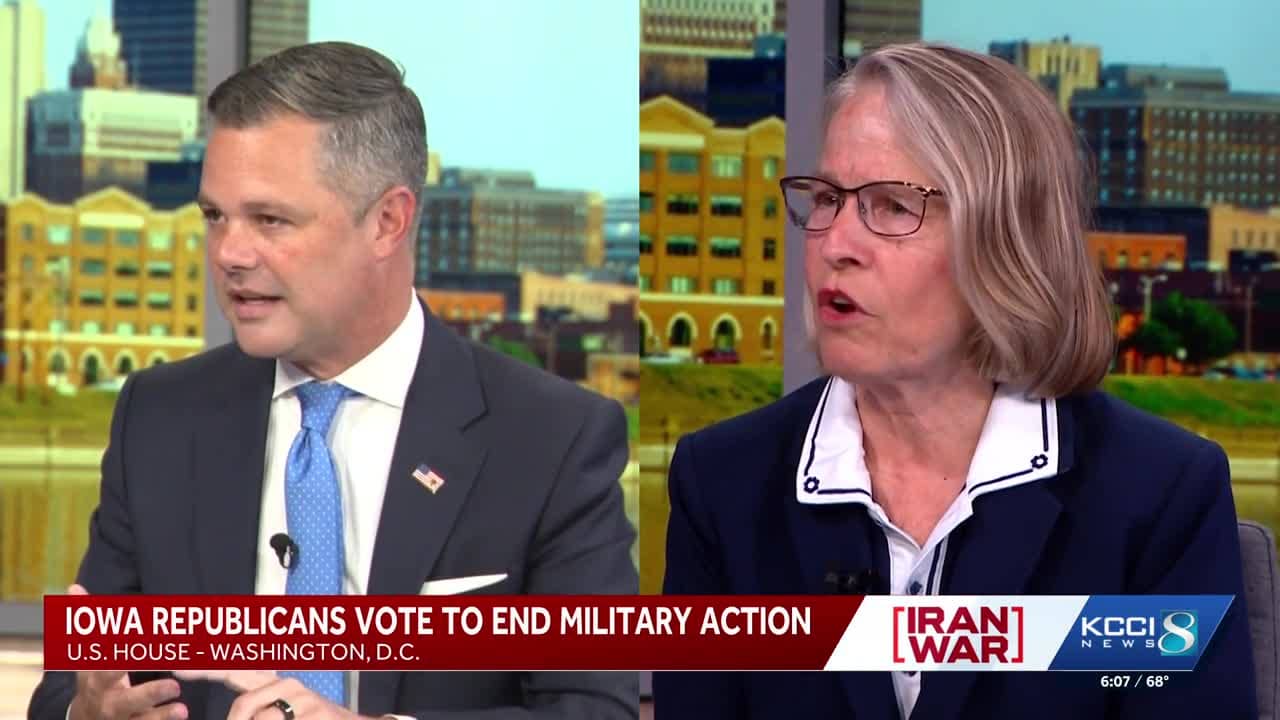
U.S. Representatives Zach Nunn and Mariannette Miller-Meeks, both Republicans representing Iowa, cast votes Tuesday to require congressional approval for continued U.S. military action against Iran. This legislative maneuver saw them diverge from the established position of former President Donald Trump on executive authority in foreign policy. The measure ultimately passed with significant bipartisan backing, including the support of Democrats and a small contingent of seven House Republicans, including Nunn and Miller-Meeks.
This vote marks a notable reversal in the legislative strategy for both Iowa lawmakers. Previously, Nunn and Miller-Meeks had opposed similar efforts to limit military action in Iran on two separate occasions, according to reporting by KCCI Television. The timing of this shift is particularly salient, occurring less than two months before Election Day, which places the decision squarely within the immediate context of the upcoming midterm elections.
A Sudden Legislative Reversal
The decision by Representatives Nunn and Miller-Meeks to support a measure requiring congressional authorization for ongoing military operations in Iran represents a significant departure from their prior voting record. Their previous opposition to similar efforts underscores the gravity of their current stance, suggesting an evolving perspective on the scope of executive power in military engagements or the specific geopolitical situation with Iran.
The legislation itself aims to enforce statutory requirements that the executive branch seek legislative consent for prolonged military actions. By joining a limited group of House Republicans who sided with Democrats on this issue, Nunn and Miller-Meeks contributed to a rare bipartisan alignment on war powers, particularly one that implicitly challenges the broad executive authority often asserted by former President Trump.
Midterm Pressures Shape Foreign Policy Decisions
The political landscape surrounding this vote is defined by the high stakes of the upcoming midterm elections. Both Zach Nunn and Mariannette Miller-Meeks are currently defending seats that political analysts have characterized as "toss-ups" in some of the country's closest congressional races. The proximity of their vote to Election Day has intensified scrutiny on the intersection of foreign policy decisions and domestic electoral politics.
KCCI reporter Amanda Rooker specifically noted that the break with Trump could carry significant implications for Iowa's midterms, given the highly competitive nature of the races both representatives are engaged in. In such closely contested districts, every legislative decision, especially one pertaining to war and peace, is subject to intense examination by voters and political opponents alike.
Explaining the Shift Amidst Scrutiny
Both lawmakers addressed the potential influence of the impending election on their legislative choices. In statements reported by KCCI, they asserted that political considerations did not drive their decisions. Instead, they attributed their support for the measure to "the circumstances surrounding the" situation regarding Iran. This explanation suggests a focus on the evolving geopolitical realities or new information that, in their view, necessitated a change in approach.
However, the timing of the vote inevitably invites questions about the balance between principled legislative action and the pragmatic realities of a re-election campaign. For lawmakers in "toss-up" races, navigating issues of party loyalty, alignment with presidential figures, and constituent concerns, particularly on matters of potential military conflict, presents a complex challenge.
Constitutional Debates Over War Powers
The measure passed by the House, which requires congressional approval for continued military action against Iran, directly engages with the long-standing constitutional debate over war powers in the United States. The U.S. Constitution grants Congress the power to declare war (Article I, Section 8), while designating the President as Commander-in-Chief. This division of authority has historically led to tension between the legislative and executive branches, particularly concerning the initiation and continuation of military engagements.
Supporters of the measure, including Nunn and Miller-Meeks in this instance, argue that it upholds the Constitution's allocation of war powers to Congress. They contend that legislative consent for prolonged military actions is essential for maintaining checks and balances and preventing unilateral executive decisions that could commit the nation to extended conflicts without the explicit approval of the people's representatives.
Divergent Views on Executive Authority
The vote by Nunn and Miller-Meeks to require congressional authorization directly contradicted the stance often adopted by President Donald Trump, who generally favored broad executive discretion in foreign policy and military matters. While President Trump has not issued a direct public response to the specific votes cast by Nunn and Miller-Meeks in the provided source material, the act of breaking with a former president highlights a fracture within the Republican caucus regarding the scope of presidential power in military engagements.
Critics of such measures, often aligned with the executive branch, typically view congressional requirements for military action as potential impediments to rapid executive response in times of crisis. They argue that the President, as Commander-in-Chief, needs the flexibility and speed to protect national interests without being constrained by potentially slow legislative processes. The bipartisan support for this particular measure, despite the limited Republican dissent from the typical executive-friendly stance, underscores the persistent nature of this constitutional debate.
Electoral Ramifications in Competitive Districts
While Representatives Nunn and Miller-Meeks stated that political considerations did not influence their vote, the electoral context remains a defining feature of the legislation's passage. Both lawmakers face re-election challenges in districts considered highly competitive, where every public action is scrutinized by voters, political opponents, and media alike.
The KCCI report indicates that the break with Trump is being monitored closely by political observers, suggesting that its potential impact on voter sentiment is a key area of interest. For Nunn and Miller-Meeks, their assertion that "the circumstances surrounding the" situation dictated their vote stands as their primary explanation for the reversal, distinguishing their stated motivation from purely electoral calculations. However, how this explanation resonates with different segments of the Iowa electorate – from Trump loyalists to independent voters concerned about military interventions – will be crucial in determining the ultimate electoral impact of their decision in November.