

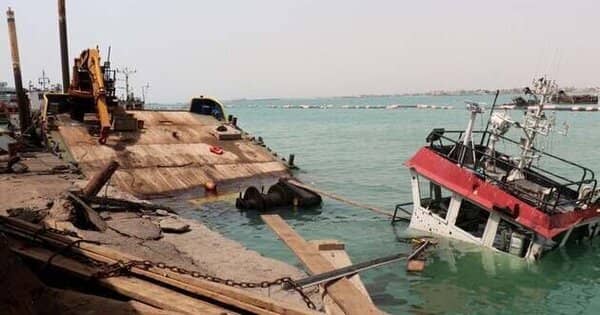

Human Rights Watch Identifies Likely War Crimes in Maritime Attacks
Human Rights Watch stated on Monday that recent Houthi attacks on commercial vessels in the Red Sea and the Gulf of Aden most likely amount to war crimes in at least three cases. The organization released its assessment from Beirut, highlighting concerns over the safety of seafarers amid escalating hostilities in one of the world's busiest shipping lanes.
Niku Jafarnia, Yemen and Bahrain researcher at Human Rights Watch, emphasized that attacks on civilians or civilian objects, whether intentional or reckless, are considered war crimes under international law. The group noted that the Houthis' latest actions have put seafarers' lives at deadly risk as part of their ongoing hostilities with the Saudi-led coalition.
"Whatever the geopolitics, attacks on civilian crews carried out deliberately or recklessly are war crimes," Jafarnia said. The organization stressed that the nature of the targets—commercial ships carrying goods rather than military personnel—raises significant legal questions regarding the principles of distinction and proportionality, which are fundamental to the laws of armed conflict. These principles require parties to a conflict to distinguish between combatants and civilians, and between military objectives and civilian objects, and to ensure that any attack is proportionate to the anticipated military advantage, minimizing harm to civilians and civilian objects.
Legal Framework for Attacks on Civilian Shipping
International humanitarian law, also known as the laws of war, strictly prohibits attacks targeting civilians or civilian infrastructure. War crimes include any grave breaches of the Geneva Conventions and other serious violations of the laws and customs applicable in international armed conflict, or in non-international armed conflict, when committed as part of a plan or policy or as part of a large-scale commission of such crimes. Human Rights Watch's assessment underscores that even in the context of a broader conflict, specific acts against commercial vessels and their crews can cross the threshold into war crimes, regardless of the Houthis' stated justifications for their broader campaign.
Houthi Maritime Embargo Triggers Red Sea Attacks
The reported attacks followed a significant announcement made by the Houthis on July 20, 2026. On that date, the group declared a maritime embargo on Saudi Arabia, citing it as a direct response to what they described as a Saudi sea and air blockade on Yemen. The Houthis, who control the northwestern part of the country, have consistently accused the Saudi-led coalition of imposing severe restrictions on the flow of goods and aid into Yemen, exacerbating a dire humanitarian crisis.
As of August 24, the Houthis reported targeting at least nine vessels since the July 20 announcement of their embargo. Human Rights Watch specifically identified that the new attacks targeted at least two Saudi-flagged vessels, a Tanzania-flagged vessel, and a Dominica-flagged vessel, illustrating the international scope of the incidents and the diverse nationalities of ships navigating these vital waterways.
Documenting Specific Vessel Strikes
Saudi and Yemeni authorities, along with a shipping company and a ship's master, confirmed four of these attacks. The affected vessels were identified as the Encelia, Daisy, Tihamah, and Amzan. These confirmations from multiple independent sources lend significant weight to the reports of these incidents.
Crucially, the Houthis claimed there was a military objective only in the attack on the Tihamah. The group stated that the vessel was carrying Saudi military equipment, attempting to justify the strike under the laws of armed conflict. However, for the other confirmed incidents involving the Encelia, Daisy, and Amzan, no such military justification was provided by the Houthi forces. This distinction is central to Human Rights Watch's assessment, as the absence of a legitimate military target would render attacks on these vessels clear violations of international law.
In addition to the confirmed attacks on the four vessels, the Saudi Press Agency, Saudi Arabia's official state news agency, and a vessel's operating company provided further details regarding other incidents. On July 24, these entities stated that the NCC Ma was also targeted, though specific details regarding its flag or cargo were not fully elaborated in the initial report. The continuous stream of reports from official and commercial sources underscores the heightened risk to commercial shipping in the region following the Houthi declaration.
Global Shipping Lanes Face Heightened Risk
The assessment by Human Rights Watch underscores the potential legal consequences of the Houthi campaign against commercial shipping. The group's declaration of a maritime embargo has led to multiple incidents involving civilian-owned vessels, raising alarms among international observers and maritime safety organizations about the precedent these actions could set for global trade and security.
The confirmation of attacks on vessels flagged in Saudi Arabia, Tanzania, and Dominica illustrates the geographic spread of the conflict's impact beyond immediate combat zones. The involvement of multiple national flags suggests that the hostilities are not merely confined to direct belligerents but are significantly affecting international trade routes and the safety of seafarers from various nations. This broader impact necessitates a robust international response to uphold the freedom of navigation and protect civilian maritime activity.
Saudi authorities have responded to the attacks through official channels, including the Saudi Press Agency, which has documented the incidents and their impact on commercial operations. The confirmation by shipping companies and ship masters adds a layer of independent verification to the claims made by both the Houthis and Saudi officials, providing crucial evidence for any future legal proceedings or international investigations into these incidents.
The distinction drawn by the Houthis between the Tihamah, which they claimed held military equipment, and other vessels remains a focal point for legal analysis. Human Rights Watch's position that attacks on civilian objects constitute war crimes regardless of the broader geopolitical context provides a clear framework for evaluating these specific incidents under international humanitarian law, emphasizing accountability for actions that endanger civilian lives and commercial shipping.