


Economic Corridors Reshape Regional Geopolitics
JERUSALEM — The prominence of the India-Israel-United Arab Emirates-United States grouping, known as I2U2, alongside the India-Middle East-Europe Economic Corridor (IMEC), signals a significant shift in how regional stability is maintained and economic integration is fostered, according to a report published in The Jerusalem Post. These interwoven initiatives demonstrate a powerful convergence of economic ambition and regional security imperatives, positioning India as a central and increasingly influential actor in the Middle East's evolving geopolitical landscape.
The report argues that the region is no longer shaped solely by traditional military alliances or the perpetual ebb and flow of power balances. Instead, the future of the Middle East is being actively redefined by the strategic development of economic corridors, the forging of robust technological partnerships, the establishment of resilient supply chains, and the enhancement of critical connectivity. At the very heart of this transformative process, the report identified India as one of the few nations possessing the unique capacity and diplomatic capital to effectively link major global players such as the United States and Israel with key Middle Eastern economies like the UAE and, increasingly, Saudi Arabia.
This strategic reorientation in the Middle East coincides with observable shifts in American foreign policy priorities. The report noted that Washington is actively seeking dependable and capable partners to help preserve regional stability and deter potential adversaries, while simultaneously signaling an intention to reduce its direct military footprint and the associated resource commitments. In this evolving dynamic, India has adeptly positioned itself as a trusted and pragmatic actor, demonstrating a remarkable ability to engage constructively across diverse political divides without demanding ideological convergence from its partners. This neutrality and reliability make India an attractive partner for nations seeking stable, long-term relationships.
The I2U2 initiative, formally launched in July 2022, initially focused on six key areas of cooperation: food security, water security, energy, transportation, space, and health. Its subsequent development and the conceptualization of IMEC, announced during the G20 Summit in September 2023, underscore a shared vision for enhanced connectivity and economic development that transcends immediate geopolitical challenges. IMEC, in particular, aims to create a vast network of trade and transport routes connecting India to Europe via the UAE, Saudi Arabia, Jordan, Israel, and Cyprus, promising to significantly reduce transit times and costs for goods.
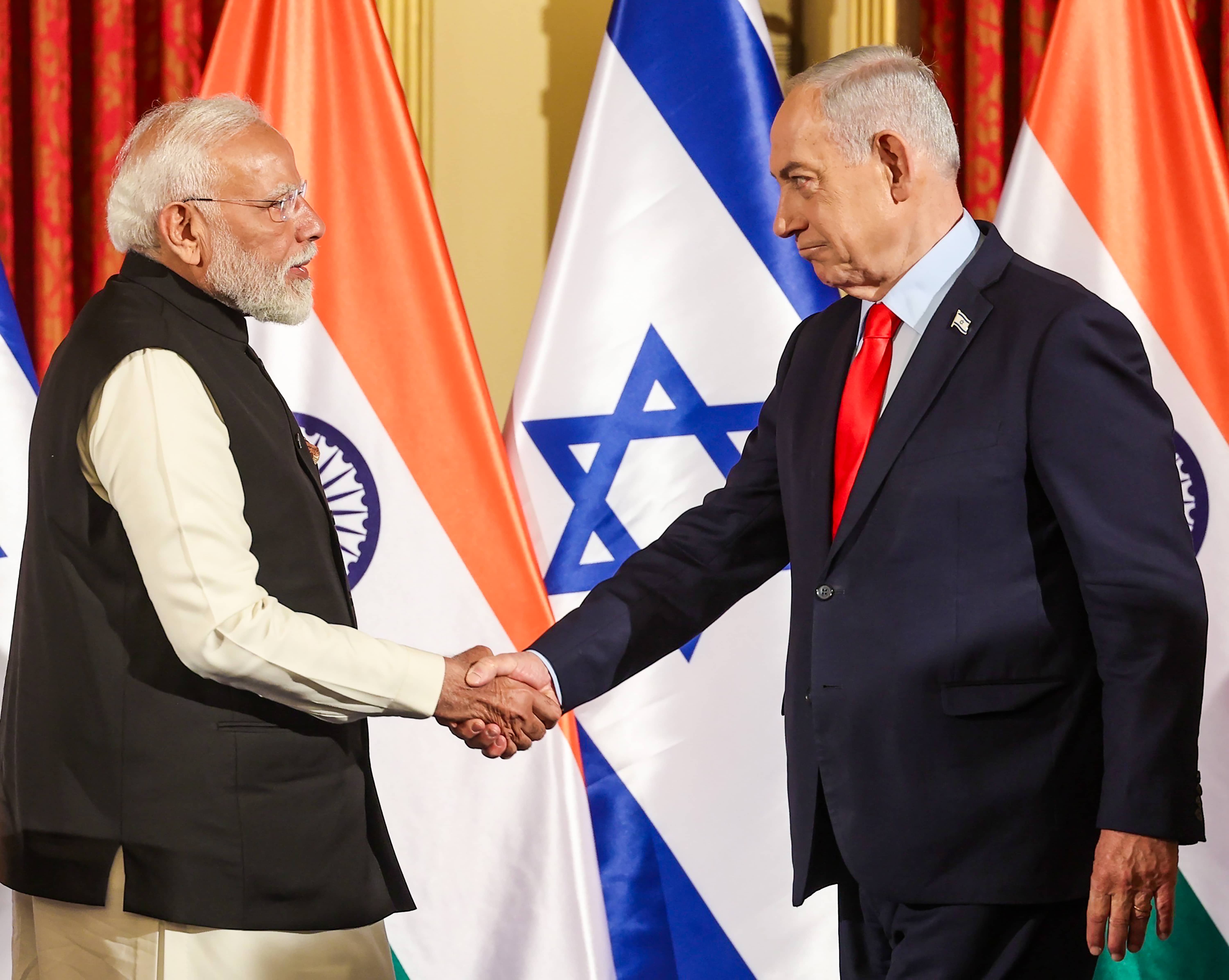
Deepening Ties Between Israel and India
The report emphasized that for Israel, the growing prominence of these multilateral partnerships represents far more than a mere diplomatic milestone or a series of bilateral agreements. It presents a strategic opportunity to anchor itself firmly within a broader, more encompassing framework that adeptly combines Israel's renowned innovation and technological prowess with substantial Gulf investment, the enduring leadership of the United States, and India's formidable economic weight and market access. This synergistic approach aims to foster a more stable and prosperous regional environment.
According to the report, the multifaceted partnership between India and Israel has experienced a dramatic and sustained expansion over the past three decades, evolving from a primarily defense-centric relationship into a comprehensive strategic alliance. While defense procurement and collaboration in security technologies remain a significant component of the bilateral engagement, cooperation has now broadened to encompass an extensive array of critical sectors. The report specifically listed counterterrorism strategies, intelligence sharing protocols, advanced cybersecurity solutions, agricultural innovation and water management techniques, the development of artificial intelligence capabilities, cutting-edge space technology, transformative healthcare solutions, and the nurturing of vibrant start-up ecosystems as key areas of burgeoning collaboration.
The Jerusalem Post highlighted that this deepening bond allows Israel to effectively integrate its world-leading technological capabilities with the significant economic resources and investment potential of its Gulf neighbors, all under the strategic umbrella and endorsement of the United States. The report further suggested that India's active involvement in these initiatives provides a crucial stabilizing force, acting as a bridge that helps to overcome traditional geopolitical divides and historical animosities within the region. This Indian role is seen as vital for building trust and facilitating deeper cooperation.
Gulf States View India as Strategic Partner
The report indicated that the perspective of key Gulf states, particularly the United Arab Emirates and Saudi Arabia, toward New Delhi has undergone a profound evolution. These nations increasingly regard India not merely as a vital and growing energy market, but as an indispensable long-term strategic partner with whom they can build shared prosperity and security.
This significant reclassification of India's role is largely driven by its consistent and rapid economic growth, its burgeoning technological sector, and its proven ability to serve as a crucial bridge connecting Western economic powers with the dynamic markets of the Middle East. The report argued that India offers one of the world's fastest-growing major economies, making it an essential and highly attractive component of any ambitious regional economic strategy aimed at diversification and sustained development. Its large consumer base and expanding industrial capacity present unparalleled opportunities for trade and investment.
The I2U2 grouping serves as a formal and effective mechanism for fostering this complex, multi-lateral cooperation. By strategically including Israel and the UAE alongside the United States and India, the framework is designed to address shared regional and global challenges through pragmatic economic means, offering an alternative to traditional military interventions. The IMEC initiative further amplifies this vision of enhanced connectivity, explicitly linking the Middle East to Europe through significant Indian participation and investment, thereby creating new trade arteries and economic opportunities.
The report concluded that these interconnected developments underscore the emergence of a new era of strategic engagement and economic interdependence in the Middle East. As global powers continue to adjust their foreign policy doctrines and strategic priorities, India's multifaceted role as a vital connector, a reliable economic partner, and a stabilizing force within the region is demonstrably expanding, powerfully supported by its deepening diplomatic and economic ties with both influential Western nations and key Gulf states.