


Strategic Partnership Evolution and Regional Stability
Tokyo/New Delhi, July 23 — The outcomes of the India-Japan annual summit demonstrate that ties between two nations have moved beyond traditional economic cooperation towards a comprehensive strategic partnership. This development was detailed in reports following the event held at Hyderabad House in New Delhi on July 2.
The summit represented not only an expansion of bilateral ties but also an important geopolitical development intended to reinforce regional stability and democratic partnerships within the Indo-Pacific region. A report has detailed that these outcomes included issuing a warning against coercive behaviour in Asia-Pacific geopolitics.
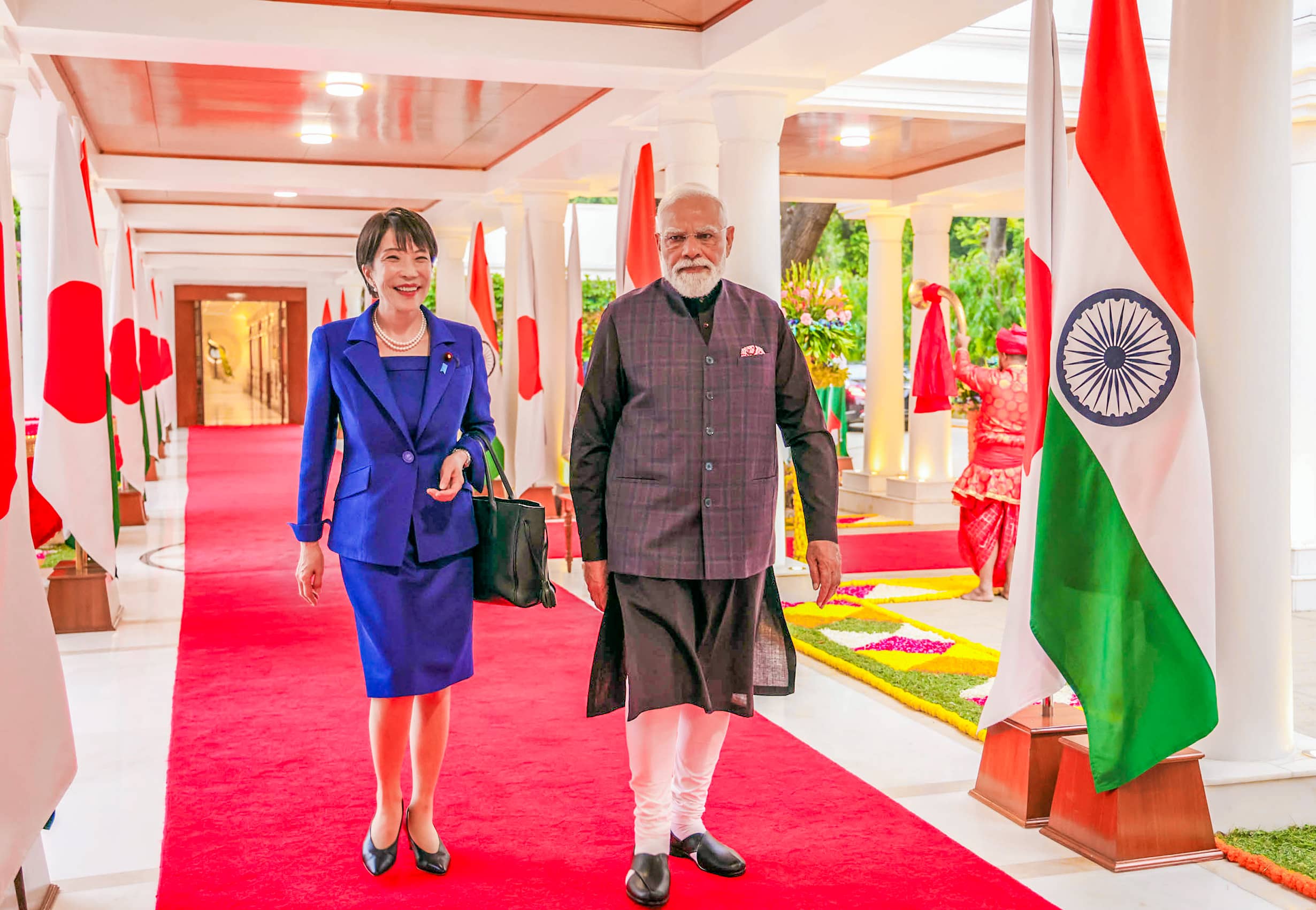
During the 16th Annual India-Japan Summit, Prime Minister Narendra Modi of India and his Japanese counterpart Sanae Takaichi discussed the full spectrum of bilateral ties. Their discussions covered trade and investment, economic security, energy, emerging technologies, defence cooperation, and people-to-people exchanges.
Both leaders also spoke about regional and global developments of mutual interest. Following these talks, Prime Minister Modi and Sanae Takaichi witnessed the exchange of key Memoranda of Understanding (MoUs) and agreements spanning economic security, clean energy, critical technologies, and research and development sectors.
Economic Security Dimensions and Supply Chain Concerns
The summit introduced a new dimension focused on economic security. This initiative aims specifically at reducing reliance on China for critical minerals and supply chains according to the details provided in reports covering the event.
Amid rising geopolitical uncertainty in the Indo-Pacific, the India-Japan bilateral breakthrough sends a clear signal regarding regional dynamics. The report notes that unilateral attempts to alter the regional status quo will face coordinated resistance from these democratic partners.
Diplomatic Statements on Maritime Security
Prime Minister Sanae Takaichi's remarks marked one of the summit's most significant strategic outcomes according to Pema Gyalpo, writing in Japan Forward. She expressed serious concern about China's increasingly assertive actions during her address.
Pema Gyalpo added that these concerns included growing militarisation of disputed maritime features and unilateral attempts to alter the status quo by force or coercion. These specific allegations regarding security situations were detailed as part of the summit proceedings in the East and South China Sea regions.
Alongside Prime Minister Narendra Modi, Sanae Takaichi expressed serious concern about these developments. Both leaders conveyed opposition to any actions threatening freedom of navigation within their respective maritime domains during discussions held at the Hyderabad House venue on July 2nd.
Bilateral Cooperation Framework and Future Outlook
The exchange of Memoranda of Understanding (MoUs) covered a wide array of sectors including economic security, clean energy initiatives, critical technologies development, and research projects. These agreements were signed by both Prime Ministers as part of the summit agenda.
Reports indicate that these bilateral breakthroughs are viewed through the lens of reinforcing regional stability within the Indo-Pacific framework. The comprehensive strategic partnership established during this 16th Annual India-Japan Summit is being analyzed for its implications on broader geopolitical dynamics in Asia and beyond.
The summit outcomes demonstrate a continued evolution from traditional economic cooperation towards deeper strategic integration between New Delhi and Tokyo. This shift reflects changing priorities regarding security architecture and supply chain resilience in the current international environment.