

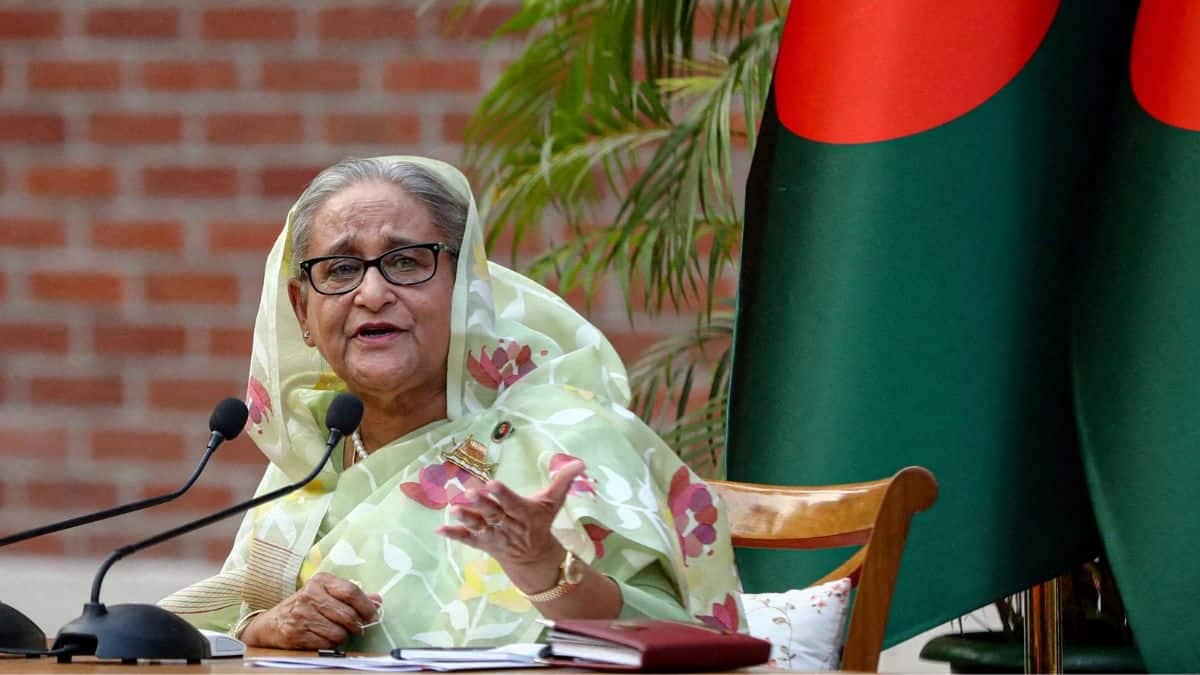

Geopolitical Implications of Political Leadership Changes
The political landscape in South Asia has shifted significantly with the reported return of Sheikh Hasina to Bangladesh. According to analysis published by Firstpost, this development presents a distinct strategic advantage for India. The publication argues that the geopolitical benefits for New Delhi are inherent to the situation itself, independent of any future electoral or political outcomes for the former prime minister.
Firstpost asserts that whether Sheikh Hasina succeeds in reviving her political career or fails in these endeavors, the structural position of India remains favorable. The argument posits that the mere presence and potential re-engagement of a leader with established ties to New Delhi creates a more predictable environment for bilateral relations compared to the uncertainty associated with other political actors.
Assessment of Bilateral Relations Under Former Leadership
The core of the argument rests on the nature of the relationship between India and Bangladesh during Sheikh Hasina's previous tenure as prime minister. Firstpost suggests that her return aligns with Indian strategic interests, implying a continuity in policy approaches that New Delhi has historically favored. The publication frames the situation not merely as a change in leadership, but as a restoration of a specific diplomatic framework.
Strategic Predictability and Regional Stability
Analysts cited in the report highlight that India benefits from the return regardless of the practical success of Hasina's political maneuvers. This perspective suggests that the potential for instability or policy divergence under alternative leadership scenarios is perceived as a greater risk to Indian interests than the challenges associated with Hasina's political revival. The benefit is described as structural rather than contingent on immediate political victories.
The report indicates that New Delhi views the return as a mechanism to secure its northeastern borders and manage cross-border dynamics more effectively. By favoring a leader with whom diplomatic channels were well-established, India reduces the transaction costs of diplomacy in the region. Firstpost notes that this advantage exists irrespective of whether Hasina can rebuild her domestic political base or maintain long-term governance.
Analysis of Political Outcomes and Indian Gains
The publication explicitly states that the outcome of Sheikh Hasina's attempt to revive her political career does not negate the benefits accrued by India. This stance separates the immediate geopolitical gain from the longer-term viability of the leader's political project. The argument is that New Delhi's strategic posture is strengthened by the mere possibility or reality of her influence, creating a lever for diplomatic engagement.
Firstpost contends that this dynamic offers India a dual advantage. If Hasina succeeds in regaining power or significant influence, India gains a partner with whom it has deep historical ties. If she fails to revive her career but remains a central figure in Bangladeshi politics, her presence still serves as a counterweight to other political forces that may be less aligned with New Delhi's preferences.
The article suggests that this flexibility allows India to navigate the complex domestic politics of Bangladesh without being fully dependent on a single outcome. The benefit is derived from the reduction of uncertainty in bilateral relations. By supporting or acknowledging a return that aligns with its interests, India positions itself as a key stakeholder in the region's stability.
Regional Security and Diplomatic Posture
The analysis extends to broader regional security concerns. Firstpost implies that a political environment influenced by Sheikh Hasina is more conducive to Indian security objectives than alternative scenarios. This includes issues related to border management, counter-terrorism cooperation, and economic connectivity projects that have faced delays or opposition in the past.
The publication does not detail specific military or intelligence operations but focuses on the diplomatic utility of leadership alignment. The argument is that New Delhi's strategic calculus favors a return that reinforces existing bilateral frameworks. This preference is described as a consistent benefit, regardless of the personal political fortunes of the former prime minister.
By framing the situation in this manner, Firstpost suggests that India's foreign policy apparatus has identified a clear path to securing its interests through diplomatic engagement with a familiar political figure. The benefit is characterized as inherent to the geopolitical configuration created by Hasina's return, rather than a result of specific policy agreements or immediate political victories.
Implications for Future Bilateral Dynamics
The report concludes that the advantage for India is robust and multifaceted. It does not rely on the assumption that Sheikh Hasina will govern effectively or retain power indefinitely. Instead, it posits that her return alters the strategic landscape in a way that favors New Delhi's long-term interests.
This perspective suggests that Indian policymakers are prepared to engage with Bangladesh under various political scenarios involving Hasina, recognizing that each outcome offers some degree of diplomatic utility. The benefit is thus described as resilient to the volatility of Bangladeshi domestic politics, providing India with a stable foundation for its regional strategy.
Firstpost's analysis indicates that this advantage persists regardless of the specific political trajectory Sheikh Hasina chooses or is forced into. The mere existence of her return as a political reality serves Indian interests by maintaining a link to a period of closer bilateral ties and reducing the influence of actors perceived as less favorable to New Delhi.