


Shifting Alliances Amidst Geopolitical Uncertainty
The geopolitical landscape of the Indo-Pacific is currently undergoing a period of redefinition. With Washington's commitment to regional security appearing shrouded in uncertainty, and China continuing to flex its military muscle across contested waters, new configurations for cooperation are being debated among key stakeholders.
Amidst this backdrop of shifting priorities, there is active discussion regarding the potential formation of a triad between India, Australia, and Japan. This proposed grouping represents a significant strategic consideration should the United States reduce its direct involvement in the Quad framework. Experts suggest that such an arrangement could emerge as a defining force within the broader Indo-Pacific architecture.
Current events highlight the urgency of these diplomatic maneuvers. The recent visit of Japanese Prime Minister Sanae Takaichi to New Delhi occurs specifically at a time when traditional security guarantees are being scrutinized by policymakers in both New Delhi and Tokyo. This timing underscores the critical nature of bilateral ties as external variables fluctuate.
The relationship between India and Japan has not developed in isolation but is deeply intertwined with historical diplomatic milestones that have set the stage for current strategic partnerships. The evolution from a standard annual summit to a high-level Global and Strategic Partnership illustrates the depth of engagement required to navigate complex regional challenges without relying solely on external powers.
Historical Foundations and Personal Diplomacy
The structural integrity of the India-Japan partnership rests upon foundations laid over nearly two decades. The annual summit between New Delhi and Tokyo was first held in 2006, marking a turning point in bilateral relations that sought to formalize cooperation beyond mere diplomatic courtesy.
Over time, this mechanism evolved significantly. Leaders from both nations agreed to elevate the relationship status, establishing an agreement for yearly summits conducted alternately in each other's capitals. This institutionalized rhythm of engagement ensures continuous dialogue regardless of immediate political cycles or changing administration priorities.
The 16th edition of the India-Japan annual summit was recently held in New Delhi. Officials describe this specific gathering as a watershed event, signaling new levels of ambition and integration within their strategic framework. The choice to host such gatherings annually in rotating capitals demonstrates a commitment to equality and mutual respect that characterizes modern diplomatic relations.
Personal dynamics between leaders have played an undeniable role in advancing the partnership significantly. A vibrant relationship existed between Prime Minister Narendra Modi and the late Shinzo Abe, who served as his predecessor at this level of engagement. Their personal ties steered the strategic partnership to new heights during their respective tenures.
The legacy of those earlier administrations continues to influence current interactions. The "Little Sister" remark made by Prime Minister Modi regarding Japanese Prime Minister Takaichi is seemingly an outcome of deep-rooted historical ties established under previous leaderships. Such personalization of diplomacy serves as a reminder that statecraft in the Indo-Pacific often relies on interpersonal chemistry alongside formal agreements.
Economic and Strategic Integration
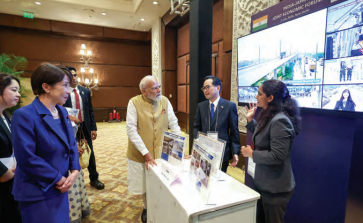
During recent high-level exchanges, leaders visited exhibitions at events such as the India-Japan Joint Economic Forum held in New Delhi. These engagements highlight how economic cooperation complements strategic alignment within the broader partnership framework.
The elevation of their relationship to a Global and Strategic Partnership was not merely symbolic but represented concrete commitments to deepen ties across multiple sectors. This comprehensive approach allows both nations to address security challenges through an integrated lens that considers economic interdependence as well as military interoperability.
Challenges Posed by Regional Powers
The current strategic environment presents specific challenges that necessitate robust bilateral frameworks independent of fluctuating external commitments. China's continued assertion of military capabilities in the region demands coordinated responses from like-minded democracies seeking to maintain a rules-based order.
Simultaneously, uncertainty regarding Washington's long-term commitment to Indo-Pacific security has prompted India and Japan to explore alternative configurations for regional stability. The potential triad involving Australia represents one such avenue being actively discussed among policymakers in New Delhi, Tokyo, and Canberra.
The timing of Prime Minister Takaichi's visit cannot be overstated as it coincides with critical junctures where traditional security architectures are under stress. This convergence of factors—China's military assertiveness combined with questions about US commitment—creates a unique window for India-Japan-Australia cooperation to take shape.
While the full details of how such a triad might operate remain subject to ongoing discussions, the groundwork laid by decades of annual summits and personal diplomacy provides a stable foundation. The recent watershed event in New Delhi suggests that both nations are prepared to adapt their strategic frameworks as geopolitical realities evolve.