

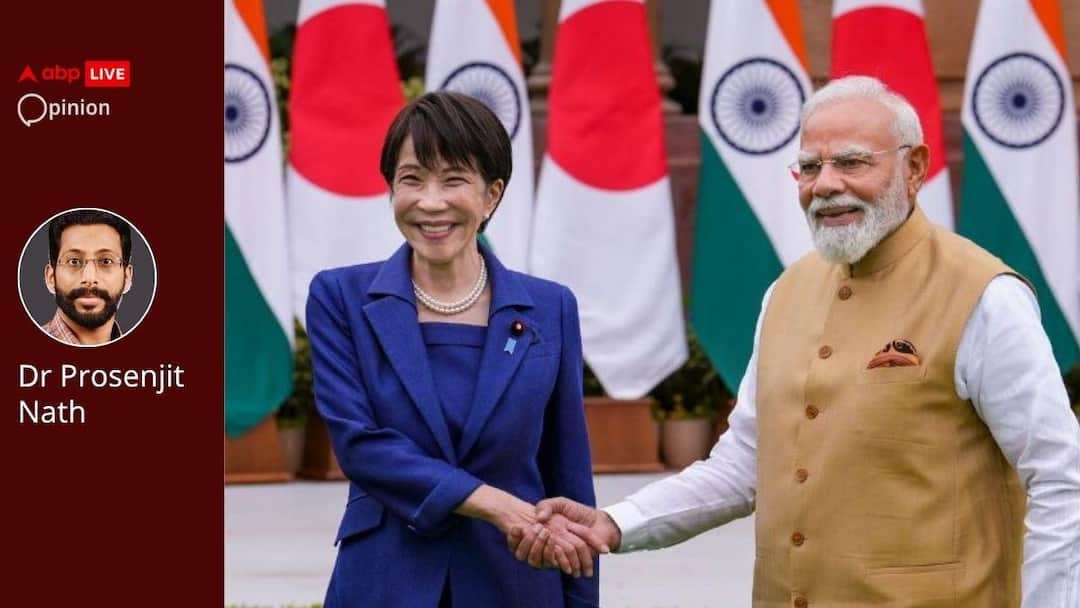

Japan's Prime Minister Sanae Takaichi's visit to India occurs during a period of significant geopolitical shifts in the Indo-Pacific. These shifts include uncertainty over US commitments, China's expanding influence, and the rise of competing strategic blocs. Tokyo seeks reliable partners to maintain a favorable power balance in Asia, with India being a key consideration due to its economic growth, military strength, and strategic location.
The Scope Of Strategic Discussions Between New Delhi And Tokyo
The discussions between Prime Minister Narendra Modi and Japanese Prime Minister Sanae Takaichi covered an impressive range of issues from economic security, semiconductor manufacturing, artificial intelligence, energy cooperation, and critical minerals to defence collaboration. These are all areas where India and Japan possess complementary strengths.Yet behind the language of economic cooperation lies a larger strategic objective: Japan wants India to become a more active pillar of its Free and Open Indo-Pacific (FOIP) strategy, which increasingly revolves around balancing China's growing power.
The Question Of Strategic Autonomy In A Multipolar Order
The question for India is not whether closer ties with Japan are desirable—they undoubtedly are. The real question is whether India should allow these ties to evolve into an overt anti-China alignment. The answer should be a cautious but firm no.
India's foreign policy has traditionally been guided by strategic autonomy rather than alliance politics. This principle has survived the Cold War, the unipolar moment dominated by the United States, and today's increasingly multipolar international order.
Unlike treaty allies of Washington such as Japan, Australia, or South Korea, India has consistently resisted joining formal military alliances.
Takaichi’s Visit Underscores The Importance Of Independent Cooperation
The discussions between Prime Minister Narendra Modi and Japanese Prime Minister Sanae Takaichi ranged from economic security, semiconductor manufacturing, artificial intelligence, energy cooperation, to defence collaboration. These topics reflect the breadth of potential partnership opportunities available to both nations.
Takaichi’s visit underscores the growing importance of India-Japan ties in an increasingly uncertain Indo-Pacific, but New Delhi must embrace deeper economic, technological and security cooperation without allowing its strategic autonomy to be subsumed by any bloc politics aimed at containing China.
Japan’s Strategic Calculations In The Region
Tokyo is looking for reliable partners capable of preserving a favourable balance of power in Asia. India, with its economic rise, military capabilities, and strategic location, naturally occupies a central place in Japan's calculations.
The geopolitical landscape of the Indo-Pacific is undergoing a profound transformation.
India’s Historical Approach To Foreign Policy
New Delhi has maintained its independence through various international orders. This approach distinguishes India from nations that have entered formal military alliances with Washington.
The author advises a cautious but firm “no” to India becoming an overt anti-China alignment.
Opinion Writer Perspective
This analysis is presented by Dr Prosenjit Nath. The piece was updated at 04 Jul 2026 01:11 PM (IST) according to the source metadata provided in the original article text.
The discussions between Prime Minister Narendra Modi and Japanese Prime Minister Sanae Takaichi ranged from economic security, semiconductor manufacturing, artificial intelligence, energy cooperation, critical minerals, and defence collaboration.
Strategic Autonomy As A Guiding Principle
India’s foreign policy has traditionally been guided by strategic autonomy rather than alliance politics. This principle has survived the Cold War, the unipolar moment dominated by the United States, and today's increasingly multipolar international order.
This approach allows New Delhi to engage with multiple nations without being bound by restrictive treaty obligations.
The Risk Of Bloc Politics
Japan wants India to become a more active pillar of its Free and Open Indo-Pacific (FOIP) strategy, which increasingly revolves around balancing China's growing power. The question for India is not whether closer ties with Japan are desirable—they undoubtedly are.
The real question is whether India should allow these ties to evolve into an overt anti-China alignment.