

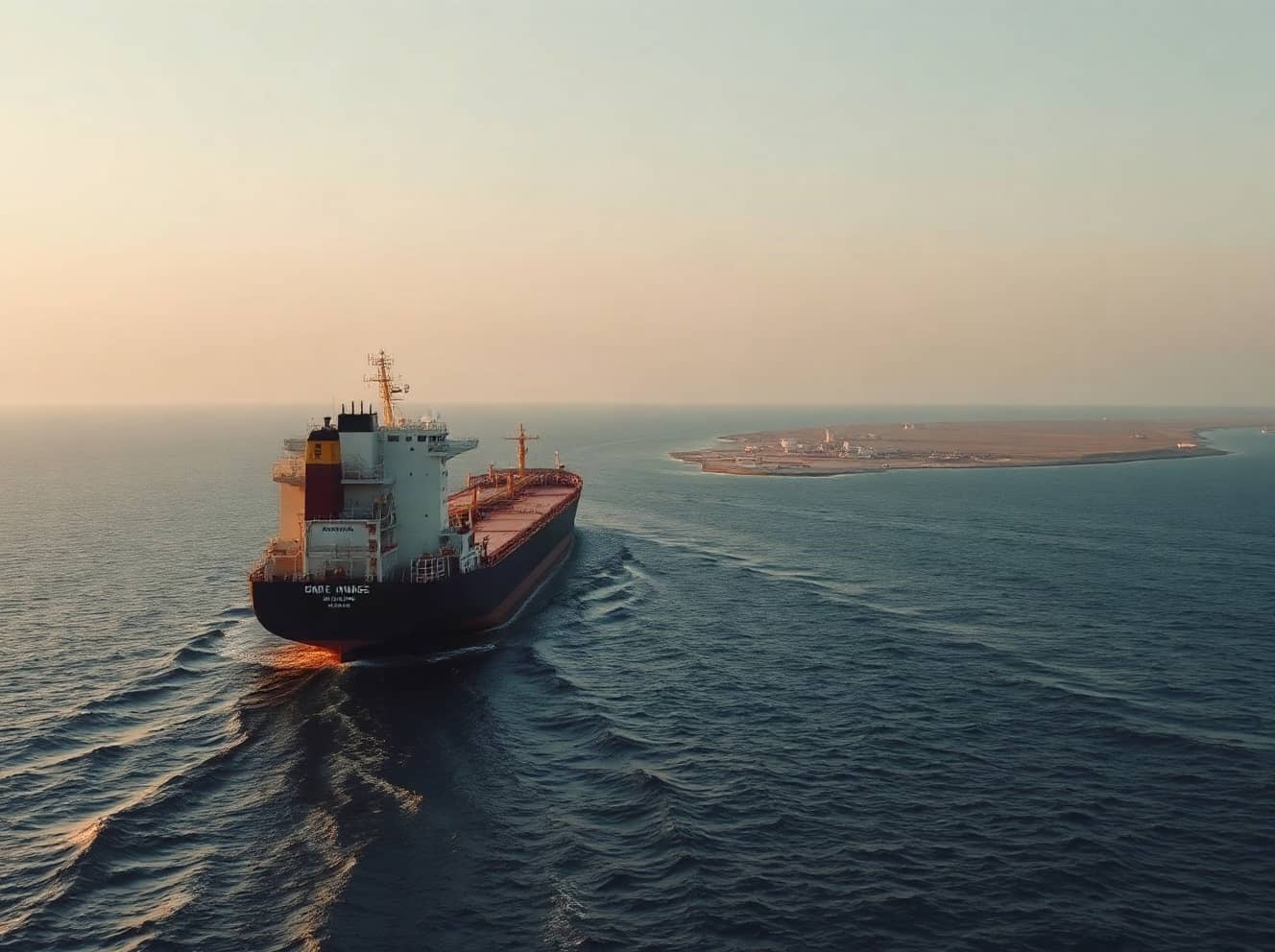

Diplomatic Efforts to Restore Maritime Transit
Iran and Oman are advancing diplomatic talks aimed at securing an interim reopening of the Strait of Hormuz, a critical maritime chokepoint for global oil shipments. According to a Bloomberg report published this week, the two nations are engaged in discussions focused on restoring normal operations within the strategic waterway. The negotiations come as regional tensions remain elevated, prompting renewed attention on the security and stability of international shipping lanes.
The Strait of Hormuz serves as a narrow passage connecting the Persian Gulf with the Gulf of Oman and the Arabian Sea. Its geographic position makes it one of the world's most important oil transit routes. The U.S. Energy Information Administration estimates that approximately 20 million barrels of crude oil and petroleum products pass through the strait daily. This volume represents roughly one-fifth of the world’s total petroleum supply, underscoring the waterway’s significance to global energy markets.
The Bloomberg report indicates that the current talks are driven by concerns over maritime security in the area. While specific details regarding the terms of any potential interim agreement were not immediately detailed in the initial reporting, the focus remains on establishing a functional framework for transit during a period of heightened regional uncertainty.
Strategic Importance and Regional Tensions
The urgency of these diplomatic efforts is linked to the broader geopolitical landscape surrounding the Persian Gulf. The region has experienced heightened tensions in recent periods, raising concerns among international observers about the potential disruption of energy supplies. The Strait of Hormuz is not merely a commercial route but a focal point for regional security dynamics involving multiple state and non-state actors.
As a narrow corridor, the strait offers limited alternatives for oil tankers and commercial vessels. Any disruption to traffic through this passage can have immediate implications for global fuel prices and supply chain logistics. The involvement of Oman, which maintains neutral diplomatic relations with both Iran and Western powers, positions the Sultanate as a key facilitator in these discussions.
Oman has historically served as a mediator in regional disputes due to its longstanding policy of neutrality. Its engagement in talks aimed at reopening the strait suggests an intent to stabilize the region’s economic infrastructure. The interim nature of the proposed reopening implies that the two nations are seeking a temporary solution to address immediate security and transit concerns while broader political issues remain unresolved.
Global Energy Implications
The potential reopening of the Strait of Hormuz would have direct consequences for global energy markets. With one-fifth of the world’s petroleum flowing through this narrow waterway, any restoration of normal traffic flow is closely monitored by international financial institutions and energy traders. The U.S. Energy Information Administration’s data on daily transit volumes highlights the scale of resources dependent on this route.
Market analysts often view stability in the Strait of Hormuz as a key indicator for energy price forecasting. Disruptions in this area typically lead to volatility in crude oil futures, affecting economies far removed from the Middle East. The current talks between Iran and Oman are therefore viewed through the lens of economic stability as much as diplomatic engagement.
While the Bloomberg report confirms that talks are advancing, it does not specify a timeline for an agreement or the specific security guarantees that might be required to ensure safe passage. The focus remains on the interim nature of the proposed reopening, suggesting that both parties recognize the complexity of the underlying regional conflicts.
Implications for International Shipping
International shipping companies and insurance providers closely track developments in the Strait of Hormuz due to the risks associated with maritime transit. Heightened tensions often lead to increased war risk premiums for vessels operating in the region. An interim reopening would likely result in a reduction of these premiums, facilitating smoother commercial operations.
The discussions between Iran and Oman are part of a broader effort to maintain the functionality of global trade routes. The strait’s role as a chokepoint means that its status directly impacts not only oil shipments but also natural gas liquefaction plants located in Qatar and other Gulf states. Any movement toward reopening the strait is therefore significant for multiple sectors of the global economy.
As of the date of the Bloomberg report, no final agreement has been announced. The talks are described as ongoing, with both Iran and Oman working to establish a framework that allows for the resumption of normal transit activities. The outcome of these discussions will likely influence regional security assessments and global energy market stability in the coming weeks.