

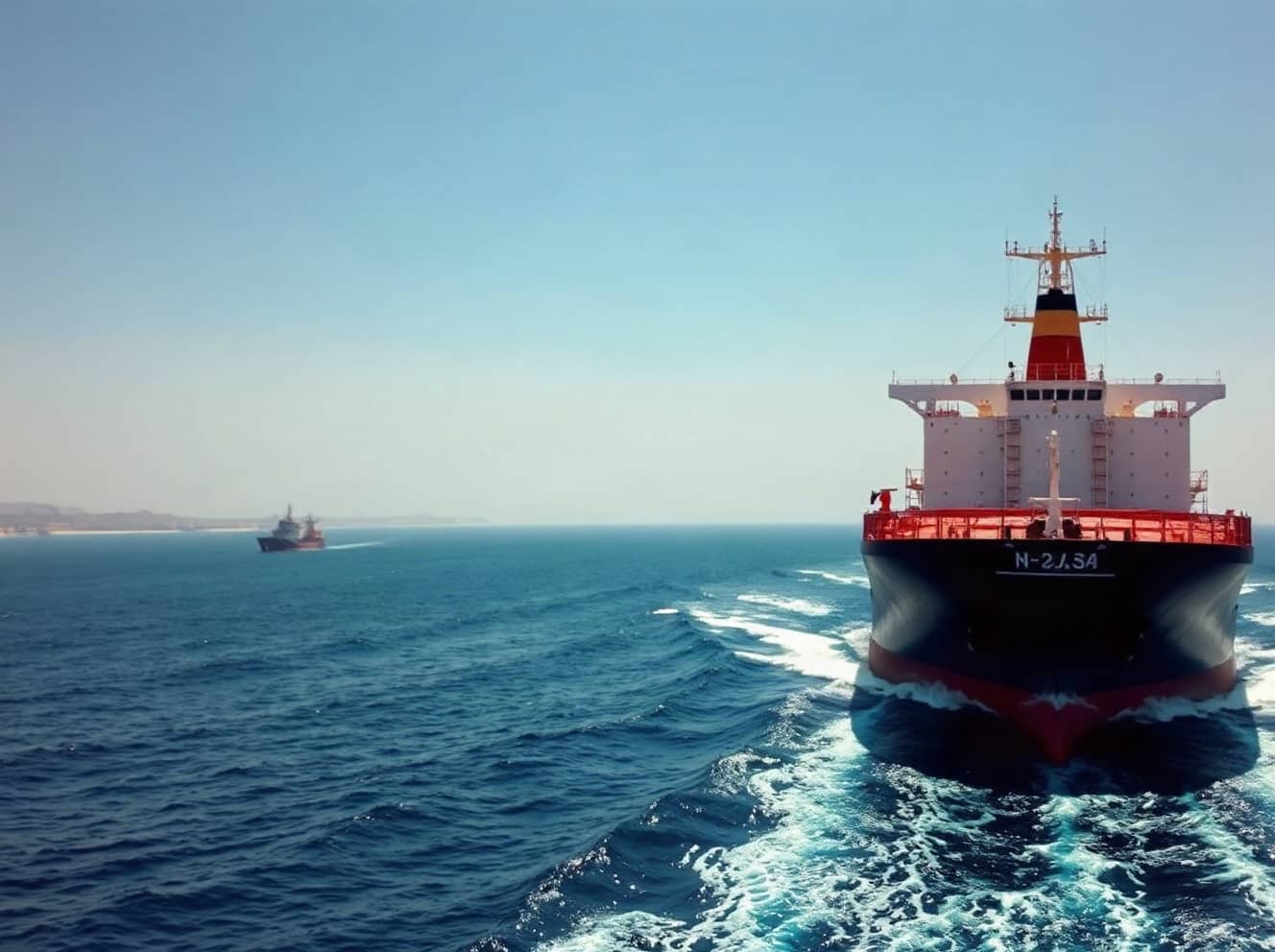

Tehran Outlines Path to Maritime Access
Iran has officially announced that it is currently preparing a comprehensive list of conditions required for the reopening of the Strait of Hormuz. This significant statement, issued by an Iranian official, marks a pivotal diplomatic maneuver within a region already characterized by heightened geopolitical tensions and persistent concerns regarding shipping security in the Persian Gulf. The declaration signals a deliberate intent by Tehran to assert its influence over one of the world's most critical maritime arteries.
The announcement strategically places the focus on the immense utility of the waterway, which functions as an indispensable maritime chokepoint for global energy markets. By framing the future operational status of the strait around specific prerequisites, Iranian authorities are clearly signaling their intention to utilize the region's unique geographic importance as a powerful bargaining chip within broader, ongoing diplomatic negotiations. This move is interpreted as an attempt to compel international stakeholders to address Iran's core demands.
Conditions Point to Security and Sanctions Demands
While the precise details of the conditions have not yet been fully disclosed by Iranian authorities, preliminary reports and expert analyses indicate that the requirements are expected to center on two primary areas: robust security guarantees for Iran and the comprehensive lifting of certain economic sanctions. These anticipated conditions suggest a direct linkage between unimpeded maritime access through the strait and Iran's broader geopolitical objectives, particularly its desire for economic relief and assurances against external threats.
The demand for security guarantees could encompass a range of measures, potentially including assurances regarding regional military activities or the presence of foreign naval forces. Concurrently, the call for the lifting of economic sanctions directly addresses the severe financial pressures Iran has faced, suggesting that access to the strait is being positioned as leverage to alleviate these burdens. The statement notably refrains from providing a specific timeline for when this list will be finalized or formally presented to international counterparts, nor does it specify which nations or entities would be expected to comply with these demands. This strategic ambiguity allows Iran flexibility in its diplomatic approach and keeps potential interlocutors guessing.
Global Energy's Critical Chokepoint
The Strait of Hormuz is universally recognized as one of the planet's most vital energy transit routes, a narrow waterway that serves as a bottleneck for a substantial portion of the world's oil supply. Approximately 20% of global oil consumption, translating to millions of barrels per day, passes through this strategic chokepoint. This immense volume makes its operational status a paramount factor in international energy security and a critical determinant of global economic stability.
Given its pivotal role, any disruption, or even the conditional closure, of the Strait of Hormuz carries immediate and far-reaching implications for global supply chains, energy prices, and the stability of international markets. Such actions can trigger significant oil price spikes, create supply shortages, and introduce considerable uncertainty for oil-importing nations worldwide. The current assertion by Iranian officials that they are preparing conditions for reopening the strait starkly underscores the profound leverage Tehran holds over global oil flows, a power derived directly from the strait's unique geographic constraints and its indispensable function in the world's energy infrastructure.
Regional Dynamics and Diplomatic Leverage
The announcement regarding the Strait of Hormuz conditions emerges at a time when regional tensions in the Persian Gulf remain acutely elevated. Concerns over shipping security have been a persistent and escalating issue, with various international stakeholders—including major oil-consuming nations, regional actors, and global maritime organizations—closely monitoring the situation for any potential escalations or disruptions. The volatile security environment often sees accusations and counter-accusations regarding maritime incidents, further contributing to the region's instability.
Observers widely interpret Iran's preparation of these conditions as a calculated strategic maneuver designed to maximize its diplomatic leverage. The move is seen as a direct attempt to capitalize on the strait’s undeniable importance to gain significant concessions in ongoing or anticipated diplomatic negotiations. This approach aligns with historical patterns where control over critical infrastructure, such as vital waterways or energy pipelines, has frequently been utilized as a powerful bargaining chip in complex international disputes and geopolitical contests. By linking the strait's accessibility to its own security and economic demands, Iran aims to force a re-evaluation of its position on the global stage.
International Community Awaits Specifics
As the comprehensive list of conditions remains undisclosed, the international community continues to monitor developments surrounding the Strait of Hormuz closely. The absence of specific details regarding the nature, scope, and enforceability of Iran's demands leaves considerable room for speculation among analysts, policymakers, and market participants. This uncertainty contributes to volatility in global energy markets and complicates strategic planning for nations reliant on the strait for their energy supplies.
The feasibility of Iran's anticipated demands, particularly those related to security guarantees and the lifting of sanctions, will be a critical point of assessment once they are formally presented. So far, no opposing party or major international body has issued a formal response to Iran's announcement, indicating a period of careful consideration and internal deliberation among affected nations. The immediate focus remains squarely on the Iranian official's initial statement and the broader context of regional security concerns and diplomatic pressures that have undoubtedly prompted this significant declaration from Tehran.