

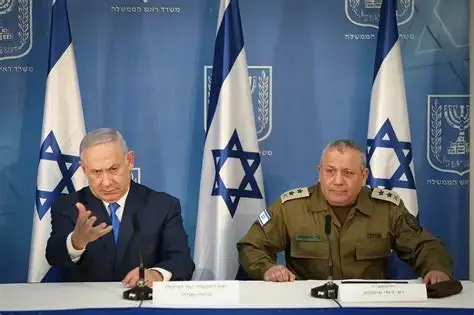

Eisenkot Mandated to Break Political Deadlock
Israeli President Isaac Herzog has selected former IDF Chief of Staff Gadi Eisenkot to attempt the formation of a new government, following a deeply divided election cycle that left no single faction with a clear path to power. The decision was announced on Saturday, November 7, after Herzog completed consultations with various political leaders across the spectrum.
The President’s choice reflects the current balance of parliamentary support. Factions representing 67 lawmakers have endorsed Eisenkot, compared to the 46 lawmakers who continue to support Prime Minister Benjamin Netanyahu. This numerical advantage provided Herzog with the justification to bypass Netanyahu for this round of government formation efforts.
Logistics and Timeline for Government Formation
Eisenkot is scheduled to formally receive the mandate at the President’s Residence at 5 pm on Sunday. Upon accepting the mandate, he will be granted a strict timeline to succeed in his mission. He has 28 days to establish a government coalition.
If necessary, this period can be extended by an additional 14 days. The entire process operates under a broader deadline of approximately 100 days before another election must be held if no government is formed. A successful government formation requires the backing of at least 61 lawmakers in the 120-member Knesset.
Electoral Landscape and Coalition Challenges
The recent elections, held on October 27, resulted in a fragmented parliament. Netanyahu’s religious-nationalist coalition secured 53 seats, while Eisenkot’s opposition bloc obtained 48 seats. Arab-led parties won 19 seats, playing a significant role in the overall arithmetic.
At the party level, Likud emerged as the largest single party with 27 seats. Eisenkot’s Yashar party followed as the second-largest with 21 seats. Despite these numbers, forming a stable coalition remains difficult due to ideological divides.
Pathways and Obstacles
Eisenkot faces several potential pathways to reach the 61-seat threshold, though analysts consider all of them unlikely. One option involves forming a minority government that relies on Arab party votes on key issues. Another possibility is forming a coalition with ultra-Orthodox parties. A third, highly improbable scenario would be forging a unity government with Netanyahu.
Notably, Eisenkot has declined to join forces with Arab parties in a formal coalition, despite the fact that Arab leaders nominated him to try to form the government first. This nomination stemmed from their view that Netanyahu’s policies are racist. However, Eisenkot has drawn firm lines regarding his potential partners.
Personal History and Political Stance
Eisenkot, 66 years old, brings a complex personal and political history to this mandate. He briefly served in Netanyahu's wartime cabinet following the October 7, 2023, attack before returning to the opposition. In that role, he publicly rebuked Netanyahu over his leadership and management of the military campaign in Gaza.
He has sworn that he would not serve in government with Netanyahu or his far-right coalition partners, Itamar Ben-Gvir and Bezalel Smotrich. Eisenkot has also criticized settler violence against Palestinians, which has surged since 2023, and opposes the policies of Netanyahu's far-right allies.
Policy Reforms and Personal Tragedy
Eisenkot’s political platform includes advocating for a state inquiry into the failures surrounding the October 7 attack. He has also proposed reforms to military service rules, arguing that ultra-Orthodox Jewish men and Arab citizens should not be exempt from national service.
His personal standing is deeply linked to the loss of his son Gal and two nephews, who were killed while fighting in Gaza starting in December 2023. This tragedy has underscored his calls for accountability and reform within the military and political establishment.
Historical Significance and Next Steps
If Eisenkot succeeds, he would become the country's first prime minister from Israel's Mizrahi community. His appointment marks a significant shift in the demographic and political landscape of Israeli leadership.
On social media platform X, Eisenkot wrote, "Now is the time to form a national emergency government. I will do everything I can to ensure we are worthy." This statement reflects the gravity of the task ahead.
If Eisenkot fails to form a government within the allotted time, Herzog may offer the opportunity to another lawmaker. This scenario could allow Netanyahu another chance to regain power, keeping the political future of Israel in flux.