


Executive Branch Rejects Oversight as Extortion
The White House and the Department of Justice have launched a fierce counteroffensive against incoming Democratic lawmakers, framing their post-election oversight efforts not as constitutional duties but as criminal threats. Following the midterm elections, which saw Democrats gain control of the House, President Donald Trump and Attorney General Todd Blanche signaled intense conflict is imminent as Congress prepares to investigate the executive branch next year.
Trump took to social media to declare that investigative requests already made by Democrats constitute “extortion at the highest level,” asserting that those making such demands should be held accountable. This rhetoric was echoed by Attorney General Todd Blanche, who reported that criminal investigations into Democrats are a possibility if they continue their current trajectory.
Blanche defended the administration’s position, stating, “They are not allowed to just go around threatening existing members of the administration, to go around threatening companies, and that’s what President Trump is extremely worried about and he should be.” The Justice Department’s stance marks a significant escalation in tone, moving beyond standard political disagreement to suggest legal repercussions for congressional oversight activities.
House Oversight Committee Targets “Trump Crime Family”
In response to the administration’s defiance, Rep. Robert Garcia, who is poised to chair the powerful House Oversight Committee in the next Congress, has begun preparing aggressive investigations. Garcia has characterized his target as the “Trump crime family,” indicating a broad scope for inquiries that may extend beyond policy disputes to potential criminal conduct.
Garcia emphasized that Democrats are not going to be intimidated by the White House’s threats. “The days of us not fighting back are over,” Garcia stated, signaling a shift in legislative strategy where oversight will be prioritized alongside other legislative goals. This confrontational approach aligns with the Democratic majority’s intent to use their new leverage in the House to scrutinize the president’s actions closely.
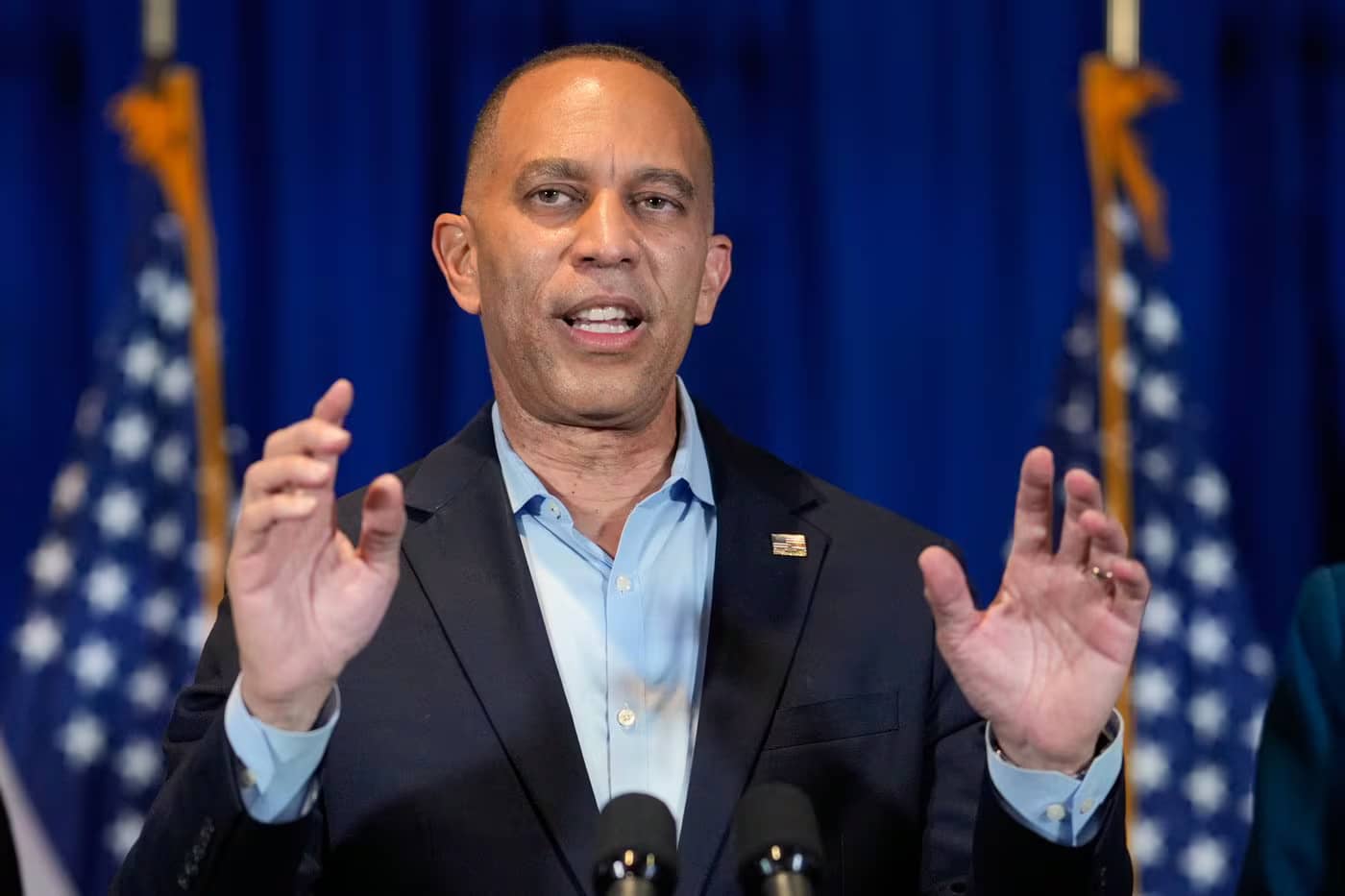
House Leader Hakeem Jeffries reinforced this commitment to accountability, stating that if individuals have been “shortchanging the American people, screwing over the American people, or stealing from the American people, then they need to be held accountable in a manner consistent with Congress’ role, constitutionally.” Jeffries made clear that impeachment remains an option for the Democratic caucus, though it is not the sole focus of their strategy.
Internal Democratic Tensions Over Priorities
Despite the unified front against the administration, Democrats face internal debates regarding how much political capital should be spent on investigations versus legislative action. Some party members are worried about overreach and warn that delivering on their central promise to voters—specifically actions to lower the cost of living—must take precedence over prolonged political battles.
Sen.-elect Adam Hamilton expressed skepticism about the focus on impeachment, noting that his campaign was centered on trying to bring people together. He stated he does not want the next two years to be spent “dividing our country further.” While acknowledging that some investigations are necessary, Hamilton said, “I’m not as interested in impeachment as setting up guardrails,” highlighting a preference for structural reforms over punitive measures.
Sen. Bernie Sanders offered a similar perspective, stating he wants to hold Trump accountable but warned there is only so much time available. “We cannot spend all of our time investigating Trump. We’ve got to stand up for working-class families, make a real difference in their lives,” Sanders stated. His comments reflect a growing concern among some Democrats that excessive focus on the president could distract from economic issues affecting constituents.
Public Sentiment and Staffing Controversies
The political standoff occurs against a backdrop of public dissatisfaction with congressional oversight. The AP Voter Poll, a survey of more than 100,000 midterm voters, found that about seven in 10 voters nationally say Congress is not doing enough to provide checks and balances on the presidency. This data suggests that while Democrats are ramping up investigations, they may be responding to a perceived vacuum of accountability rather than overwhelming public demand for immediate punitive action.
Complicating the dynamic between the branches is Trump’s recent personnel decisions. Trump announced that Stephen Miller would replace Susie Wiles at the post of White House Chief of Staff, a few days after Republicans lost control of Congress during the midterm elections. The appointment has drawn sharp criticism from Democratic leaders.
Jeffries criticized Trump’s choice of longtime adviser Stephen Miller to succeed Susie Wiles as his chief of staff, calling him an “awful choice” and casting doubt on the prospect of working with him. This staffing move signals that the incoming administration intends to maintain a hardline stance, potentially making cooperation with the new Democratic House majority difficult from the outset.