


The Crisis of Empathy and Political Survival
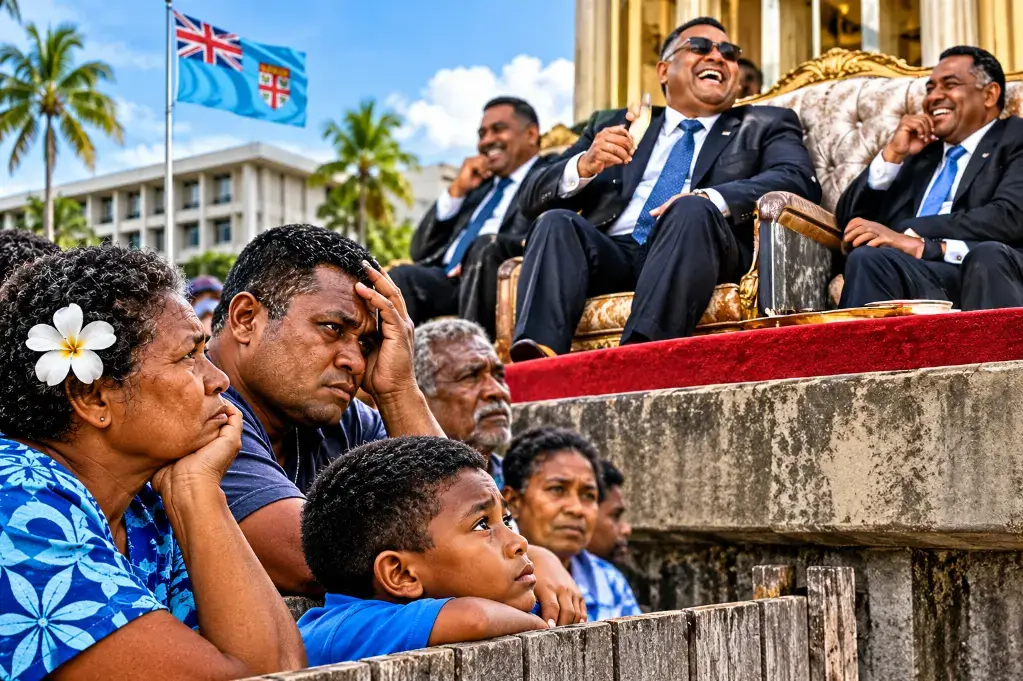
An opinion piece published Monday in the Fiji Sun argues that empathy, accountability, and genuine public service have been overshadowed by political survival and power struggles within Fiji’s political establishment. The article contends that the tragedy of the nation's politics is not a lack of politicians, but a struggle to find representatives who genuinely understand the constituents they claim to serve.
The author highlights a specific moment of public frustration, noting that a Fijian recently asked whether Lenora Qereqeretabua could lead a political party to offer an approachable alternative to intimidating patriarchs shaped by Fiji’s coup culture. While the piece acknowledges a certain political naivety in that question, it uses this inquiry to illustrate a deeper disconnect between the electorate and those in power.
The author notes that changing the personality at the top does not necessarily change the system beneath it, nor does being a woman automatically make someone a better leader. However, the underlying sentiment serves as what the article describes as a "damning indictment" of the current political establishment, raising urgent questions about where empathy has gone in public discourse.
Contrasting Governance Philosophies
The author observed younger political leaders in the United States during a recent visit, citing Michigan’s Senator-elect Abdul El-Sayed as an example of a leader who articulates the anxieties of ordinary people regarding healthcare, housing, and economic insecurity.
In stark contrast, the author stated they struggle to identify a comparable voice in Fiji’s political landscape that genuinely connects policy with lived experience or speaks to the indignity of poverty, unemployment, and drug-related community anguish. The article criticizes current political maneuvering as being focused on personalities, alliances, and ministerial appointments rather than substantive governance.
The piece notes that Members of Parliament entered Parliament on the coattails of Messrs Bainimarama and Sayed-Khaiyum. The author questions whether the electorate features in calculations beyond parliamentary survival, suggesting that political accommodation appears more urgent to leaders than explaining what principles have changed.
Enduring Colonial Mentality
The article describes a "colonial school of politics" where leaders cultivate authority, demand respect, dispense patronage, and speak condescendingly to the electorate. The author argues that this behavior stems from a confusion of public office with wisdom.
According to the piece, colonial administration was designed to govern subjects rather than empower citizens. The author argues that this mentality has survived 56 years after Independence despite replacing governors with elected politicians.
The opinion cites Prime Minister Rabuka as having struggled to transcend the colonial understanding of power. The article concludes that counterparts across the political divide offer little evidence of a fundamentally different philosophy of leadership, reinforcing the view that the system remains unchanged regardless of who holds office.