


Israel's Actions Dismantle Old Regional Divides
An article published by Middle East Monitor on June 24, 2026, presents a critical analysis of Israel's recent geopolitical conduct, arguing that its actions have fundamentally shifted the organizational principles of West Asian politics. The author, Junaid S. Ahmad, contends that Israel has succeeded in diminishing the relevance of the longstanding Sunni-Shia rivalry, which had previously served as the primary lens through which regional conflicts were understood.
Ahmad characterizes Israel's approach as lacking strategic subtlety, akin to wielding a “chainsaw in a porcelain museum.” This blunt methodology, according to the analysis, has inadvertently achieved what decades of diplomatic and strategic efforts by various international actors could not. The piece suggests that this shift represents a significant departure from the protracted attempts by diplomats, clerics, monarchs, generals, and analysts who spent years attempting to navigate or resolve these sectarian tensions without achieving the same outcome attributed to Israel's recent behavior.
Previously, regional dynamics were often framed through a sectarian grammar that portrayed the capitals of Riyadh and Tehran as metaphysical opposites and civilizational antagonists. Every battlefield in the region was described in this theological prose, with conflicts in countries such as Yemen and Syria translated into narratives of eternal Sunni-Shia combat. Ahmad's analysis posits that Israel's actions have now eclipsed this sectarian framework, forcing a re-evaluation of the region's core political drivers.
America's Security Role Re-evaluated
The article further asserts that Israel's conduct has profoundly altered the perception of the United States' role in the region. Specifically, the author claims that the American “security umbrella,” traditionally viewed as a protective measure for allied states, now appears less like an umbrella and more like a “very expensive lightning rod.” This powerful metaphor implies that U.S. involvement, rather than preventing conflict or ensuring stability, may instead be attracting liability and exacerbating tensions for its regional partners.
This re-evaluation of the American security guarantee stems from the perceived consequences of Israel's actions, which, in Ahmad's view, have made the U.S. appear less as a guarantor of security and more as a costly enabler of regional instability. The analysis suggests that states in West Asia are now compelled to reconsider the true value and implications of their alignment with Washington, given the altered risk landscape.
Settlement Expansion Undermines U.S. Influence
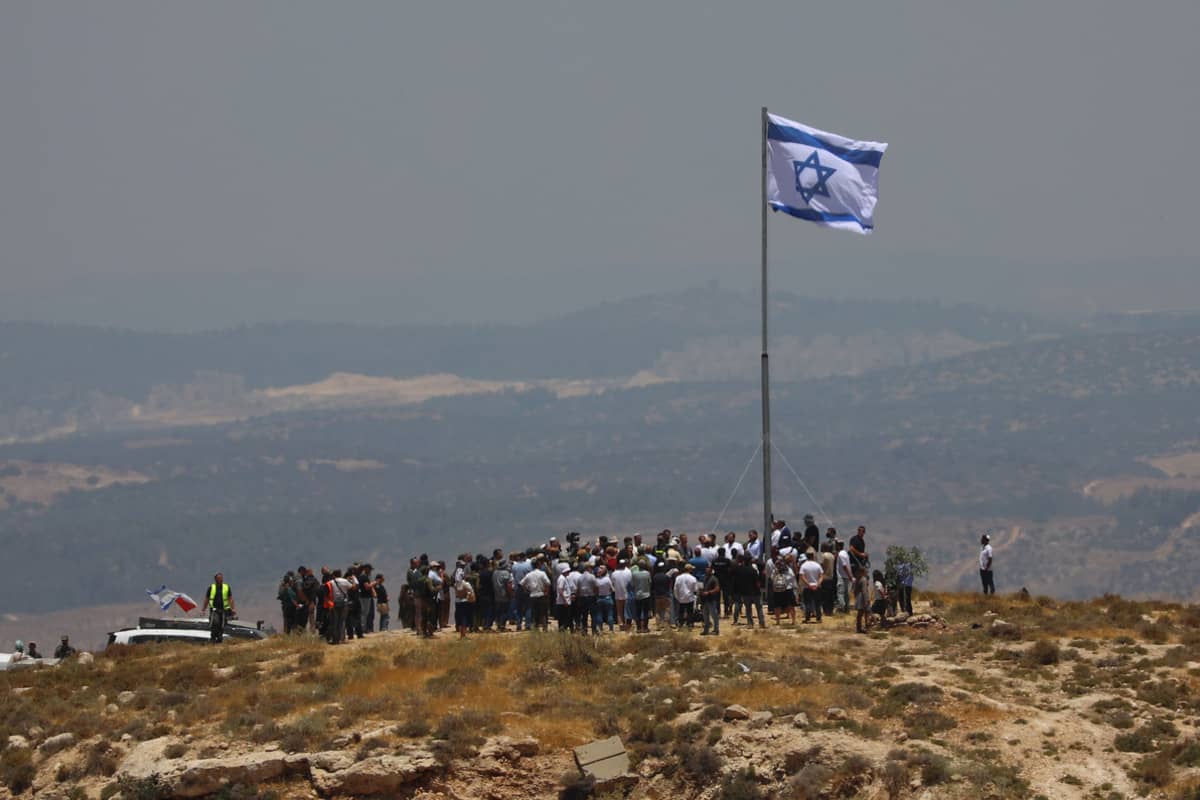
The article references specific events to illustrate its broader arguments about Israeli strategy and its impact on the U.S. position. It cites an incident on June 16, 2026, involving Israeli Finance Minister Bezalel Smotrich and illegal Israeli settlers. These individuals attended the inauguration ceremony of the “Doren” settlement outpost, which was established south of Hebron in the West Bank.
The source describes these settlements as illegal under international law and notes the presence of Anadolu Agency photographer Wisam Hashlamoun at the event. The article uses this specific instance as a prime example of Israel “overplaying the empire’s hand,” referring to the United States' influence and perceived tolerance of such actions. Such overt acts of settlement expansion, particularly with high-level ministerial involvement, are presented as directly contributing to the erosion of the American security umbrella's credibility, making the U.S. appear either complicit in or unable to restrain actions that destabilize the region and contradict international norms.
Middle East Monitor's Critical Analysis
The analysis by Junaid S. Ahmad was published on the Middle East Monitor website, a platform that describes itself as creating new perspectives since 2009. The organization aims to provide in-depth reporting and commentary on West Asian affairs, often offering viewpoints that challenge mainstream narratives. The article is categorized under Opinion pieces, reflecting its analytical and interpretive nature, and falls within the Middle East section of the site's comprehensive coverage.
Available in both English and Portuguese editions, the piece is designed to reach a broad international audience, contributing to global discourse on the evolving geopolitical landscape of West Asia. The article stands as a singular opinion piece reflecting the author's viewpoint on the strategic consequences of Israel's actions in West Asia during 2026. It does not include direct responses from Israeli officials or U.S. government representatives regarding these specific criticisms, positioning itself as an independent assessment of regional power dynamics and the shifting roles of key international players.