

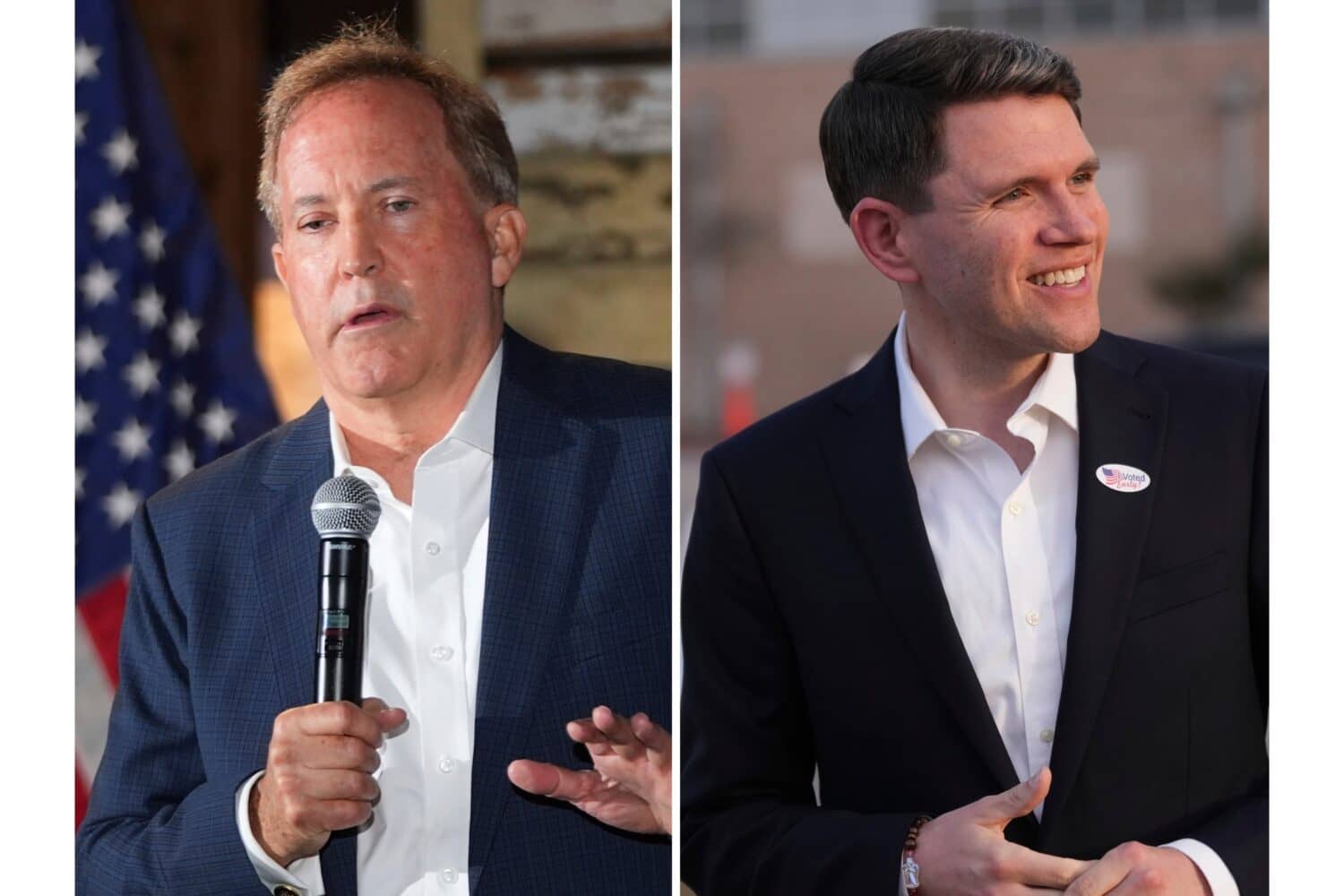

Scandal History Fails to Halt Political Momentum
Ken Paxton continues to face scrutiny despite a history of scandals that have not previously halted his political momentum. This dynamic is central to the upcoming Texas Senate race, where years of controversy surrounding the former attorney general persist as a defining feature of the campaign landscape.
The Houston Public Media report from July 27, 2026, highlights the question facing observers: Can James Talarico change that trajectory? The article notes explicitly that despite the weight of past allegations and investigations involving Paxton, his ability to maintain political support remains intact. This resilience suggests a specific disconnect between public perception of scandalous events and actual voting behavior in previous elections.
Political analysts within the campaign environment suggest that simply pointing out these scandals may not be sufficient to alter the outcome if voters have already absorbed this information without changing their preferences. The persistence of Paxton's support indicates that his past controversies, while frequent, have not translated into a loss of momentum in previous electoral cycles.
The report emphasizes that years of scandals haven't stopped Ken Paxton. This statement serves as the foundational observation for understanding the current campaign strategy employed by James Talarico and his team. The inability to halt this momentum through past exposure is viewed as a significant challenge for any opponent entering the race against him.
Despite these challenges, the political machinery continues to operate with Paxton at its center. His continued presence in the news cycle regarding Texas Senate races demonstrates that historical scandals do not automatically equate to electoral defeat. This observation forms the basis upon which Talarico's team must construct their counter-strategy.
Talarico Team Analyzes Past Strategies
James Talarico's campaign team has analyzed the strategies used in Paxton's previous races. According to available information, this analysis is not a passive exercise but an active component of developing a new approach for the 2026 election cycle.
The strategy involves attempting to replicate elements from those past campaigns while introducing new approaches. This dual-pronged method suggests that Talarico's team believes there are specific tactical victories in Paxton's history that can be leveraged, provided they are adapted with fresh messaging or delivery methods.
By studying how Paxton has navigated previous elections, the campaign seeks to identify patterns of voter engagement and response. The goal is to understand what worked for his opponents previously and why those efforts may have fallen short in stopping him from advancing further down the ballot line.
The team's approach indicates a belief that simply repeating past failures will not yield results. Instead, they aim to refine existing tactics while ensuring that new approaches are integrated into the overall campaign plan. This method of evolution is common in high-stakes political races where repetition often leads to diminishing returns for challengers.
The research notes confirm that Talarico's team has studied Paxton's previous races extensively. This study includes an examination of how different scandals were handled by opponents and whether those handling methods effectively reduced support for the incumbent or former official.
Portraying a Broader Culture of Corruption
A central tactic is portraying Ken Paxton as part of a broader culture of corruption that fails to improve people's lives. This specific framing represents a shift from attacking individual incidents to contextualizing them within a larger systemic issue.
The campaign argues that the scandals are not isolated events but symptoms of a deeper problem affecting governance in Texas. By linking Paxton to this alleged broader culture, Talarico hopes to expand the scope of voter concern beyond specific instances of misconduct or legal trouble.
This tactic attempts to connect individual failures with collective dissatisfaction regarding government performance. The argument posits that if one figure represents a corrupt system, then supporting him is tantamount to accepting continued failure in public services and infrastructure improvements.
The phrase "fails to improve people's lives" serves as the concluding element of this narrative arc. It connects abstract concepts of corruption directly to tangible outcomes experienced by constituents such as healthcare access, education funding, or road conditions.
Strategic Replication With New Approaches
The strategy involves attempting to replicate elements from those past campaigns while introducing new approaches. This phrasing indicates a calculated risk where the team believes certain foundational messages resonate with voters even if previous attempts failed to stop Paxton's ascent.
Talarico's team is essentially trying its own version of the playbook by painting Paxton as part of a broader culture of corruption that has failed to improve people's lives. This approach suggests they believe in adapting proven themes rather than inventing entirely new ones from scratch.
The replication element implies identifying successful moments when opponents successfully questioned Paxton or limited his gains and applying those lessons again with modifications. The innovation component ensures these methods do not become stale or predictable to voters who have followed the race closely over time.
By combining old tactics with new execution, Talarico aims to create a campaign that feels both familiar enough to resonate emotionally yet fresh enough to capture attention in an increasingly crowded media environment. This balance is critical for maintaining relevance throughout long election cycles where fatigue can set in quickly among the electorate.
Impact on Voter Perception
The attempt to paint Paxton as part of a broader culture of corruption relies heavily on shifting voter perception from isolated incidents to systemic issues. If successful, this could alter how voters weigh scandals against other factors like policy positions or party affiliation during the voting process.
However, given that years of scandals haven't stopped Ken Paxton in previous elections, there is an inherent uncertainty about whether this specific framing will achieve its intended effect on voter behavior. The campaign team must navigate a complex landscape where past failures have not translated into electoral losses for their target opponent.