

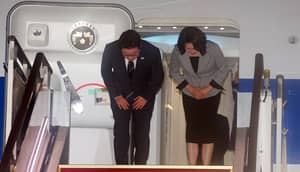

President Lee Concludes Extensive Diplomatic Journey
President Lee Jae Myung returned to Seoul Air Base in Seongnam on Saturday, marking the conclusion of an intensive five-day diplomatic tour. The journey, which spanned multiple continents, included his attendance at a NATO summit in Turkey and a subsequent state visit to Mongolia. First Lady Kim Hea Kyung accompanied the president throughout the duration of the trip, participating in official engagements.
The swift return to the capital signals an immediate pivot for President Lee from high-level international diplomacy to a series of pressing domestic challenges. The administration's focus is now expected to shift towards internal affairs, even as the implications of the recent overseas engagements continue to unfold on the global stage. This diplomatic circuit was strategically designed to elevate South Korea's standing and influence across distinct geopolitical spheres.
South Korea's Broader Strategic Aspirations
The core objective behind President Lee's diplomatic itinerary was to strategically position South Korea as a more significant player in both Euro-Atlantic security frameworks and the broader geopolitics of Eurasia. This ambition extends beyond immediate foreign policy concerns, aiming to connect the administration's current diplomatic goals with a wider, long-term strategic vision for the Eurasian continent.
By engaging with key international bodies and regional partners, South Korea seeks to expand its influence and demonstrate a comprehensive approach to international relations. The trip underscored a deliberate effort to bridge the country's immediate foreign policy priorities with its long-term strategic interests, particularly in a region as diverse and complex as Eurasia. This proactive stance reflects a desire to move beyond traditional regional alliances and contribute more substantially to global stability and cooperation.
Dual Engagements: Euro-Atlantic Security and Eurasian Geopolitics
NATO Summit Participation in Turkey
The initial segment of President Lee's tour focused on engagements related to the North Atlantic Treaty Organization (NATO) summit held in Turkey. This participation highlighted South Korea’s concerted efforts to deepen its ties with Euro-Atlantic security structures. By engaging with NATO members, South Korea aimed to signal its commitment to global security cooperation and its willingness to contribute to addressing shared challenges that extend beyond its immediate geographical vicinity.
The presence at the summit underscored the administration's intent to foster stronger partnerships with Euro-Atlantic nations, reinforcing South Korea's role as a responsible international actor capable of contributing to collective security discussions and initiatives. This engagement is part of a broader strategy to enhance diplomatic reach and influence within critical global security dialogues.
Deepening Relations with Mongolia
Following the NATO engagement in Turkey, the diplomatic mission shifted its focus to Mongolia for a state visit. During his time in Ulaanbaatar, President Lee participated in official ceremonies and held discussions aimed at strengthening bilateral relations between South Korea and Mongolia. The inclusion of Mongolia in the itinerary was a key component of the broader goal to establish a more consequential role for South Korea in Eurasian affairs.
Mongolia, as a strategically located Central Asian partner, plays an important role in South Korea’s expanding Eurasian strategy. The state visit was intended to foster closer economic, cultural, and political ties, demonstrating the administration's comprehensive approach to international relations that encompasses both established security alliances and emerging partnerships in Central Asia. This engagement with a Central Asian nation serves to enhance South Korea's diplomatic footprint across the diverse geopolitical landscape of Eurasia.
Domestic Challenges Await President Lee in Seoul
Addressing Critical Housing and Infrastructure Policies
Upon his return to Seoul, President Lee Jae Myung is immediately confronted with a series of pressing domestic challenges that demand his administration's urgent attention. Among the foremost issues are comprehensive housing policy reforms, which have been a significant area of public concern and political debate. The administration is expected to address these policies to ensure stability and affordability in the housing market.
Additionally, the management and progress of large-scale infrastructure projects, often referred to as 'mega projects,' are high on the agenda. These initiatives are considered critical not only for the nation's economic development but also for the administration's domestic stability and its public support. Effective oversight and successful implementation of these projects are crucial for maintaining public confidence.
Impending Cabinet Reshuffle Considerations
Adding to the immediate domestic priorities, there is significant speculation regarding a potential Cabinet reshuffle. The timing of President Lee's return coincides with ongoing assessments of governmental performance and the possibility of personnel adjustments within the executive branch. Such a reshuffle could involve changes in ministerial portfolios and other key administrative positions.
These potential changes are often undertaken to enhance governmental efficiency, respond to public sentiment, or re-energize the administration's policy agenda. The anticipation of a Cabinet reshuffle suggests a period of internal review and strategic realignment within the government as it prepares to tackle the pressing issues facing the nation.