


A Historic Reversal and a New Political Era
Brazilian President Luiz Inácio Lula da Silva has secured a fourth non-consecutive term as president, marking a significant turning point in the nation's political landscape. The victory was not merely a win but a dramatic reversal of fortune; Lula had initially led in the first round of voting before losing the subsequent runoff by approximately 2.2 million votes. In just three weeks, he managed to reverse this deficit and reclaim the presidency.
This achievement is unprecedented in Brazilian electoral history. No previous presidential candidate had ever won a first round only to lose the runoff before Lula broke this pattern. The result also establishes the longest democratically elected tenure in Brazil’s history. Having now governed for a total of 16 years, Lula joins an exclusive club of power, with only Getúlio Vargas having held office longer.
Market Turmoil and Electoral Shock
The election outcome triggered immediate and severe reactions in financial markets, defying pre-election polls that had suggested a closer contest. Lula secured 51.7 percent of the vote against challenger Flávio Bolsonaro’s 48.2 percent. This margin caused significant volatility, sending the Brazilian real tumbling nearly 12 percent against the dollar. The Bovespa index dropped by 10 percent, forcing trading to halt under circuit-breaker rules.
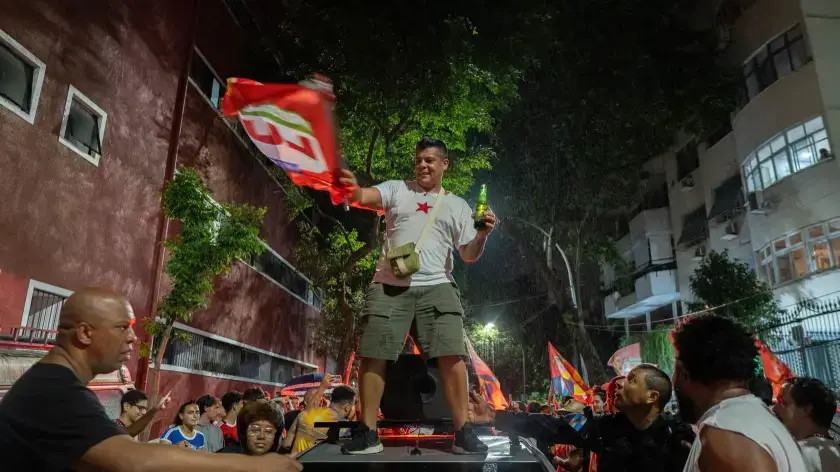
International investors also reacted sharply. A Brazilian-focused exchange-traded fund in the United States fell as much as 26 percent as capital was withdrawn from assets associated with Lula’s Workers' Party. Despite the financial shockwaves, the victory sparked widespread celebrations across the country. In Rio de Janeiro’s favelas, celebratory gunfire and fireworks lit up the night, while mass gatherings took place on Avenida Paulista in São Paulo.
Geopolitical Realignment and Sovereignty
Lula’s return carries profound geopolitical implications, positioning Brazil as a bulwark against the rise of the far right. The result bucking trends seen in Latin America and Europe, where several other countries have elected far-right leaders. It serves as a firm stance on sovereignty, rejecting the notion of Brazil being a "backyard" for external powers.
The victory also represents a direct check on the so-called "Donroe Doctrine," which seeks to align regional governments with Washington’s interests. By rejecting Flávio Bolsonaro, who had pledged to align Brazil closer to US President Donald Trump, Lula resisted the Trump administration’s push to bring the Western Hemisphere into the US sphere of influence. This decision underscores a broader rejection of external pressure in favor of independent foreign policy.
Defying Regional Trends and Political Odds
Lula’s win defies the "incumbent curse" that has plagued Latin American politics, where governing parties have recently lost elections due to inflation and economic stagnation. His ability to overcome this trend highlights a unique resilience in his political base and a rejection of the status quo by voters.
Flávio Bolsonaro, the defeated challenger, announced an intention to seek an annulment of the election following a chaotic vote extension. However, the result stands as a testament to Lula’s enduring influence. He previously governed Brazil from 2003 to 2010, and his 2022 victory had already ended Jair Bolsonaro’s right-wing administration. Lula’s political journey has been marked by turbulence, including his imprisonment from 2018 to 2019 on charges that were later overturned.
As Brazil navigates this new chapter, the world watches closely. The election signals a firm stance on sovereignty and foreign policy, challenging the dominance of right-wing movements in the region. Lula’s fourth term is not just a personal political triumph but a shift in the geopolitical balance of power, with implications that extend far beyond Brazil’s borders.