

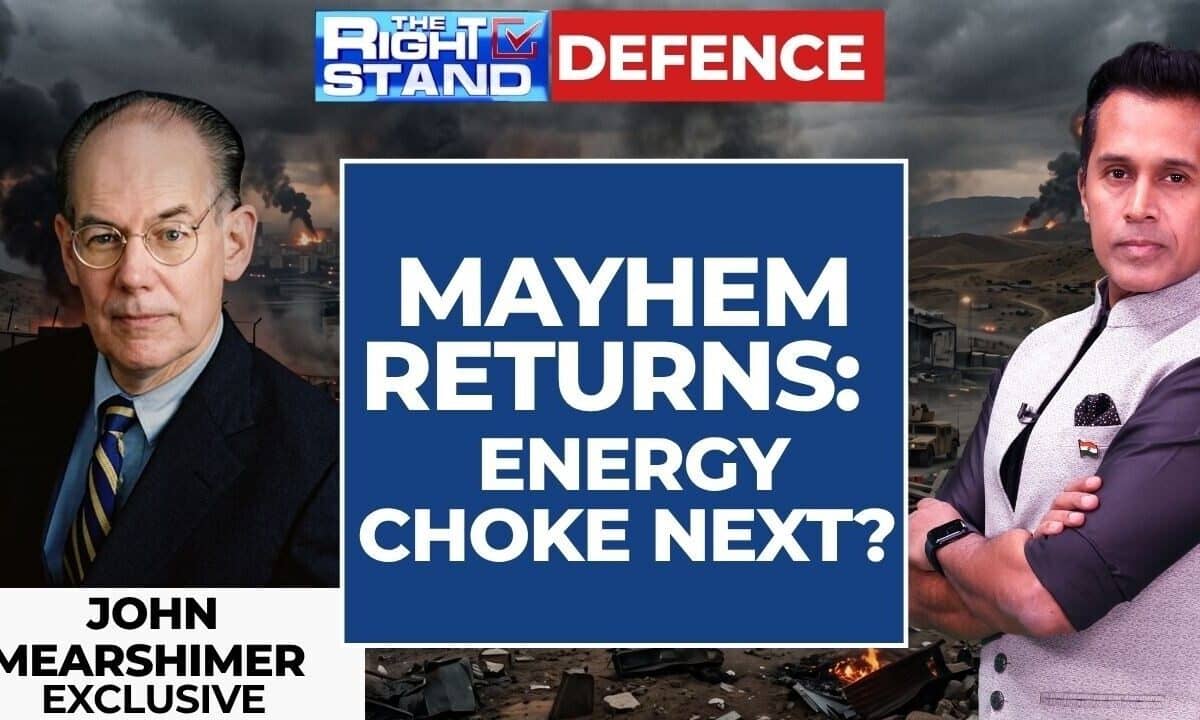

Mearsheimer Analyzes Strategic Dilemma Facing US Leadership
Political scientist John Mearsheimer has offered an analysis regarding the escalating conflict between the United States and Iran. According to Mearsheimer, President Donald Trump is currently caught in what he describes as an escalation cycle concerning these tensions. The political scientist suggests that the current situation presents a difficult strategic challenge for American leadership while hostilities continue to intensify across the Middle East region.
In his assessment of the geopolitical landscape, Mearsheimer focuses heavily on specific geographic choke points that are central to the dispute. He identifies the Strait of Hormuz as a critical point in this rising tension between nations. The strait serves as a vital maritime corridor through which significant volumes of global oil trade pass daily.
Mearsheimer highlights Iran's position within its own region and discusses how military actions taken by either side could alter that standing. He notes that the conflict is not isolated to bilateral disputes but carries implications beyond the immediate borders of the Middle East. The potential consequences of further military escalation are viewed as having a capacity to influence international relations on a broader scale.
Broader Geopolitical Implications for China and Russia
The political scientist argues that the ongoing conflict could have significant effects extending well beyond the immediate theater of operations in Iran. He posits that these events might accelerate shifts occurring within the global balance of power involving major global powers such as China and Russia.
According to Mearsheimer, instability in this region does not exist in a vacuum. The actions taken by Tehran or Washington could ripple outward, affecting alliances and strategic calculations made by other nations involved in international trade routes. This perspective suggests that the Strait of Hormuz crisis is intrinsically linked to wider geopolitical strategies employed by non-Western powers.
Assessment of Military Escalation Risks
Mearsheimer discusses the potential consequences of military escalation without explicitly detailing specific troop movements or weapon systems currently deployed. He emphasizes that any increase in hostilities could lead to outcomes that were not anticipated during initial diplomatic engagements. The political scientist maintains a focus on the structural elements driving these tensions rather than attributing them solely to individual leaders.
Context of Regional Standing and Strategic Interests
The analysis provided by Mearsheimer centers on Iran's regional standing as a key variable in understanding current events. He suggests that attempts to alter this standing through forceful means may not achieve the desired results for intervening powers. Instead, he implies that such actions could entrench positions held by Tehran within its neighborhood.
Regarding the United States' position under President Trump, Mearsheimer frames the situation as a trap created by previous commitments and current realities on the ground. He does not speculate on future administrations or hypothetical outcomes but focuses strictly on the present predicament described in his commentary.
Perspectives from Political Science Community
As noted in reports covering this topic, Mearsheimer is a prominent figure within international relations theory known for realist perspectives on state behavior. His comments regarding the Strait of Hormuz crisis align with broader academic discussions about how great powers interact through force and diplomacy.
The source material indicates that his warnings are directed at policymakers who must navigate complex interests involving energy security, regional stability, and global trade routes. He cautions against underestimating the resilience of state actors involved in these disputes or overestimating the ability of external interventions to resolve internal conflicts quickly.
"