

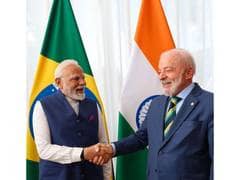

Modi Pledges Deepened Strategic Partnership
Prime Minister Narendra Modi congratulated Brazilian President Luiz Inácio Lula da Silva on his re-election victory on Monday, expressing a desire to work closely with him to further deepen and expand the India-Brazil Strategic Partnership.
In a post on X dated October 26, 2026, Modi stated he looks forward to advancing shared priorities of the Global South and working toward a more inclusive, equitable, and sustainable world. He described Lula as a "dear friend" and highlighted the multifaceted nature of the bilateral relationship.
Modi’s message emphasized continued cooperation across diverse sectors between the two nations. The communication marks a formal diplomatic acknowledgment of Lula’s return to the Brazilian presidency following the recent electoral process.
Tharoor Highlights Geopolitical Shifts and BRICS Implications
Congress MP Shashi Tharoor asserted that Lula’s victory has significant geopolitical implications for BRICS, stating that Lula’s leadership "supercharges Brazil's commitment to multipolarity" and strengthens the bloc as a voice of the Global South.
Tharoor highlighted potential challenges for Brazil-US relations, noting that Washington had openly backed Lula’s rival. He predicted that economic and diplomatic friction would likely persist due to Lula’s prioritization of national sovereignty over alignment with Western interests.
The Congress leader described Lula’s return as a champion of the working class and poor, bringing renewed focus to social inclusion, economic justice, and poverty alleviation. Tharoor characterized Brazil’s electoral outcome as a choice for social progress and democratic resilience amid rising right-wing assertion in Latin America.
A Fourth Term Amidst Electoral Tightness
Lula, an 80-year-old former factory worker and leader of the Partido dos Trabalhadores (PT), won re-election after defeating far-right candidate Flavio Bolsonaro in a closely contested presidential run-off.
The victory marks Lula securing a fourth non-consecutive term in office, following a first round where candidates were tied and neither secured the required majority. This result underscores the polarized nature of Brazilian politics and the narrow margin by which the former president reclaimed the presidency.