

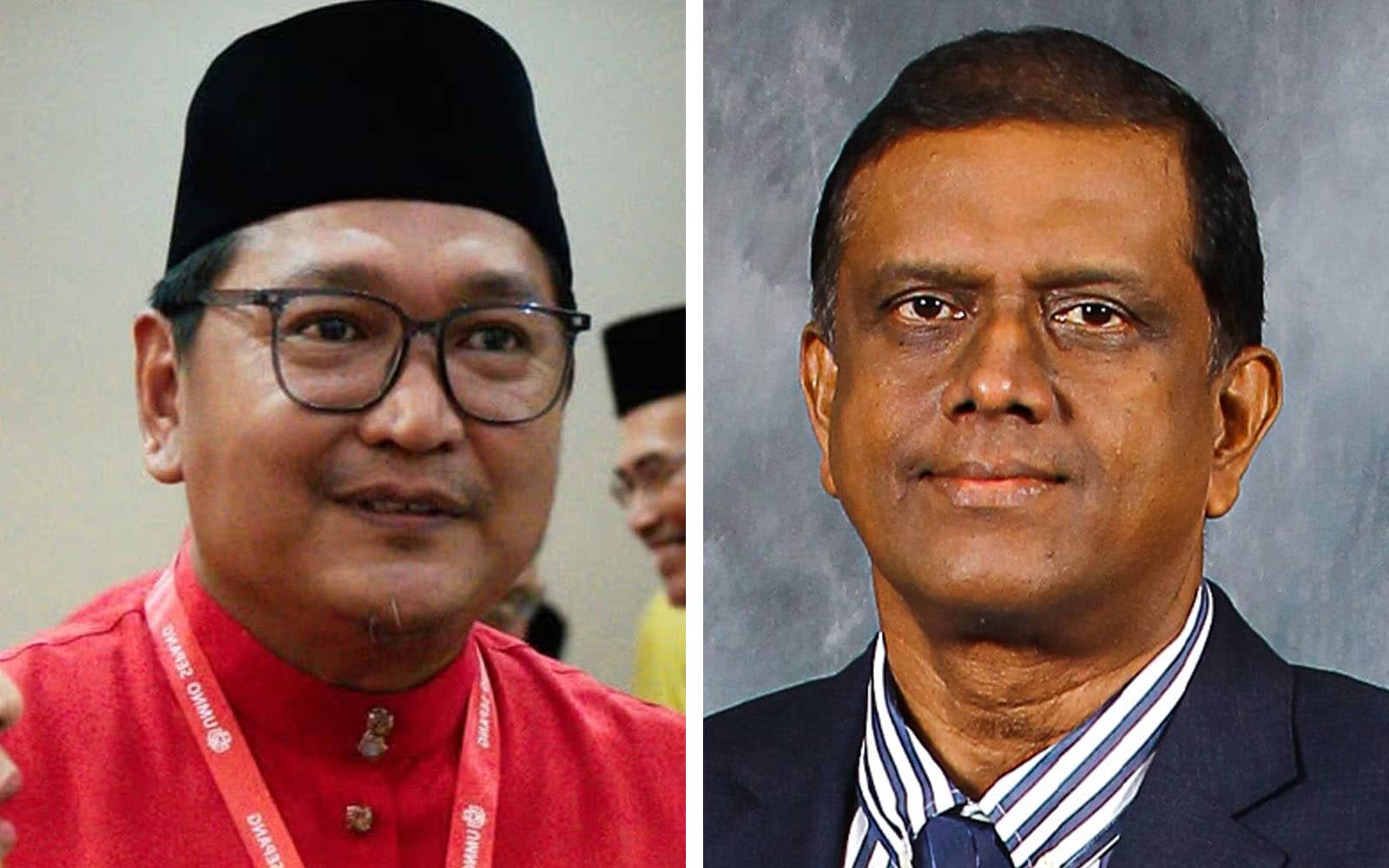

A Politician's Conscience Tested by Faith
PETALIJAYA: The intricate intersection of political life and deeply held personal religious conviction has been brought into sharp focus for MIC Vice-President Nelson Renganathan. A recent controversy, stemming from remarks made by another politician, prompted Renganathan, who identifies as Catholic, to publicly describe a profound moment of internal conflict where his professional role as a politician clashed directly with his identity as a believer.
In an article published by Free Malaysia Today on September 16, 2026, titled "When the politician in Nelson met his Catholic conscience," Renganathan meticulously detailed the specific nature of this tension. He recounted that upon encountering a lewd joke involving a Catholic priest and a nun, two distinct perspectives immediately emerged within him, pulling in different directions. "The politician in Renganathan saw an issue," he wrote, indicating a natural inclination towards political analysis and response. "The Catholic in him saw a test of faith," highlighting a deeper, spiritual challenge that transcended mere political strategy.
Renganathan argued that this internal division, rather than standard political condemnations or immediate public outcry, offered a more revealing insight into the incident's true impact. He suggested that the controversy reached a critical juncture where "the shouting stops and a person has to decide what the offence means to them." For Renganathan, this decision was not straightforward, requiring him to navigate the complex and often contradictory space between an immediate, politically expedient reaction and the longer-term, more profound principles of his religious beliefs. His reflection underscored the unique pressures faced by public figures who strive to reconcile their professional duties with their spiritual convictions in a pluralistic society.
Controversial Remarks Spark Public Outcry
The genesis of the controversy lies in remarks made by Noorazli Said, the Sepang Umno chief, during a general assembly of his party. Said delivered a "jibe" that specifically targeted Catholic clergy, which Renganathan characterized as lewd and deeply offensive. The specific content of the joke included an inaccurate reference to Psalm 129, a detail that further exacerbated the offense for many, as it demonstrated a misrepresentation of sacred religious text.
The nature of the joke, involving Catholic clergy, was perceived as a direct affront to the religious sensitivities of the Catholic community and beyond. The public setting of a party general assembly amplified the reach and impact of the remarks, quickly generating a significant backlash across various segments of society. This widespread condemnation prompted Noorazli Said to issue an apology. In his statement, Said acknowledged and accepted that he deserved reprimand not only for the inaccuracies in his reference to the biblical text but also for the inherently offensive nature of the joke itself.
Beyond the public outcry and subsequent apology, the incident also prompted formal legal action. A police report was filed concerning the controversy, indicating that the matter had escalated beyond rhetorical debate into official channels. While the details regarding the status or specific allegations within the police report were not elaborated upon, its filing signifies the seriousness with which the offense was perceived by those who initiated the action.
Navigating Forgiveness Amidst Lingering Controversy
Despite Noorazli Said's apology and his acceptance of reprimand, the dispute surrounding the incident has not concluded. Renganathan observed that the apology "has not ended the argument," indicating a continued public discourse and a lack of full resolution in the eyes of many. The situation remains active in public debate, with critics and supporters alike weighing the sincerity of Said's remorse against the perceived gravity and lasting impact of the offense to religious sentiments.
In response to the ongoing criticism and scrutiny, Noorazli Said has publicly requested that those judging his actions consider his sincerity. He has appealed for fairness in evaluating whether his apology was genuine, suggesting that he believes the current public judgment of his character and intentions may be insufficient or biased. This plea highlights the difficulty in assessing the true depth of remorse, particularly in high-profile public incidents where political and religious sensitivities are intertwined.
Concurrently, Renganathan has leveraged the incident as an opportunity for deeper reflection on what he considers the appropriate Christian response to such offenses. He posited that forgiveness should remain a central and guiding component of the Christian reaction to being offended. This perspective frames the controversy not merely as a political misstep by Said, but as a broader test of religious tolerance, personal conduct, and the application of faith-based principles for believers themselves. Renganathan’s commentary underscores the expectation that individuals of faith, particularly those in public life, may be held to different standards of conduct, especially concerning forgiveness and restraint, even in the face of perceived attacks on their beliefs.
The Broader Implications for Malaysian Public Life
The incident continues to be a subject of public debate in Malaysia, a nation known for its multi-ethnic and multi-religious fabric. While Said has apologized and accepted reprimand, his subsequent request for fairness suggests a belief that the political fallout and public condemnation may exceed the bounds of just criticism. This dynamic points to the complexities of navigating public opinion when religious and cultural sensitivities are involved, where apologies may not always be sufficient to fully mend damaged trust or perceived slights.
Meanwhile, Nelson Renganathan’s commentary serves as a significant, documented example of how Catholic politicians, and indeed individuals of faith in public office, may process offensive political rhetoric through the profound lens of their religious doctrine. His internal struggle and subsequent public reflection offer a window into the personal cost and moral navigation required when political expediency clashes with deeply held spiritual values.
The filing of a police report further indicates that the matter has transcended mere rhetorical debate, entering formal legal channels and underscoring the severity with which the remarks were perceived by some. Although no further details regarding the status or outcome of that report were provided in the source material, its existence highlights the potential for such incidents to have legal ramifications in addition to social and political ones. Ultimately, this controversy vividly illustrates the ongoing challenges inherent in Malaysian politics, where religious sensitivities frequently intersect with party activities, public assemblies, and the broader discourse, demanding careful consideration and often difficult personal and public responses from all stakeholders.