

FanzizFanziz
App
Geopolitics

Nepal and India Secure Bhairahawa Air Route After Extended Shah-Modi Talks

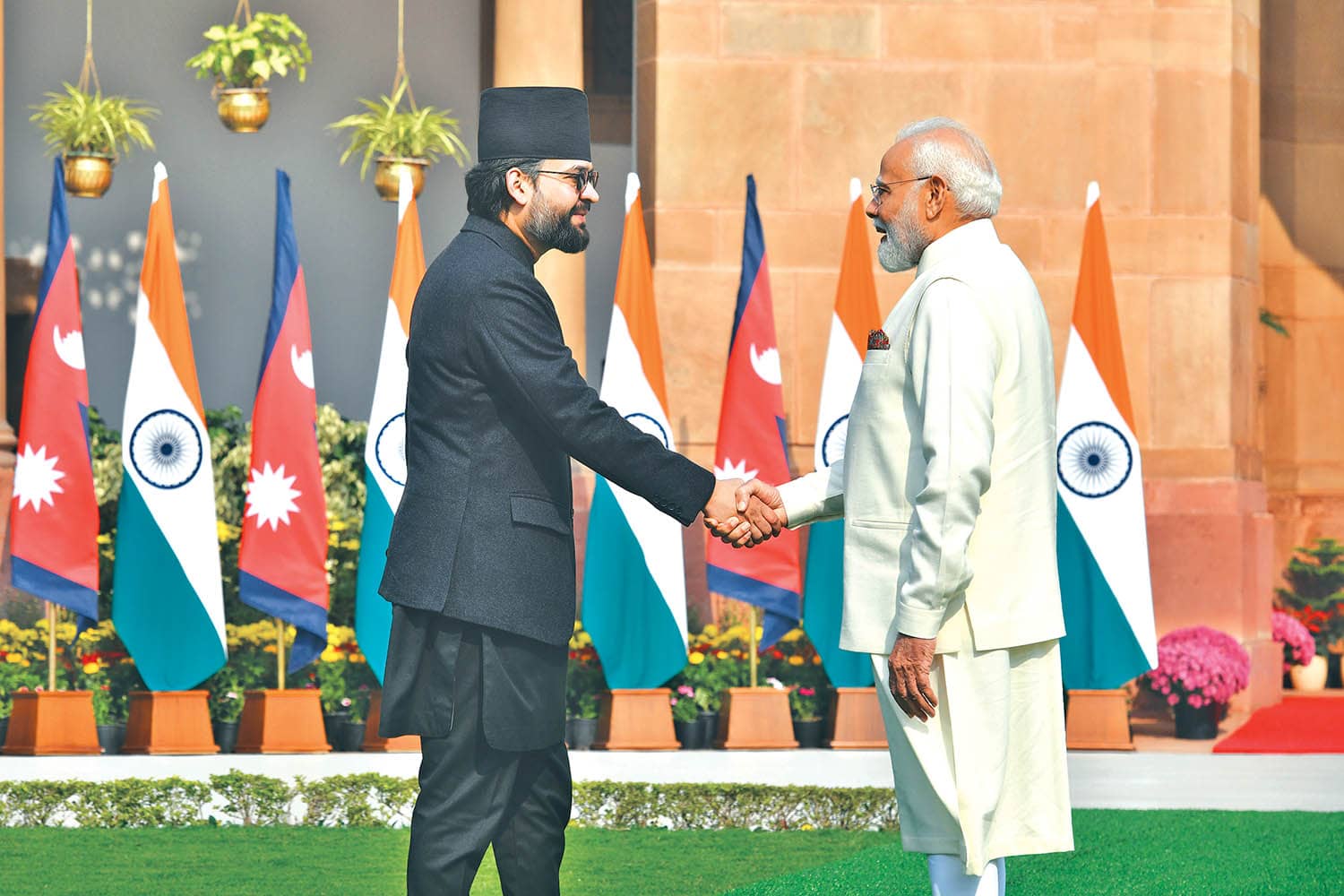
Prime Minister Balendra Shah and Indian Prime Minister Narendra Modi held an extended one-on-one meeting in New Delhi, resulting in an agreement for bidirectional flights to Bhairahawa without altitude restrictions.

By Rohan DesaiPublished 2 Min Read
Nepal and India Secure Bhairahawa Air Route After Extended Shah-Modi Talks
Advertisement

Full story

Extended Meeting Yields Airspace Agreement

Prime Minister Balendra Shah of Nepal and Indian Prime Minister Narendra Modi held a one-on-one meeting at Hyderabad House in New Delhi on Monday that lasted an hour and a half, significantly exceeding the scheduled 30-minute duration. The extended interaction between the two leaders facilitated an understanding for a new air-entry route through Indian airspace to Bhairahawa. Two Nepali officials stated that the personal rapport developed during the meeting helped secure the agreement. The arrangement allows bidirectional flights to and from Bhairahawa without altitude restrictions. Technical-level meetings will be held subsequently to determine the operational details of this new corridor. Nepal intends to utilize the new route to improve connectivity to Gautam Buddha International Airport. Officials aim to establish Bhairahawa as a primary gateway for tourists visiting Lumbini, the birthplace of Lord Buddha.

Future Negotiations and Strategic Implications

A second phase of negotiations is planned to address an additional entry route through Mahendranagar. In exchange for airspace access, Nepal may consider allowing Indian civilian flights to use Nepali airspace for travel to Bagdogra airport. Professor SD Muni wrote on the social media platform X that India’s request for airspace access to Bagdogra was intended to test Nepal's response to security concerns regarding China. This assessment suggests the airspace negotiations are linked to broader strategic calculations between the two neighbors. A senior Indian journalist noted that "New Delhi is the first responder in every crisis outside and inside Nepal." The journalist added that Nepal's approach toward China causes irritation in bilateral relations, indicating underlying tensions despite the recent diplomatic progress.

Unresolved Bilateral Issues

While the airspace agreement marks a development in ties, other contentious issues remain unresolved. The leaders exchanged views on the 1950 Peace and Friendship Treaty and boundary disputes during their meeting. However, they did not discuss the Eminent Persons' Group (EPG) report. A Nepali official stated that a joint commission meeting at the foreign minister level is scheduled for 2027 to review old treaties. This scheduled review effectively advances the discussion regarding the EPG report and other historical bilateral frameworks.