

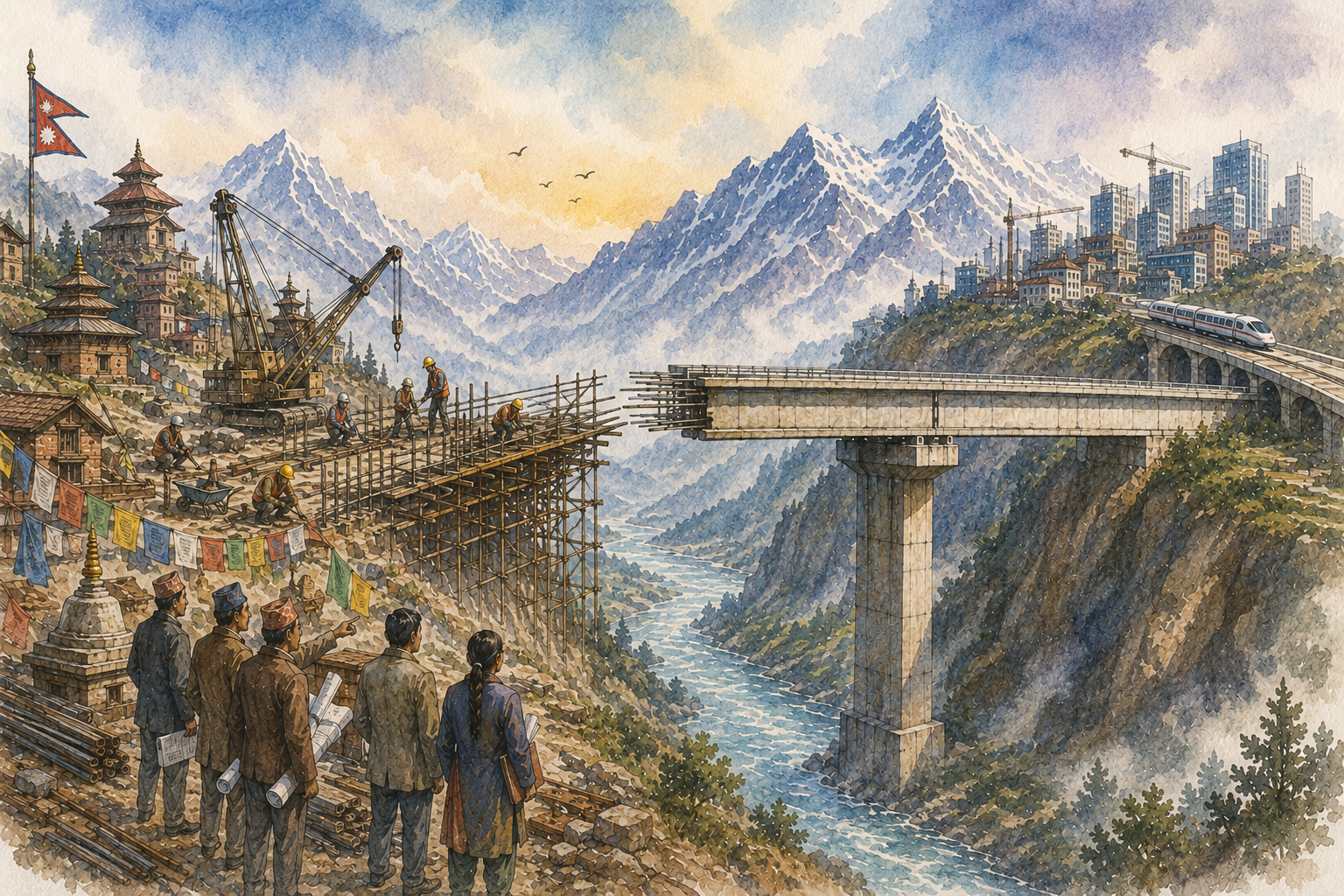

Seven Decades of Nepal-China Diplomacy: A Milestone Reflection
Nepal and China are currently celebrating the 71st anniversary of their diplomatic relations, marking more than seven decades of formal engagement between the two neighboring nations. This extensive period has witnessed the relationship evolve through significant political and economic shifts in both countries, establishing a foundation of mutual recognition and cooperation.
The commemoration of this anniversary provides a crucial opportunity for both governments to reflect deeply on the state of their partnership. However, observers and policy analysts note that the focus has often remained predominantly on ceremonial aspects and high-level symbolic gestures, rather than on achieving tangible, practical outcomes. The current diplomatic landscape is increasingly characterized by a pressing need to address the discernible gap between the historical ties that bind the nations and the contemporary economic realities and aspirations of Nepal.
While the longevity of the relationship underscores its stability and importance, the evolving global and regional dynamics necessitate a re-evaluation of its practical impact. The traditional emphasis on diplomatic pleasantries and cultural exchanges, while valuable, is now seen as insufficient to meet the developmental demands of the 21st century. This milestone serves as a reminder that the partnership must now pivot towards delivering concrete benefits that resonate with the daily lives and economic prospects of the Nepali populace.
Translating Geographical Proximity into Economic Gains
A central and persistent issue facing the bilateral relationship is the inherent difficulty in converting Nepal's geographical proximity to China into tangible and sustained economic benefits. Despite sharing a significant border with one of the world's largest and most dynamic economies, Kathmandu has historically struggled to transform this physical closeness into a consistent engine for its own prosperity and development.
Analysts point out that the relationship is increasingly being tested by its ability to deliver concrete results that go beyond mere declarations of intent. The prevailing view suggests that symbolic gestures, such as high-level visits and commemorative events, are no longer sufficient to address the complex economic challenges Nepal faces. There is a growing consensus among policymakers and economists that the focus must decisively shift from these symbolic displays to achieving measurable economic cooperation, particularly in areas like trade, investment, and infrastructure development.
The complexity of this challenge is deeply rooted in the broader geopolitical context and the unique topographical realities of the Himalayan region. While the relationship reflects what some describe as a 'civilisational grandeur' due to centuries of cultural and historical interactions, its practical application in modern economic terms has faced significant hurdles. The struggle to effectively leverage border access for enhanced trade flows, increased foreign direct investment, and improved connectivity remains a critical point of discussion and a key area for potential reform among policy experts in both nations.
The Strategic Imperative of Cooperation
A key question emerging in discussions about Nepal-China relations is how the partnership is fundamentally perceived and prioritized by Kathmandu. There is an ongoing debate regarding whether cooperation with China should be viewed as a long-term strategic component of Nepal's foreign policy, integral to its sustained development and regional positioning, or merely as a short-term solution for specific emergencies or immediate needs.
This distinction is crucial for future planning and the allocation of resources. If the relationship is treated primarily as an emergency savior, invoked during times of crisis or when other avenues are constrained, it may lack the consistency, depth, and sustained commitment required for deep and meaningful economic integration. Such an approach risks creating a reactive rather than proactive partnership, limiting its long-term potential.
Conversely, viewing the relationship as a long-term strategic imperative would necessitate a sustained, deliberate, and comprehensive effort across multiple sectors. This would include significant and consistent investment in infrastructure development, such as cross-border connectivity and transit routes, robust trade facilitation measures to streamline customs and logistics, and a concerted focus on policy alignment and regulatory harmonization. Such a strategic outlook would aim to embed the cooperation within Nepal's national development agenda, ensuring predictability and mutual benefit over decades.
Prioritizing Concrete Outcomes for Future Growth
The call to move beyond mere symbolism and embrace substantive cooperation is not a new sentiment within diplomatic circles, but it has gained considerable urgency as the 71-year mark of diplomatic relations approaches. The argument is that both nations now have a unique opportunity to directly confront the 'hard realities' and structural impediments that have previously limited the depth and breadth of their economic ties, thereby unlocking the full potential of their partnership.
For Nepal, the overarching goal is to ensure that diplomatic milestones and high-level engagements translate directly into tangible development outcomes for its citizens. This involves a dedicated effort to address the fundamental structural barriers that have historically prevented geographical proximity from becoming a distinct economic advantage. The challenge lies in creating a robust and predictable framework where cooperation is consistent, reliable, and proactively planned, rather than being reactive to external circumstances or intermittent diplomatic initiatives.
This shift requires a collaborative approach to identify and dismantle obstacles to trade, investment, and people-to-people exchanges. It also entails fostering an environment conducive to long-term projects that can genuinely contribute to Nepal's economic diversification, job creation, and overall improvement in living standards. The focus must be on practical implementation and measurable progress, ensuring that the spirit of cooperation translates into concrete projects and sustainable development.
Charting a Course for Enhanced Collaboration
As the anniversary celebrations conclude, the emphasis is expected to remain firmly on how both sides can significantly enhance practical collaboration across various sectors. The ongoing discussion centers on whether the current trajectory of the Nepal-China relationship is sufficient to meet Nepal's ambitious economic needs and development aspirations, or if a more fundamental restructuring and re-calibration of the partnership's priorities are required to achieve greater impact.
The coming years will likely serve as a critical period, determining whether the relationship matures into a robust, economically integrated partnership characterized by consistent progress, or if it remains largely defined by periodic diplomatic gestures and unfulfilled potential. The ultimate answer depends squarely on the willingness and commitment of both Kathmandu and Beijing to prioritize substantive, measurable results over ceremonial observances, fostering a partnership that delivers enduring benefits for the people of Nepal.