

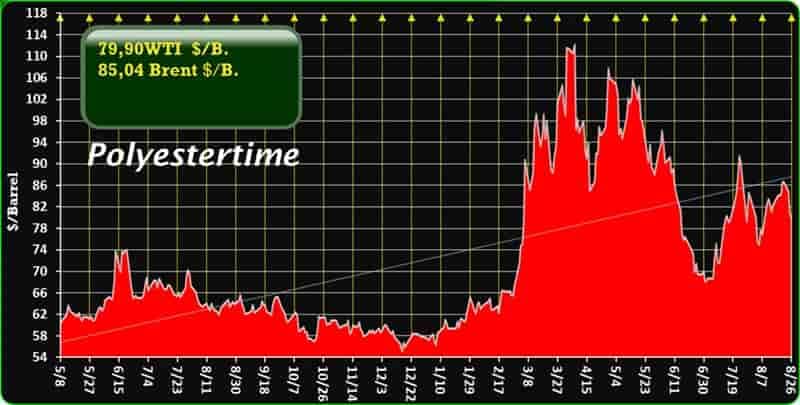

Brent Crude Stabilizes Near $85 Amid Easing Fear Premium
Global oil benchmarks have seen a reduction in their immediate "fear premium," with Brent crude oil trading around $85 per barrel and West Texas Intermediate (WTI) near $80 per barrel. Early trading data reported Brent October futures at approximately $86.28 and WTI October futures at about $80.29, according to Polyestertime. Both benchmarks recently fell by more than $2 per barrel from previous levels, reflecting a market adjustment to evolving geopolitical dynamics.
Diplomatic Efforts Temper Immediate Concerns
The decline in prices primarily reflects a reduction in the market’s immediate fear premium, which had built up due to heightened geopolitical tensions. Investors are reacting positively to renewed talks between Iran and Oman concerning a temporary shipping corridor through the Strait of Hormuz. These diplomatic overtures suggest a potential de-escalation of immediate maritime risks, offering a degree of relief to a market sensitive to supply disruptions.
Adding to this sentiment, the United States has signaled a greater emphasis on economic pressure and sanctions rather than an immediate expansion of military action in the region, according to Reuters reports cited by Polyestertime. This strategic focus on non-military leverage has further contributed to the easing of the fear premium, as the prospect of direct military confrontation, which could severely disrupt oil flows, appears less imminent.
Lingering Uncertainty Over Shipping Lanes
Despite the recent price easing, analysts caution that this should not be interpreted as a full return to normality or a resolution of underlying tensions. The Strait of Hormuz, a critical energy chokepoint, remains a major source of uncertainty. Tanker traffic through the waterway is still severely restricted, and the latest diplomatic proposals have not yet produced a fully operational and secure reopening of the waterway. This ongoing limitation means that the physical reality on the ground continues to pose challenges for global energy supply chains.
Iranian officials have underscored that the proposed arrangement does not necessarily guarantee the strait's openness, according to Al Jazeera reports cited by Polyestertime. This official stance highlights the precarious nature of the current situation and the lack of a definitive, long-term solution for secure passage. The absence of guaranteed access keeps the region’s vital energy infrastructure in a state of high alert, reminding market participants of the persistent risks.
Strait of Hormuz Criticality and Global Energy Flows
The Strait of Hormuz stands as one of the world’s most important and vulnerable energy chokepoints. Its strategic location at the mouth of the Persian Gulf makes it indispensable for global oil trade. According to the U.S. Energy Information Administration, oil flows through the strait averaged about 20 million barrels per day in 2024. This immense volume is equivalent to approximately one-fifth of global petroleum consumption, underscoring its unparalleled significance to the international energy market.
Vulnerability of a Vital Waterway
The narrow waterway, connecting the Persian Gulf to the Arabian Sea and beyond, is bordered by Iran to the north and Oman and the United Arab Emirates to the south. Its geographical constraints mean that any disruption, whether due to military action, political maneuvering, or maritime incidents, can have immediate and far-reaching consequences for global energy supplies and prices. The sheer volume of oil transiting this strait means that even a temporary closure or significant restriction could trigger a severe supply shock, impacting economies worldwide.
Operational Constraints and Market Sentiment
The potential for disruption in this critical chokepoint continues to heavily influence market sentiment. While diplomatic channels are actively engaged in discussions, the physical reality on the ground remains constrained. The absence of a fully operational and secure reopening means that tanker traffic continues to face restrictions, leading to increased transit times, higher insurance costs, and logistical complexities for shippers. This ongoing state of operational uncertainty ensures that any escalation in regional tensions could immediately impact global supply chains, leading to price spikes and market instability.
Sanctions Threat Looms Over Global Growth and Oil Flows
Amidst the fluctuating oil prices, financial institutions are issuing warnings regarding the broader economic implications of renewed geopolitical tensions. Danske Bank, for instance, highlights renewed geopolitical tension around Iran as Washington prepares tougher sanctions that could significantly impact oil flows from the Gulf. The bank notes that Brent crude was previously near $93 per barrel after profit-taking on a rally, according to FXStreet reports, indicating the market's sensitivity to such developments even before the current price adjustments.
Anticipated US Measures and Economic Repercussions
The prospect of fresh U.S. measures targeting Iran, coupled with Iran’s threats of disrupted exports, represents significant downside risks for global growth and commodity markets. Investors are reportedly taking profits ahead of an expected U.S. announcement on tougher sanctions against Iran. These anticipated sanctions are designed to exert maximum economic pressure, potentially further restricting Iran’s ability to export its oil, which would tighten global supply and could reverse the recent downward trend in prices.
Renewed geopolitical tensions around Iran and the anticipated tougher U.S. sanctions collectively pose significant downside risks to global growth and commodity markets, according to research notes provided by Polyestertime. Such measures could directly impact oil flows from the Gulf, not only through direct restrictions on Iranian exports but also by increasing the perceived risk of shipping in the region, affecting insurance premiums and operational costs for all vessels.
Market Volatility Driven by Policy and Regional Dynamics
The current market environment for crude oil is characterized by a delicate tug-of-war between easing immediate fears of military conflict and persistent long-term risks stemming from sanctions and diplomatic stalemates. While the reduction in the immediate "fear premium" has allowed prices to settle lower, the underlying structural issues contributing to regional instability remain unresolved. This dynamic creates an inherently volatile landscape where prices can swing rapidly based on news and policy shifts.
Interplay of Sanctions, Diplomacy, and Shipping
As the U.S. continues to focus on economic pressure as its primary tool, the market is closely monitoring any forthcoming announcements regarding new sanctions regimes. These measures have the potential to further restrict Iran’s ability to export oil, thereby tightening global supply and potentially reversing the recent downward trend in prices. Conversely, any concrete progress in diplomatic efforts to secure the Strait of Hormuz could provide further downward pressure on prices, though such progress remains elusive.
The situation in the region remains tense as diplomatic proposals for the secure reopening of the Strait of Hormuz are not yet fully operational. The intricate interplay between U.S. policy decisions, Iranian responses to sanctions and diplomatic overtures, and the evolving dynamics of regional shipping will continue to dictate price movements in the coming weeks and months. Global oil inventory levels also play a role, providing a buffer against immediate shocks but not immune to sustained supply disruptions from such a critical chokepoint.