

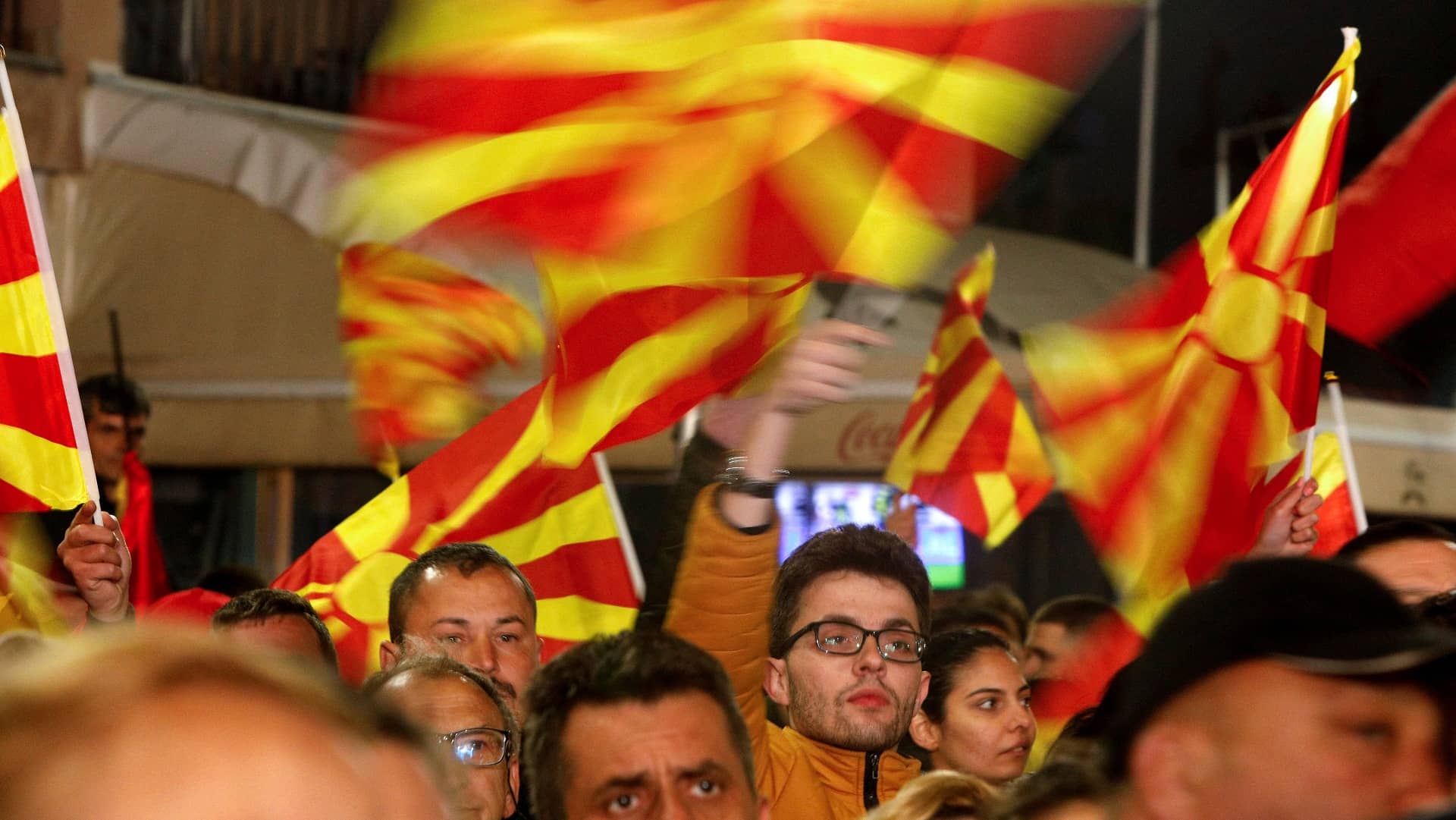

Old Divides, New Tensions in North Macedonia
In the spring of 2001, slogans in support of the National Liberation Army (NLA), also known by its Albanian acronym UCK, were heard for the first time in what was then referred to as the Former Yugoslav Republic of Macedonia. This period marked the onset of an armed conflict between government forces and ethnic Albanian insurgents, exposing deep-seated ethnic divisions within the multi-ethnic state. Two decades later, the country, now known as North Macedonia, continues to grapple with the legacy of these historical divides while simultaneously confronting a new array of internal and external pressures.
The 2001 Conflict and the Ohrid Framework Agreement
The 2001 conflict escalated rapidly, primarily involving ethnic Albanian paramilitary groups, including the NLA, who demanded greater rights and recognition for the Albanian minority, and the Macedonian security forces. The fighting, which lasted for several months, brought the country to the brink of civil war. International mediation, particularly from the European Union and the United States, played a crucial role in de-escalating the crisis. This intervention culminated in the signing of the Ohrid Framework Agreement in August 2001.
The Ohrid Agreement established a ceasefire and outlined a comprehensive plan for political reform, aiming to integrate ethnic Albanians more fully into the country's political and social structures. Key provisions included constitutional amendments enhancing minority rights, decentralization of power, official recognition of the Albanian language in areas where Albanians constituted over 20% of the population, and increased representation of ethnic Albanians in public administration and the police force. The agreement was widely regarded as a critical step towards preventing further conflict and fostering inter-ethnic coexistence.
Post-Ohrid Dynamics and Ethnic Representation
Following the implementation of the Ohrid Framework Agreement, North Macedonia embarked on a path of institutional reform aimed at fulfilling its commitments. Over the subsequent years, ethnic Albanian political parties became integral components of coalition governments, participating in decision-making processes at both national and local levels. This increased political representation was intended to address historical grievances and ensure that the interests of the ethnic Albanian community were reflected in state policies. However, the practical implementation of these reforms and the pace of integration have remained subjects of ongoing debate and occasional political friction.
Despite the formal mechanisms for power-sharing and minority rights, challenges persisted in fully overcoming inter-ethnic mistrust and ensuring equitable opportunities across all communities. Economic disparities, differing historical narratives, and occasional nationalist rhetoric from various political actors continued to influence public discourse and inter-ethnic relations. The framework, while successful in averting large-scale conflict, did not entirely erase the underlying societal divisions.
The Prespa Agreement and Geopolitical Realignments
A significant development in North Macedonia's recent history was the resolution of the long-standing name dispute with Greece. For decades, Greece objected to the country's constitutional name, "Republic of Macedonia," arguing it implied territorial claims to the Greek region of Macedonia. This dispute had blocked North Macedonia's aspirations for membership in NATO and the European Union. In 2018, the two countries signed the Prespa Agreement, which stipulated the country's renaming to "Republic of North Macedonia."
The Prespa Agreement, ratified in 2019, paved the way for North Macedonia's accession to NATO in March 2020 and opened the door for the commencement of EU accession talks. While internationally lauded as a diplomatic success, the agreement faced considerable opposition domestically from segments of the population in both countries. In North Macedonia, opponents argued that the name change compromised national identity, while supporters emphasized the strategic benefits of Euro-Atlantic integration. The political fallout from the agreement contributed to shifts in the domestic political landscape and continued to be a point of contention for some political factions.
Emerging Tensions and European Integration Challenges
In the period following the Prespa Agreement and NATO accession, North Macedonia has encountered new challenges, particularly concerning its path towards European Union membership. Despite fulfilling numerous reform benchmarks and aligning its legislation with EU standards, the country's EU accession process has faced significant delays. These impediments have notably stemmed from objections raised by other member states, prominently Bulgaria, which has utilized its veto power to block the commencement of full accession negotiations.
Bulgaria's objections have primarily centered on historical and linguistic issues. Sofia asserts that the Macedonian language has Bulgarian roots and that certain historical figures, revered as national heroes in North Macedonia, are also integral to Bulgarian national identity. These demands often involve a reinterpretation of historical narratives and a recognition of a shared linguistic heritage. The ongoing dispute has been perceived by some in North Macedonia as an attempt to undermine their distinct national identity and language, leading to heightened nationalist sentiments and political polarization within the country.
These new geopolitical hurdles have exacerbated internal political tensions and fueled public frustration regarding the pace of European integration. The protracted nature of the dispute with Bulgaria has reignited discussions about national identity and historical interpretation within North Macedonia, often intersecting with existing ethnic and political divides. The perception among some citizens that the country has made significant concessions (e.g., the name change) without immediate tangible benefits from the EU has contributed to a sense of disillusionment. Furthermore, persistent issues such as economic stagnation, perceived high levels of corruption, and the emigration of young, skilled professionals continue to contribute to a complex domestic environment, where the promise of European prosperity remains a distant goal for many citizens. These factors collectively underscore the intricate interplay between historical legacies, domestic politics, and external influences shaping North Macedonia's trajectory.