


The Independent Life of Political Terminology
In the lead-up to the 2026 elections in Osun State, political discourse has been characterized by a specific phenomenon where language operates independently of its original intent. According to reporting by Pm News Nigeria, there are distinct moments in politics when a single word acquires a life of its own. This linguistic evolution occurs as the term travels beyond the intention of its creator, entering an atmosphere that is already charged with suspicion and fear.
The article highlights that this dynamic creates a significant challenge for political actors. By the time an explanation or clarification regarding the word's intended meaning arrives, the damage associated with its spread may have already traveled much further. This suggests a disconnect between the initial deployment of political rhetoric and the ability of parties to control the narrative once the term has gained traction in the public sphere.
AMBO as a Catalyst for Suspicion
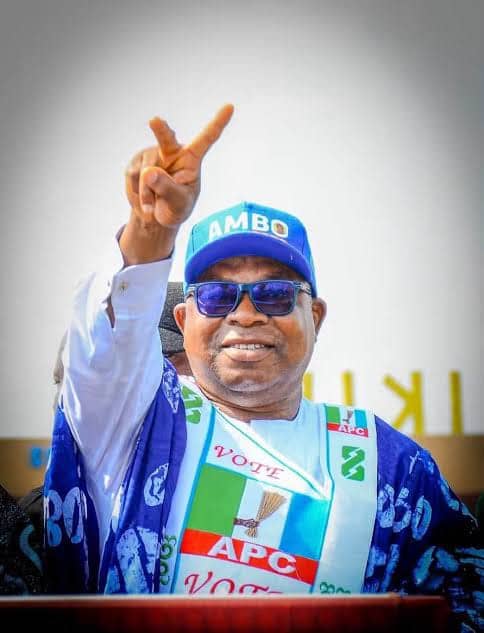
The term "AMBO" serves as the central example of this phenomenon within the Osun political landscape. The source material describes AMBO not merely as a label, but as a word that has acquired an independent existence in political discourse. Its spread is linked to an environment where suspicion and fear are already prevalent, allowing the term to amplify existing tensions rather than facilitate factual discourse.
The narrative suggests that the impact of such terminology is tied to its speed of propagation relative to the speed of correction. The article posits that the damage inflicted by the word is often irreversible or significantly entrenched before any explanatory context can be provided. This dynamic positions AMBO as a tool that thrives on the gap between accusation and clarification.
The All Progressives Congress's Strategic Response
In response to these dynamics, the All Progressives Congress (APC) is portrayed as engaging in a battle against what is described as toxic politics. The source indicates that this form of political engagement thrives on suspicion and fear rather than factual discourse. The APC's efforts are framed as an attempt to combat this specific type of political toxicity, which is exemplified by the independent spread of terms like AMBO.
The article contrasts the "sanitising effect" associated with AMBO against the broader battle against toxic politics. While the term AMBO is linked to the spread of suspicion, the APC's strategy involves addressing the underlying conditions that allow such toxicity to flourish. The reporting suggests that the party is actively working to counteract the influence of narratives driven by fear rather than verifiable facts.
The Role of Timing in Political Damage
A critical component of the reported dynamic is the element of timing. The source emphasizes that the damage caused by political rhetoric is not solely dependent on the content of the word, but on the delay between its use and its explanation. This delay allows the atmosphere of suspicion to expand, making the eventual clarification less effective in mitigating the initial impact.
This aspect of the political landscape in Osun highlights the vulnerability of actors who rely on factual discourse in an environment where emotional responses to terminology can outpace logical rebuttals. The APC's battle is thus described as not just against specific terms, but against the structural conditions that allow toxic politics to gain momentum before facts can be established.
Implications for the 2026 Electoral Landscape
The focus on AMBO and the fight against toxic politics underscores the challenges facing political parties in Osun as they approach the 2026 elections. The reporting from Pm News Nigeria suggests that the ability to manage narrative speed and content will be a defining factor in the electoral contest.
By characterizing the current environment as one where words travel beyond intention into atmospheres of fear, the article frames the upcoming election as a struggle over the nature of political communication itself. The APC's efforts are presented as part of a broader attempt to restore factual discourse, countering the spread of terms that operate primarily through suspicion.