

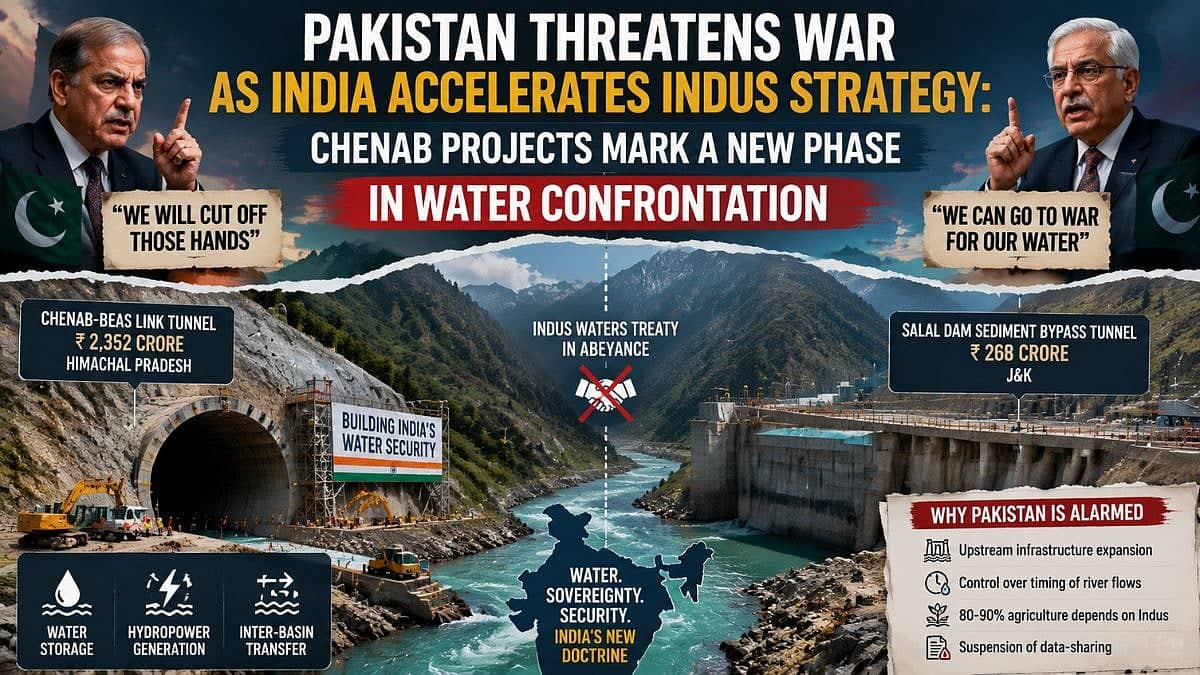

Tensions between India and Pakistan concerning the Indus Waters Treaty (IWT) have entered a phase described by analysts as their most dangerous since New Delhi placed the agreement in abeyance following the 2025 Pahalgam terror attack. The situation has shifted from diplomatic signaling to concrete infrastructure development, specifically through projects linked to the Chenab River.
Shift From Diplomacy To Infrastructure
India's evolving strategy regarding the Indus River system is moving away from purely diplomatic discussions toward tangible construction efforts. According to reports published by The Free Press Journal on Tuesday, July 14, 2026, at 09:53 PM IST, these developments are centered around expanding infrastructure projects along the Chenab.
The article notes that India's expanding Chenab infrastructure has brought water security to the forefront of strategic relations between New Delhi and Islamabad. This transition marks a significant change in how the two nations approach their long-standing dispute over river rights, which dates back six decades under the framework of the Indus Waters Treaty.
Escalation In Rhetoric
Pakistan has reacted to India's accelerated strategy with strong rhetoric concerning its water security. Musadik Malik, identified as Pakistan’s Climate Change Minister in the source text issued a specific warning regarding these developments.
"Islamabad would ‘cut off those hands’ seeking to claim Pakistan's share of the Indus waters,"
Malik stated that Islamabad intends to take severe action against entities or groups attempting to divert water resources designated for Pakistani use. This statement reflects a hardening stance from the Pakistani government regarding its interpretation of the treaty and its perceived rights under international law.
Dangerous Phase In Strategic Relations
The latest flashpoint in this confrontation involved declarations made by Pakistan’s Defence Minister Khawaja Asif. He declared that Islamabad could “go to war” if its water security were threatened.
"The rhetoric has transformed what was once a technical water-sharing arrangement into...",
The source text indicates that the debate now highlights the growing intersection of water management, national security, regional stability and strategic competition in South Asia. The combination of military threats from Islamabad and infrastructure expansion by New Delhi suggests that the dispute is no longer viewed solely through the lens of environmental science or hydrological engineering.
Context Of Recent Events
The current escalation follows a period where India placed the Indus Waters Treaty in abeyance. This action occurred after the 2025 Pahalgam terror attack, an event that significantly altered the geopolitical landscape between the two nations. The placement of the treaty on hold removed previous diplomatic constraints and allowed for more aggressive maneuvering regarding water resources.
Analysts suggest that these developments represent a significant escalation in the India-Pakistan water dispute. By moving beyond a technical water-sharing agreement, both sides are now engaging with issues that touch upon core national security doctrines. The Chenab projects serve as the primary vehicle for this new phase of confrontation.
The Intersection Of Security And Water
According to KS Tomar, who updated the report on July 14, 2026, India's expanding Chenab infrastructure has brought water security to the forefront of India-Pakistan strategic relations. This framing places hydrological disputes within a broader context of national defense.
"Combined with Pakistan Defence Minister Khawaja Asif's declaration that Islamabad could ‘go to war’ if its water security were threatened, the rhetoric has transformed what was once a technical water-sharing arrangement into...",
The full quote from The Free Press Journal cuts off after describing the transformation of the agreement. However, the available text confirms that Pakistan officials view their access to Indus waters as inseparable from their national survival and security posture.
Implications For Regional Stability
The situation highlights complex interplay between water management, national security, regional stability and strategic competition in South Asia. As India accelerates its plans for the Chenab River, Pakistan has responded with threats of military action to protect what it considers its share.
These developments underscore how environmental resources can become flashpoints for broader geopolitical conflict. The Indus Waters Treaty, originally designed as a technical agreement between New Delhi and Islamabad based on hydrological data from 1960, is now being tested against the realities of modern strategic competition.
"The debate highlights the growing intersection of water management, national security, regional stability and strategic competition in South Asia.",
With Pakistan’s Climate Change Minister Musadik Malik warning that Islamabad would “cut off those hands,” and Defence Minister Khawaja Asif declaring readiness to go to war, the diplomatic space for negotiation appears increasingly constrained. The Chenab projects mark a definitive shift from dialogue to implementation of infrastructure plans by India.
The article concludes its factual reporting with these statements attributed directly to officials in Islamabad. No further speculation is included regarding future outcomes or unverified claims about specific project timelines beyond what was explicitly stated in the source text provided for July 14, 2026.