


Unusual Maritime Routes Emerge Amidst Waterway Bottlenecks
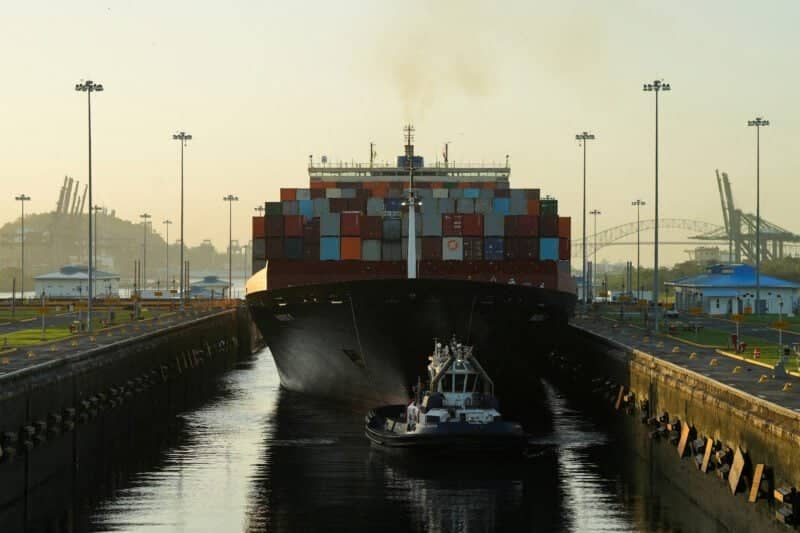
Growing congestion at the Panama Canal is forcing some gas tankers into unusual journeys, according to a report by Bloomberg published on Aug. 28, 2026. This bottleneck has led to significant disruptions, compelling operators to consider and implement non-traditional shipping strategies. The disruptions range from rare detours around the entirety of South America, adding thousands of miles and weeks to voyages, to the possible emergence of innovative "shuttling" operations through the waterway itself. These alternative methods are being adopted as operators seek to maintain crucial supply chains for liquefied petroleum gas (LPG) amidst tightening transit conditions and extended waiting times for vessels without advance bookings.
Vessel-tracking data, combined with reports from traders and shipbrokers, indicate that two supertankers recently engaged in a ship-to-ship transfer off Balboa port on Panama’s Pacific Ocean coast. This complex logistical maneuver allows one of the tankers to shuttle back and forth through the canal repeatedly, optimizing its passage. By transferring cargo mid-transit, typically from a larger vessel to one better suited for canal transit or to avoid a longer wait, the vessels aim to ensure a steady flow of LPG to Asian customers. This strategy bypasses some of the severe delays associated with standard single-vessel transits, where a single tanker might face prolonged queues before being granted passage.
Geopolitical and Environmental Factors Tighten Transit
The current bottleneck at the Panama Canal is the result of converging geopolitical and environmental pressures, creating an unprecedented strain on one of the world's most vital maritime arteries. The ongoing Iran war has significantly impacted global shipping patterns, diverting more maritime traffic through the Panama Canal as vessels seek alternative, safer routes between the Atlantic and Pacific oceans. This surge in demand has dramatically increased the volume of vessels seeking passage, overwhelming the canal's regular capacity. Simultaneously, canal authorities have been compelled to impose stricter controls on operations to manage the escalating strain on the waterway, exacerbating the congestion.
Canal Authorities Impose Stricter Limits
In response to these pressures, authorities have tightened restrictions on how much cargo vessels can carry, implementing draft limits that reduce the maximum permissible weight. Furthermore, they have limited the overall number of ships that are permitted to cross at any given time, creating a managed queue system. These operational limits are directly linked to drier conditions in the region, which are triggered by the El Niño weather phenomenon. El Niño has reduced the water levels necessary for optimal canal function, particularly in the Gatun Lake, which feeds the canal's lock system. The combination of higher demand from diverted shipping lanes and lower operational capacity due to weather-related constraints has created a significant backlog, leaving many vessels stranded for extended periods.
Soaring Costs for Expedited Passage
The scarcity of available transit slots has led to a dramatic surge in costs for operators desperate to move their cargo efficiently. Waiting times for vessels that have not made bookings in advance to transit the waterway have grown considerably in recent months, sometimes stretching into weeks. In response to these prohibitive delays, some shipping operators are paying significant sums, far beyond standard transit fees, to expedite their passage through the canal and avoid costly disruptions to their supply chains.
Industry sources report that these fees can reach millions of dollars per vessel, reflecting the intense competition for limited slots and the high value of timely cargo delivery. One notable instance involved a supertanker reportedly paying a record $4.6 million to skip the standard queue and secure immediate transit rights. These exorbitant fees highlight the severe economic pressure exerted by the congestion on global fuel transport networks, forcing operators to weigh the cost of delay against the extraordinary expense of expedited passage to meet market demands, particularly for critical commodities like LPG destined for Asian markets.
Operational Shifts in Global Shipping
The reliance on non-standard transit methods marks a fundamental shift in how gas tankers manage their schedules and logistics. The ship-to-ship transfer observed off Panama’s Pacific coast represents a complex operational adjustment, requiring precise coordination between vessels, crews, and port authorities. Traders have indicated that this process is vital for facilitating the continuous movement of LPG to Asian markets, which are critical destinations for these fuel carriers and rely on a steady, predictable supply. This method allows for greater flexibility and responsiveness in the face of canal delays.
While the detour around South America remains a rare alternative due to its immense length and significant time implications—adding weeks to a journey and substantially increasing fuel consumption and operational costs—the "shuttling" method offers a more immediate, albeit complex, solution to the transit crisis. As conditions remain subject to unpredictable El Niño patterns and ongoing geopolitical developments in the Middle East, these unusual routes and operational adjustments are likely to persist, and potentially become more common, as standard practice for vessels requiring timely delivery of liquefied petroleum gas to global markets.