


The Evolution of Anti-Government Mobilization
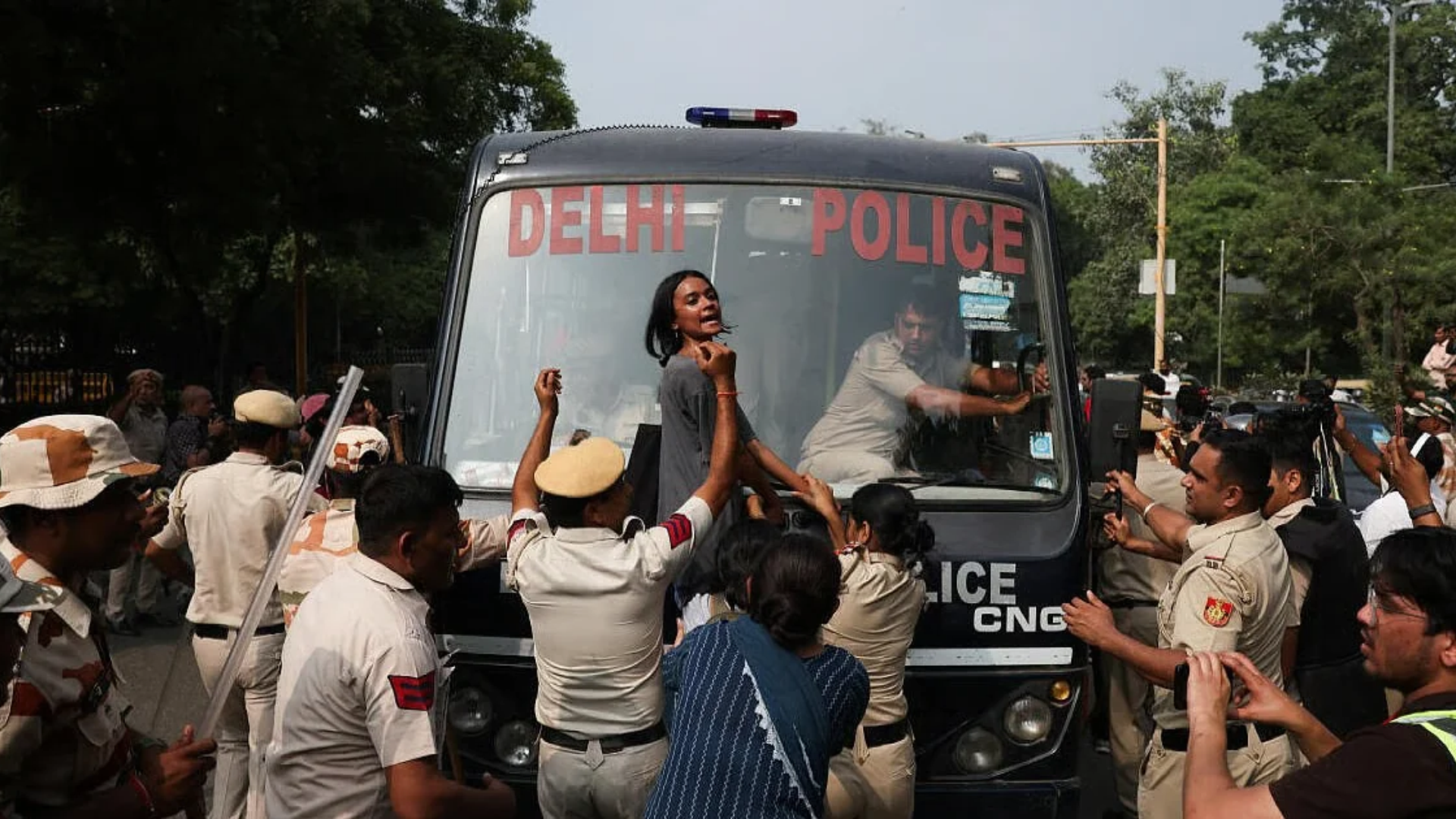
A second wave of demonstrations has emerged in India, focused on demanding the resignation of Chief Election Commissioner (CEC) Gyanesh Kumar. This current phase of unrest marks a distinct shift from earlier political mobilizations, specifically distinguishing itself from the protests that occurred in June 2026.
The June 2026 demonstrations were directed at then Education Minister Dharmendra Pradhan, calling for his resignation. The current protests, however, target the head of the country's electoral body, signaling an escalation in the scope of public dissent regarding government accountability and institutional integrity.
State Crackdowns and the Rise of 'Protectors'
While the June 2026 protests faced backlash from the state involving excessive force, the current wave of anti-CEC demonstrations involves anticipated state crackdowns alongside actions by non-state actors. These non-state participants self-identify as 'protectors' of the Bharatiya Janata Party (BJP), the Sangh Parivar, or Hindutva.
Feminism in India reports that these right-wing 'activists' are a consequence of the far right weaponizing India’s patriarchal norms to consolidate power. The outlet links Indian patriarchy and the right wing as structures rooted in the oppression of religious and gender minorities, suggesting that the current violence is not merely political but deeply cultural.
The Mechanics of Patriarchal Obedience
The article defines obedience under patriarchy as non-optional social submission that benefits authority figures. This submission is determined by intersectional identities such as caste, class, economic status, education, and political clout, rather than being earned through merit or action.
According to the report, Indian patriarchy cultivates uncritical obedience through pervasive cultural messages. These include directives such as "You should always listen to your elders" and the belief that fathers, brothers, and husbands know what is best for women. This framework creates a social environment where dissent is viewed not just as political disagreement, but as a violation of fundamental social order.
Paternalism and Political Rhetoric
The outlet argues that politics exploits this patriarchal culture to stifle dissent. This exploitation constructs a paternalistic state where citizens are viewed as wards requiring guidance from an infallible authority. By framing political opposition as disorderly or disrespectful, the ruling structure reinforces its own legitimacy.
Feminism in India observes this phenomenon in India alongside the rise of the BJP, led by Prime Minister Narendra Modi since 2014. The article notes that political rhetoric under this leadership portrays the ruling party as the 'protector' of Sanatana Dharma and the Prime Minister as a protector of the nation and the world.
This narrative of protection serves to justify the actions of both state forces and non-state actors who identify with the BJP or Hindutva ideologies. By casting themselves as defenders against perceived internal and external threats, these groups legitimize their use of force against protesters, framing it as a necessary defense of national and religious identity.
Feminism as a Counter-Narrative
The report positions feminism as a key antidote to the suppression of dissent at protest sites. It suggests that challenging these patriarchal structures is essential to addressing the mechanisms of control observed in both the June 2026 protests and the current anti-CEC demonstrations.
By exposing how patriarchal norms are weaponized to silence opposition, the article highlights the intersection between gender-based oppression and political authoritarianism. The current protests against CEC Gyanesh Kumar thus represent not only a demand for electoral accountability but also a broader challenge to the ideological frameworks that enable such control.