


Britain Imports American Political Tactics
The arrival of the Patriot Platform in Piddington, Oxfordshire, signals a significant evolution in the landscape of local political engagement across Britain. Christopher Bucktin, in an opinion piece for the Mirror, highlights a concerning trend: the apparent wholesale importation of America’s "masked, God-and-country grievance politics" into the United Kingdom. This observation suggests a departure from traditional forms of local protest, indicating a deeper, ideologically driven shift.
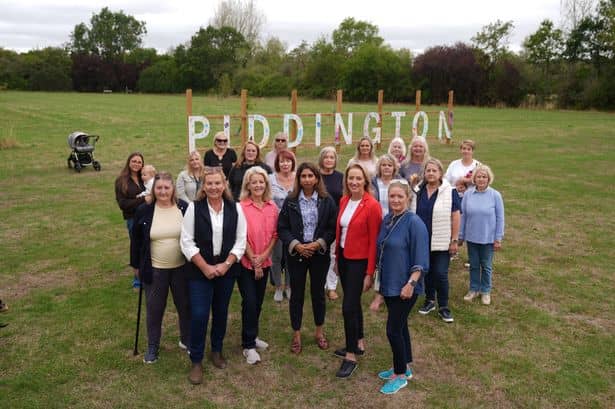
Bucktin's analysis frames the unfolding situation in Piddington not merely as an isolated local demonstration but as a manifestation of a broader ideological current taking root in British society. The village, he contends, has emerged as the latest focal point for Britain's simmering immigration tensions, specifically ignited by strong opposition to proposed plans for asylum accommodation within the community. This particular conflict, therefore, transcends typical community disagreements, becoming emblematic of a wider political transformation.
The commentary further elaborates on the UK's "remarkable talent" for readily adopting American cultural and political phenomena. This tendency, Bucktin notes, often occurs precisely at a juncture when Americans themselves are beginning to critically re-evaluate or even distance themselves from these very trends. He draws parallels to earlier, seemingly innocuous cultural imports that have become ingrained in British life, such as the widespread popularity of drive-through coffee establishments, the emergence of gender-reveal parties as social events, and the significant commercial impact of Black Friday sales events. These examples, though distinct in nature, collectively illustrate a pattern of cultural absorption that now, according to Bucktin, extends into the realm of political strategy and rhetoric.
The Role of the Patriot Platform
The impending arrival of the Patriot Platform in Piddington has undeniably intensified the national spotlight on the Oxfordshire village. Observers and critics alike are interpreting the group’s planned presence as a clear indication that local concerns, particularly those surrounding immigration, are no longer purely indigenous but are being deliberately amplified and co-opted by external political forces. Bucktin specifically points to the rhetoric being deployed in Piddington, asserting that it bears a striking resemblance to American political strategies. These strategies, he explains, are characterized by their reliance on the cultivation and exploitation of perceived grievances, often at the expense of substantive policy debate or constructive dialogue.
This dynamic has propelled the local opposition to the asylum accommodation plans beyond a mere village dispute, elevating it to a matter of national significance. Piddington has, consequently, become a critical flashpoint, emblematic of the broader, often contentious, immigration debates unfolding across the UK. The specific involvement of the Patriot Platform is viewed by some political analysts as a calculated effort to recontextualize local anxieties and frame them within a pre-existing, imported political narrative—one that resonates with the "masked, God-and-country grievance politics" identified by Bucktin. This framing, critics suggest, aims to transform specific community concerns into a component of a larger, ideologically charged movement.
Immigration Tensions in Oxfordshire
Piddington's emergence as a significant focal point for Britain's wider immigration tensions is directly attributable to the contentious proposals regarding the use of local facilities to accommodate asylum seekers. These plans have met with considerable resistance, prompting strong opposition from both individual residents and organized local groups within the community. This collective disapproval has, in turn, fostered a notably volatile and charged environment within the otherwise quiet Oxfordshire village, transforming a local planning issue into a deeply divisive public dispute.
The Mirror report, drawing on Bucktin's insights, underscores a crucial interpretive layer to this local conflict: it is increasingly being understood through the prism of imported political ideology. Bucktin’s detailed analysis suggests that the specific manner in which the issue is being framed in Piddington bears a distinct resemblance to American-style grievance politics. He characterizes this imported political approach as "masked," implying that its true ideological underpinnings may not always be overtly stated, and as deeply "rooted in nationalistic sentiment." This framing, therefore, moves beyond practical concerns, tapping into broader identity and nationalistic narratives.
From this perspective, the ongoing conflict in Piddington transcends simple disagreements over housing provision or the allocation of local resources. Instead, it represents a more profound development: the active adoption and internalization of a particular political style. The core argument presented is that British communities are progressively finding themselves embroiled in public debates that increasingly mirror and replicate the polarized, confrontational, and grievance-driven dynamics that have become a pervasive feature of the political landscape across the Atlantic. This adoption of style, it is argued, fundamentally alters the nature of political engagement in these communities.
Broader Implications for UK Politics
The commentary by Christopher Bucktin critically raises significant questions concerning the long-term ramifications of such ideological imports on the fabric of British society. His central contention is that by readily adopting American-style political tactics and rhetoric, the United Kingdom risks importing far more than just ephemeral cultural trends. Instead, it faces the potential consequence of internalizing and exacerbating deeper, more entrenched societal divisions that could fundamentally alter its political landscape and social cohesion.
Bucktin’s earlier comparison of these political imports to phenomena like Black Friday sales and gender-reveal parties serves a crucial purpose. While these cultural adoptions might appear superficial on the surface, they are used to underscore a more profound point: that the current political imports are not mere passing fads. Rather, they are indicative of more serious and potentially destabilizing political shifts underway. The imminent presence of the Patriot Platform in Piddington is presented as compelling evidence of this deeper transformation, suggesting that the UK is moving beyond simple cultural mimicry into a more fundamental reshaping of its political discourse and methods.
As the unfolding situation in Piddington continues to develop, it is poised to become a pivotal case study for understanding the mechanisms and consequences of how local immigration issues are increasingly being politicized across the UK. The village's experience will likely offer insights into the dynamics of external influence on community-level debates. The ultimate extent to which these imported grievances and the associated political tactics will permeate and shape future political discourse within Britain remains a subject of considerable discussion and debate, not only among political commentators and analysts but also among the residents directly affected by these evolving dynamics. The trajectory of Piddington, therefore, holds broader implications for the future direction of British politics.