


President Ruto Sustains Calls for African Union Reforms Amid Shifting Geopolitical Realities
President William Ruto has consistently advocated for comprehensive reforms within the African Union (AU), emphasizing the critical need for stronger continental institutions, sustainable financing mechanisms, and enhanced self-reliance across Africa. These calls are made in the context of evolving global geopolitical landscapes, which necessitate a more robust, unified, and self-sufficient African response to both internal and external challenges.
Chaired Oversight Committee Session
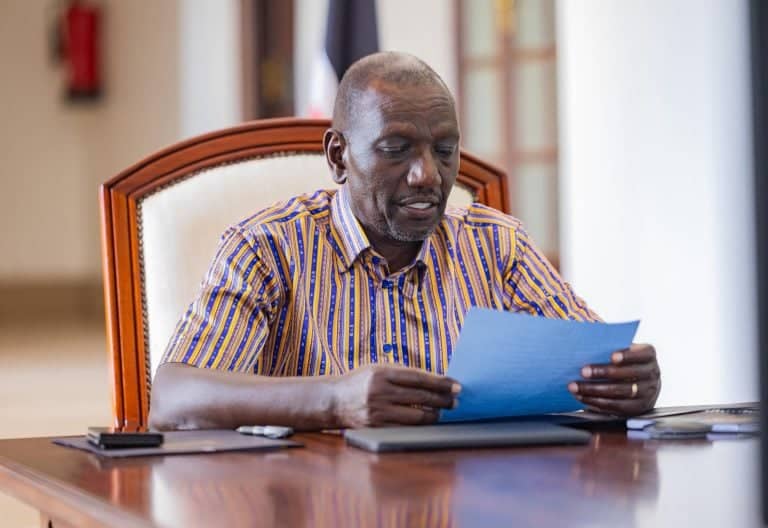
On Monday, May 25, 2026, President Ruto chaired the fourth virtual session of the African Union Ad Hoc Oversight Committee of Heads of State on Institutional Reforms. This committee, comprising various African leaders, plays a pivotal role in guiding the AU's transformation agenda. The session convened to meticulously review the progress made in implementing the ongoing institutional reform agenda of the continental body. Following the session, President Ruto shared a statement on his official X account, reaffirming the committee's unwavering commitment to advancing the AU's overall institutional effectiveness and its capacity to deliver on its mandates.
Emphasis on Institutional Strengthening
A central and recurring pillar of President Ruto's reform advocacy is the imperative for strengthening AU institutions. This involves a multi-faceted approach aimed at enhancing their capacity to execute mandates efficiently, improve governance structures, and ensure greater accountability across all levels of the organization. The ultimate objective is to equip the AU with the necessary frameworks, operational efficiencies, and human resources to address the increasingly complex regional and global challenges that impact the continent. Stronger institutions are viewed as fundamental to projecting a unified and authoritative African voice on the international stage, ensuring that the continent's diverse interests and perspectives are adequately represented and considered in global decision-making processes.
Sustainable Financing for the AU
Another key area consistently highlighted by President Ruto is the critical need for sustainable financing of the African Union. Historically, the AU has faced significant budgetary challenges, with a substantial portion of its operational and programmatic budget often reliant on contributions from external partners and donors. The persistent push for sustainable financing aims to significantly reduce this dependency by exploring and implementing innovative internal funding mechanisms, such as the proposed levy on eligible imports. This strategic shift towards financial self-sufficiency is intended to grant the AU greater autonomy, predictability, and flexibility in its operations, allowing it to set its own agenda and priorities based solely on the needs and aspirations of its member states, without undue external influence or conditionalities.
Promoting Greater Self-Reliance Across Africa
President Ruto's advocacy for reforms also extends to fostering greater self-reliance across the African continent as a whole. This principle encompasses various interconnected dimensions, including achieving robust economic independence, ensuring comprehensive food security, and developing the indigenous capacity to address peace and security challenges predominantly through African-led initiatives and resources. The drive for self-reliance is deeply rooted in the belief that Africa possesses abundant natural resources, a dynamic and growing human capital base, and immense innovative potential. By harnessing these internal strengths, the continent can effectively chart its own sustainable development path, mitigate vulnerabilities to external economic or political shocks, and enhance its resilience in a rapidly changing world.
Geopolitical Realities and the Reform Imperative
The ongoing calls for AU reforms are situated within a highly dynamic global environment characterized by profound and shifting geopolitical realities. These shifts include the emergence of a more multipolar world order, evolving global trade relationships, increased competition for resources and influence, and persistent transnational challenges such as climate change, global pandemics, and complex regional conflicts. In this intricate and often unpredictable context, a reformed and significantly strengthened African Union is considered essential for Africa to effectively navigate these complexities. Such reforms are aimed at enabling the continent to protect its collective sovereignty, enhance its bargaining power, and strategically leverage its collective influence to secure beneficial partnerships and favorable outcomes on the global stage, positioning the AU as a more agile and responsive organization capable of adapting to rapid global changes and advocating for African interests.
The Ad Hoc Oversight Committee's Mandate
The African Union Ad Hoc Oversight Committee of Heads of State on Institutional Reforms was specifically established to provide strategic guidance and oversee the comprehensive implementation of the AU's institutional reform agenda. Its broad mandate includes diligently monitoring progress across various reform pillars, providing strategic direction to ensure coherence and effectiveness, and ensuring that the reforms align seamlessly with the continent's long-term vision for deeper integration, sustainable development, and enhanced global standing. The recent virtual session, chaired by President Ruto, served as a crucial platform to review specific milestones achieved to date, assess the impact of implemented changes, and identify areas that may require further attention, accelerated action, or revised strategies to ensure the successful realization of the reform objectives.
President Ruto's Statement on Progress
Following the conclusion of the committee's fourth virtual session, President Ruto's statement on his X account underscored the ongoing commitment of African leadership to the reform process. He explicitly noted that the committee reviewed the substantial progress made in key areas, including the strengthening of AU institutions, the advancement towards sustainable financing models, and the collective efforts aimed at promoting greater self-reliance across the continent. The statement highlighted the collective resolve of African leaders to continue building a more effective, efficient, and impactful African Union – an organization truly capable of serving the aspirations of its member states and, crucially, its diverse citizens in the 21st century.