


President outlines potential economic shifts for Singaporean enterprises
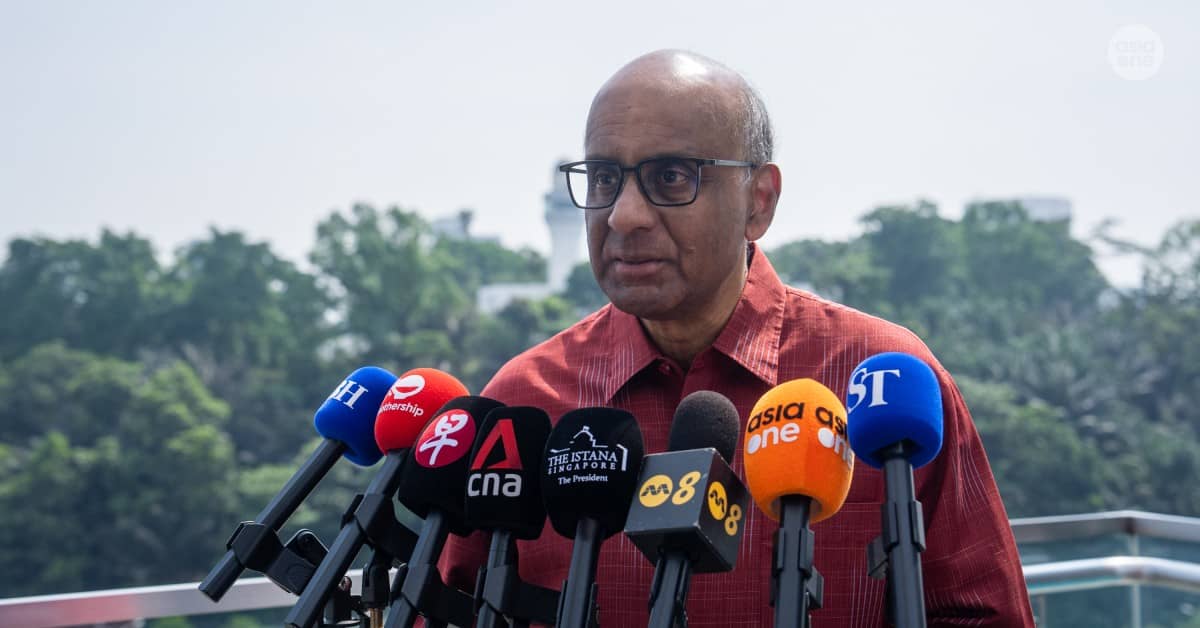
Singapore President Tharman Shanmugaratnam addressed media inquiries on Wednesday morning regarding the evolving bilateral relationship between his nation and Malaysia. These significant remarks were delivered following a breakfast roundtable convened with business leaders, an event that marked the conclusion of a four-day state visit spanning from July 12 to July 15. The visit itself underscored the importance Singapore places on its ties with its closest neighbour, culminating in discussions that touched upon the future economic landscape shaped by deeper integration.
During the press conference, President Tharman articulated a nuanced perspective on the deepening ties between Singapore and Johor. While acknowledging the broad spectrum of mutual benefits that such integration offers for both countries, he candidly noted that some specific sectors within Singapore may experience negative impacts. He stated that there will inevitably be businesses in Singapore who lose out as the two nations link up more closely through ambitious initiatives such as the proposed Special Economic Zone (SEZ) and the Rapid Transit System (RTS) Link.
The President specifically identified service industries as a group likely to face difficulties under this new framework of integration. He elaborated, "It is no secret that, in linking up more with Johor for instance – through the Special Economic Zone and the RTS (Rapid Transit System) Link – there will be some businesses in Singapore who lose out." This observation highlights a specific concern regarding service industries, which could potentially be affected by increased cross-border competition, shifts in consumer patterns, or the relocation of certain operations as the economic barriers between Singapore and Johor diminish. For instance, some segments of retail, food and beverage, or even certain professional services might face new competitive pressures from more cost-effective options or expanded market access across the Causeway.
Navigating economic shifts
Despite these localized concerns, President Tharman emphasized that other sectors stand to gain significantly from closer Johor-Singapore links. He characterized the overall situation as one where both countries will emerge as winners in the long run, underscoring a strategic vision that prioritizes collective prosperity over isolated sectoral interests. The President added that the overall gains for Singapore and Malaysia would substantially outweigh any smaller, localized losses associated with specific industries or businesses. This perspective suggests a readiness to accept short-term adjustments for long-term strategic advantages, such as enhanced regional competitiveness and a larger combined market.
In describing this dynamic, he referred to it as a mature way of approaching bilateral relationships. This perspective suggests an acceptance of friction or loss within certain sectors as a natural component of a broader strategy aimed at strengthening complementarity between the two nations. It signifies a recognition that deep economic integration, while yielding substantial benefits, often necessitates adjustments within individual economies. The President indicated that both sides are actively investing in these ties, not just through infrastructure, but also through policy alignment and collaborative frameworks, to ensure such mutually beneficial outcomes are realised. This includes fostering an environment where businesses can adapt, innovate, and find new opportunities within the expanded economic landscape.
Strategic initiatives and regional alignment
The discussion took place against the backdrop of key areas of alignment shared by Singapore and Malaysia, with a specific focus on their relationship within the Association of Southeast Asian Nations (ASEAN). President Tharman highlighted that strengthening complementarity is central to these efforts, aiming to forge a more robust and interconnected regional economy that can collectively compete on the global stage. This regional cooperation is vital for both nations to navigate complex geopolitical and economic shifts.
Deepening cross-border infrastructure
Closer integration involves structural projects like the Rapid Transit System Link (RTS Link) connecting the two countries, specifically between Johor Bahru and Singapore. This vital piece of infrastructure, which is currently under construction, is designed not merely for convenience but to fundamentally alter economic and social interactions between Singapore and Johor. By facilitating easier and faster movement of people, goods, and services, the RTS Link aims to reduce commuting times and operational costs, thereby enhancing the attractiveness of cross-border collaboration and investment. It is expected to significantly boost tourism, trade, and daily commuting efficiency.
Complementing the RTS Link, the proposed Special Economic Zone (SEZ) between Johor and Singapore represents another cornerstone of this integration strategy. While details are still being finalized, the SEZ is envisioned to offer a conducive environment for businesses through streamlined regulations, preferential policies, and enhanced connectivity. Such a zone would encourage cross-border investments, foster industrial clusters, and create employment opportunities, leveraging the distinct strengths of both regions. For Singapore, it could mean access to a larger talent pool and land resources, particularly beneficial for industries facing space constraints. For Johor, it could attract high-value investments in manufacturing, logistics, and digital economies, leading to technology transfer and job creation for its citizens.
These initiatives are designed to create a more integrated regional economy where resources flow freely across borders, optimizing efficiency and fostering innovation. The goal is to move beyond mere transactional trade to a deeper, symbiotic economic relationship where both Singapore and Johor can thrive together, enhancing their collective resilience and competitiveness in the face of global economic shifts. This collaborative approach is seen as crucial for unlocking new growth engines and ensuring sustainable development for the entire southern growth corridor of Malaysia and Singapore.
Assessment of net benefits
President Tharman's comments underscored the principle that macroeconomic gains often supersede micro-level disruptions in specific industries when pursuing strategic bilateral integration. He noted that while some businesses and service industries may be affected negatively, others are poised to benefit significantly from the closer integration with Johor. This dynamic is not unique to Singapore-Malaysia relations but is a common feature of economic liberalization and regional integration efforts worldwide, where the broader economic pie often expands even as its slices are re-distributed.
The President's emphasis on a "mature approach" suggests a governmental commitment to managing these transitions, potentially through support for affected sectors or workers, while simultaneously championing the broader national and regional advantages. This long-term perspective aims to cultivate a more resilient, diversified, and interconnected economy for both Singapore and Malaysia, ensuring sustained growth and shared prosperity for their respective populations. Ultimately, the vision articulated by President Tharman is one of a stronger, more integrated Singapore-Johor economic nexus that serves as a powerful engine for regional development.