

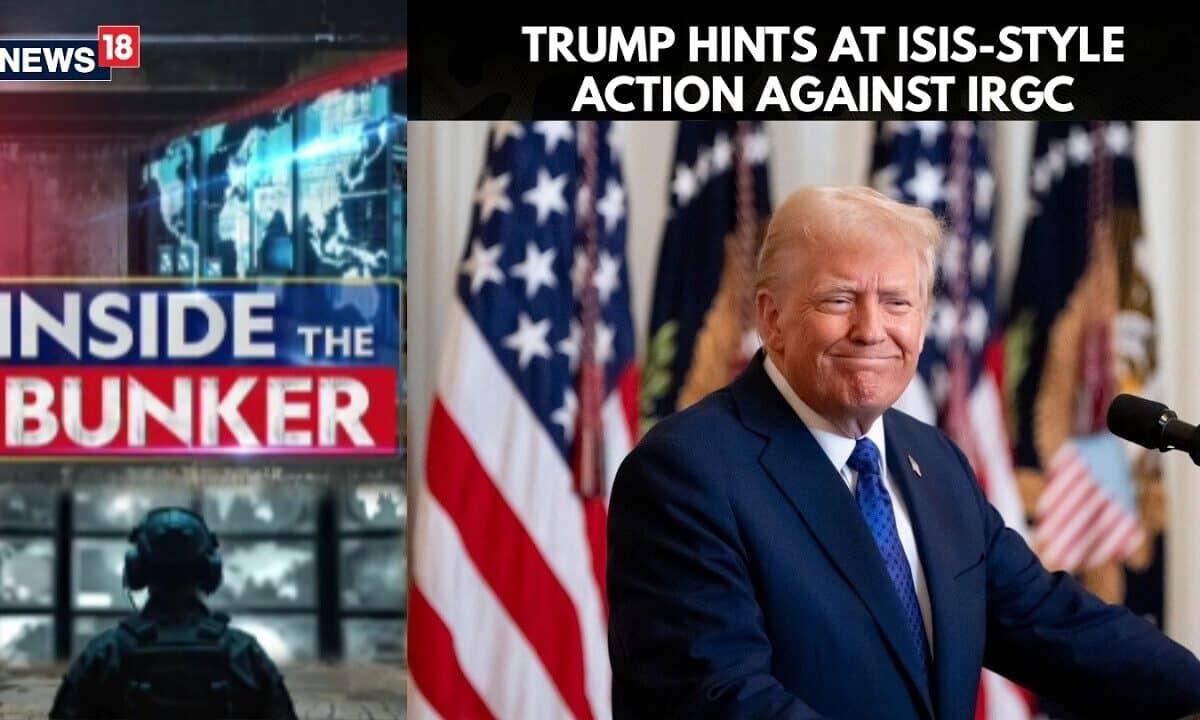

United States President Donald Trump has made a significant statement regarding escalating tensions with Iran. During an interview, when asked whether he would consider using the same playbook against Iran's Islamic Revolutionary Guard Corps (IRGC) that was employed against ISIS, Trump replied "yes, we may." These remarks arrive as the United States and Iran remain locked in a period of heightened military and diplomatic tensions.
Statement on Military Strategy Against IRGC
The President's comments were delivered directly to address questions about potential actions involving foreign entities. When specifically queried if he would utilize an approach comparable to past operations against the Islamic State, Trump provided a direct affirmative response. He stated that "yes, we may" consider such a course of action.
Specific References to ISIS Tactics
The discussion centered on whether existing military methodologies could be applied in this new context. The President drew explicit parallels between the operational frameworks used against one non-state actor and those potentially applicable to Iran's IRGC. By framing the response as a "playbook" from previous engagements, Trump suggested that past experiences with ISIS might inform future decisions regarding Iranian forces.
Context of Escalating Tensions
The remarks were made amidst heightened military and diplomatic tensions between the United States and Iran. The situation involves complex developments in the Middle East drawing global attention. Both nations are currently engaged in a standoff characterized by increased scrutiny on their respective actions.
Global Attention to Regional Developments
The geopolitical landscape of the region is under close observation as these tensions persist. International observers note that such statements from high-ranking officials can significantly influence regional stability and diplomatic calculations across multiple nations in the Middle East. The United States maintains a strategic interest in how its policies affect broader security dynamics within the area.
Implications of Presidential Remarks
The President's willingness to entertain similar strategies marks a notable shift in public discourse regarding potential military engagements with Iran. By explicitly linking current considerations to past operations, Trump has introduced new variables into the ongoing diplomatic equation between Washington and Tehran.
Nature of the Proposed Approach
While specific details regarding operational parameters were not elaborated upon beyond the comparison to ISIS tactics, the core assertion remains that a similar strategic framework is under consideration. The President's language suggests flexibility in applying military doctrine based on perceived threats and historical precedents.
Diplomatic Environment
The diplomatic environment surrounding these statements reflects ongoing friction between the two nations. Relations remain strained as both sides navigate complex geopolitical interests. The United States continues to monitor Iran's activities closely, while maintaining its own strategic objectives in the region.
Continued Monitoring of Situation
Diplomatic channels operate alongside potential military considerations as tensions persist. Officials on both sides assess each other's positions and actions within this volatile context. The situation remains fluid with developments occurring rapidly across various fronts involving multiple stakeholders interested in the outcome.
Media Coverage and Public Discourse
The statement received immediate attention from media outlets covering international affairs. News organizations reported on the President's comments as a significant development in U.S.-Iran relations. The phrasing used by Trump became central to discussions regarding potential future military engagements involving Iran.
Analysis of Rhetorical Choices
The use of specific terminology such as "playbook" and direct references to ISIS operations provided concrete examples for analysts studying the President's strategic thinking. Such language helps clarify abstract concepts into tangible comparisons that can be evaluated by experts in military strategy and international relations.
Regional Security Dynamics
The potential application of such strategies has implications beyond bilateral U.S.-Iran relations. Regional security dynamics are influenced by how major powers perceive threats and respond to them through various means including diplomatic engagement or military action.
Influence on Broader Geopolitical Landscape
Actions taken in response to perceived threats from Iran can ripple outward affecting neighboring states and international organizations. The Middle East remains a focal point for global powers seeking stability while managing competing interests among regional actors including state-sponsored militias, proxy groups, and conventional military forces.