


Conditions for Diplomatic Engagement
Leader of the Opposition in the Lok Sabha Rahul Gandhi stated that bilateral talks with Pakistan are impossible until Islamabad ends its support for cross-border terrorism. Speaking at the University of Chicago in Illinois on November 20, 2026, Gandhi addressed the conditions required for India and Pakistan to move beyond mutual accusations.
When asked during the event if there is scope for the two nations to work together, Gandhi emphasized that India cannot accept a situation where innocent people are killed while the nation engages in diplomatic talks with Pakistan. He identified Pakistan’s support for and promotion of terrorism within India as a major problem that must stop before conversations can begin.
"There is scope, but there is a major problem, and that is Pakistan’s support for and promotion of terrorism within our country. This is absolutely out of the question," Gandhi said. He added that "the moment that stops, then a conversation can potentially begin." Gandhi ruled out the possibility of bilateral talks with Pakistan while it supports terrorism, framing the cessation of cross-border violence as a non-negotiable prerequisite for any diplomatic engagement.
Academic Discussions in the United States
Gandhi is currently on a two-day visit to the United States. Prior to his appearance at the University of Chicago, he took part in an academic interaction with students and faculty members at Columbia University in New York.
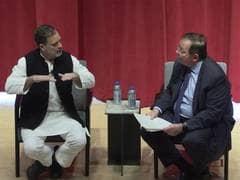
During the discussion at the University of Chicago, Gandhi engaged with political science professor Robert Pape. The event focused on geopolitical dynamics and domestic challenges facing India. The dialogue between Gandhi and Pape served as a platform to discuss the intersection of internal stability and external security threats, particularly regarding Pakistan's role in regional instability.
Domestic Challenges and Global Warnings
During his remarks, Gandhi argued that India was grappling with structural issues prior to recent international conflicts. He stated that these internal problems were exacerbated by the "recent Iran war," which he said pushed people over the edge. This assessment suggests that external geopolitical shocks have intensified pre-existing domestic vulnerabilities rather than creating them from scratch.
Gandhi warned against diplomatic complacency, stating that those who think they are exempt from global geopolitics have a big problem coming. His comments underscored the interconnectedness of international conflicts and their direct impact on national security and internal cohesion.
The Congress party also highlighted three core domestic challenges in a post on X. The party identified massive concentration of wealth and power in the hands of a few large conglomerates, large-scale distress and destruction of small and medium-sized businesses, and rising unemployment as key issues. These points were presented alongside Gandhi's foreign policy statements to illustrate the dual pressures of economic inequality and geopolitical risk facing the nation.