


Historical Patterns of National Ascendance and Decline
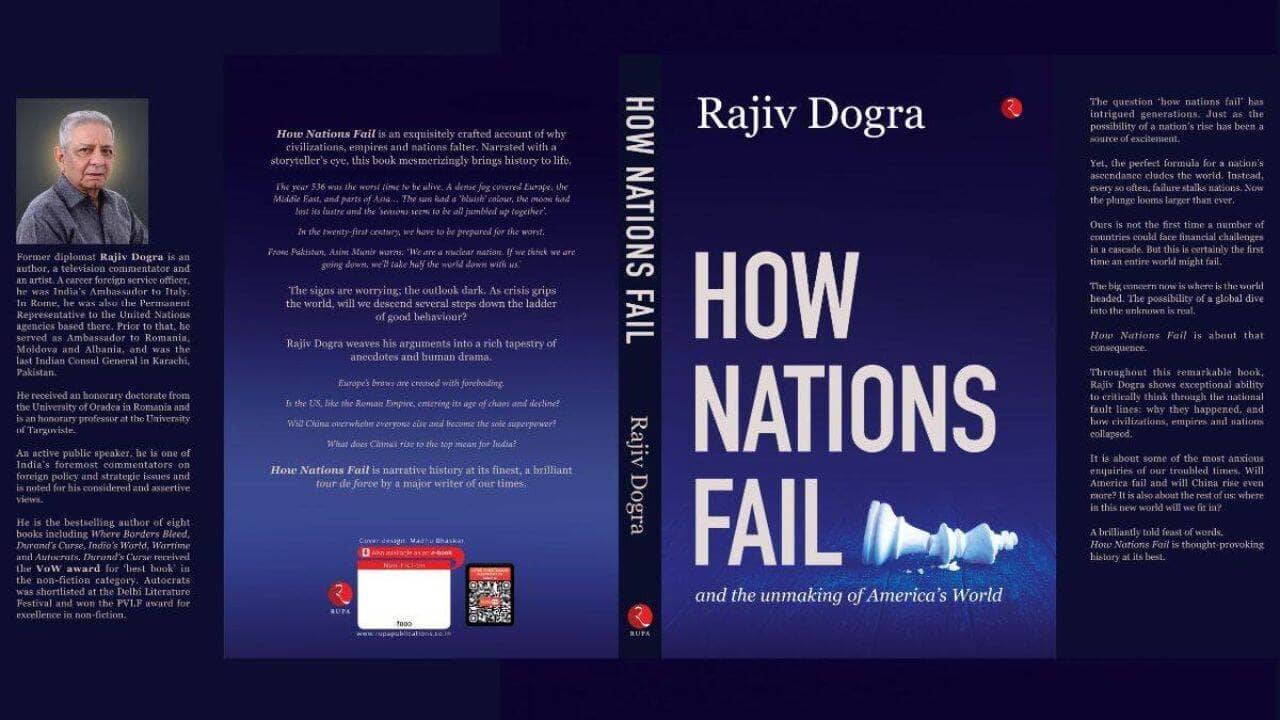
The question of why certain nations achieve global power status while others experience decline has long been a subject of intense study among historians, philosophers, and political thinkers. In his latest publication, "How Nations Fail and the Unmaking of America's World," former diplomat Rajiv Dogra investigates these dynamics through the lenses of history, politics, and contemporary geopolitical shifts.
Dogra posits that the trajectory of a nation is not determined solely by geography or economic resources, but is significantly influenced by the quality of its leadership and the strength of its institutions. According to his analysis, the ascendance and decline of nations are closely tied to these structural factors. The book examines how specific political choices and institutional frameworks can either propel a country toward prominence or lead it toward obsolescence.
A central theme in Dogra's work is the role of hubris and intellectual complacency in the downfall of powerful states. He argues that these psychological and cultural traits often precede a nation's decline, suggesting that a loss of critical engagement with reality can be as damaging as external pressures. By tracing historical patterns, Dogra aims to provide guidance for navigating global shifts and making future decisions.
The Unmaking of America's Global Order
The title of Dogra's book explicitly references the "unmaking of America's world," indicating a focus on the changing nature of United States hegemony. While the source material does not detail specific policy failures, it frames the current era as one where the previous American-dominated global order is undergoing significant transformation. This shift creates a complex environment for other rising powers and established democracies alike.
Dogra explores whether the fate of nations is decided by culture or simply the quality of their leaders. His work suggests that leadership quality is a decisive variable in maintaining or losing global influence. The book serves as an examination of how the unmaking of one world order creates vacuums and opportunities for other geopolitical actors to redefine international relations.
India's Civilizational Strengths and Implementation Challenges
Turning his analytical lens toward South Asia, Dogra addresses India's position in the modern world. He asserts that India possesses inherent civilizational strengths that provide a foundation for its potential rise. These strengths are rooted in the country's long history and cultural continuity.
However, Dogra identifies a critical gap between potential and reality. He notes that India faces significant challenges in implementation. While the civilizational assets exist, the execution of policies and institutional reforms required to translate these assets into tangible geopolitical power remains a hurdle. This distinction highlights the difference between possessing resources and effectively utilizing them.
Geopolitical Pressures from China
The discussion of India's future is inextricably linked to its relationship with China. Dogra identifies China's growing influence as a significant geopolitical challenge for India. This dynamic adds complexity to India's strategic calculations, requiring a nuanced approach that accounts for both internal institutional development and external security pressures.
The rise of China presents a scenario where India must navigate a competitive environment while addressing its own domestic implementation deficits. The interplay between India's civilizational strengths and the pressure from its northern neighbor forms a key component of Dogra's assessment of future global power structures.
Leadership and Democracy in Future Decisions
Dogra connects the themes of national failure and rise to the broader concepts of leadership and democracy. His work suggests that democratic institutions must be robust enough to counteract intellectual complacency and hubris. The quality of leadership is presented not just as a matter of political charisma, but as a functional requirement for institutional survival.
By examining these elements, Dogra provides a framework for understanding how nations can avoid the pitfalls that have led to historical declines. The book serves as both a critique of current global trends and an exploration of the factors necessary for sustainable national power. Through this analysis, he offers insights into how countries like India might leverage their strengths while mitigating the risks associated with poor execution and external competition.