


Ramaswamy Defends Controversial Ad Amid Growing GOP Backlash
Vivek Ramaswamy, the biotech billionaire candidate for Ohio governor, faced intensifying criticism from across the political spectrum on Friday as his campaign’s advertising strategy sparked a rare bipartisan condemnation. The controversy centers on a 60-second spot featuring Donna Arthur, the estranged mother of Democratic rival Dr. Amy Acton, which Ramaswamy defended during a statewide bus tour while simultaneously drawing sharp rebukes from former and current Republican governors.
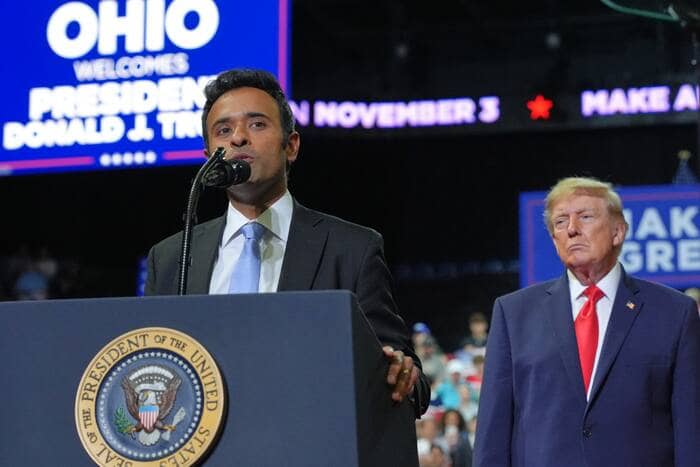
During stops on the tour Friday, Ramaswamy sought to justify the ad against what he characterized as manufactured outrage. Speaking to a crowd in suburban Cleveland, he told supporters, “The irony is they’re lying about an ad that is about lying.” The candidate argued that the criticism was concocted by Democrats and the news media, attempting to frame the advertisement as a necessary exposure of truth rather than a personal attack.
The ad itself features Arthur calling her daughter “a liar” who “needs help” due to a “serious problem” being honest about her past. The spot highlights the fractured relationship between the two women; Arthur has not seen her daughter in nearly 50 years. According to reports, Arthur lost custody of her children after her husband, the children’s stepfather, was indicted for raping Acton when she was 12. Acton, Ohio’s former state health director, has confirmed she has not seen her mother since 1978 and has made no secret of facing homelessness and abuse as a child.
Republican Governors Condemn the Tactics
The backlash within Ramaswamy’s own party was swift and severe. By Friday, every living full-term governor of Ohio—two Democrats and three Republicans—had publicly spoken out against the ad. The condemnation extended to former GOP leaders who typically maintain a low profile on campaign tactics.
Former Republican Governor Bob Taft told Marion radio show host Scott Spears that his great-grandfather, President William Howard Taft, “is probably rolling over in his grave” at the negativity of this year's elections. Taft urged Ramaswamy to cease airing the ad immediately. Fellow Republican Governor Mike DeWine had issued a statement the day prior, stating more bluntly that the advertisement “really exceeds the bounds of human decency.”
The pressure also mounted on other statewide candidates who found themselves sharing stages with Ramaswamy. U.S. Sen. Jon Husted shared a stage with Vice President JD Vance on Wednesday without mentioning the controversial ad during the event but issued a statement shortly afterward clarifying his position, saying he would not have run it. Other statewide candidates drew the same careful line without raising the issue when on the same stage with Ramaswamy. Husted did not participate in the first two stops of the tour Friday; his campaign said he had scheduling conflicts.
Trump and Vance Back the Strategy
Despite the local backlash, Ramaswamy’s ad campaign has received high-profile support from the national Republican establishment. With backing from Vice President JD Vance and at President Donald Trump’s urging, Ramaswamy continued a $4 million campaign to air the ad on streaming platforms and TV.
The President’s endorsement was explicit. At a campaign rally in Iowa on Thursday, Trump told the crowd that Ramaswamy had called him to ask for advice about the ad. Trump recalled telling his Ohio rival, “You’ve got to ride with it.” He expressed jealousy that he didn’t have such a strong ad to run during his own campaigns, describing the tactic as being like “hitting pay dirt.”
This dynamic has created a complex political landscape for Ramaswamy. While he retains the backing of the party’s most powerful figures who view the ad as effective political warfare, he is simultaneously alienating key Ohio Republican leaders who view the tactics as morally indefensible. As the bus tour continues, Ramaswamy remains caught between the strategic approval of Washington and the ethical objections of his home state’s political establishment.