

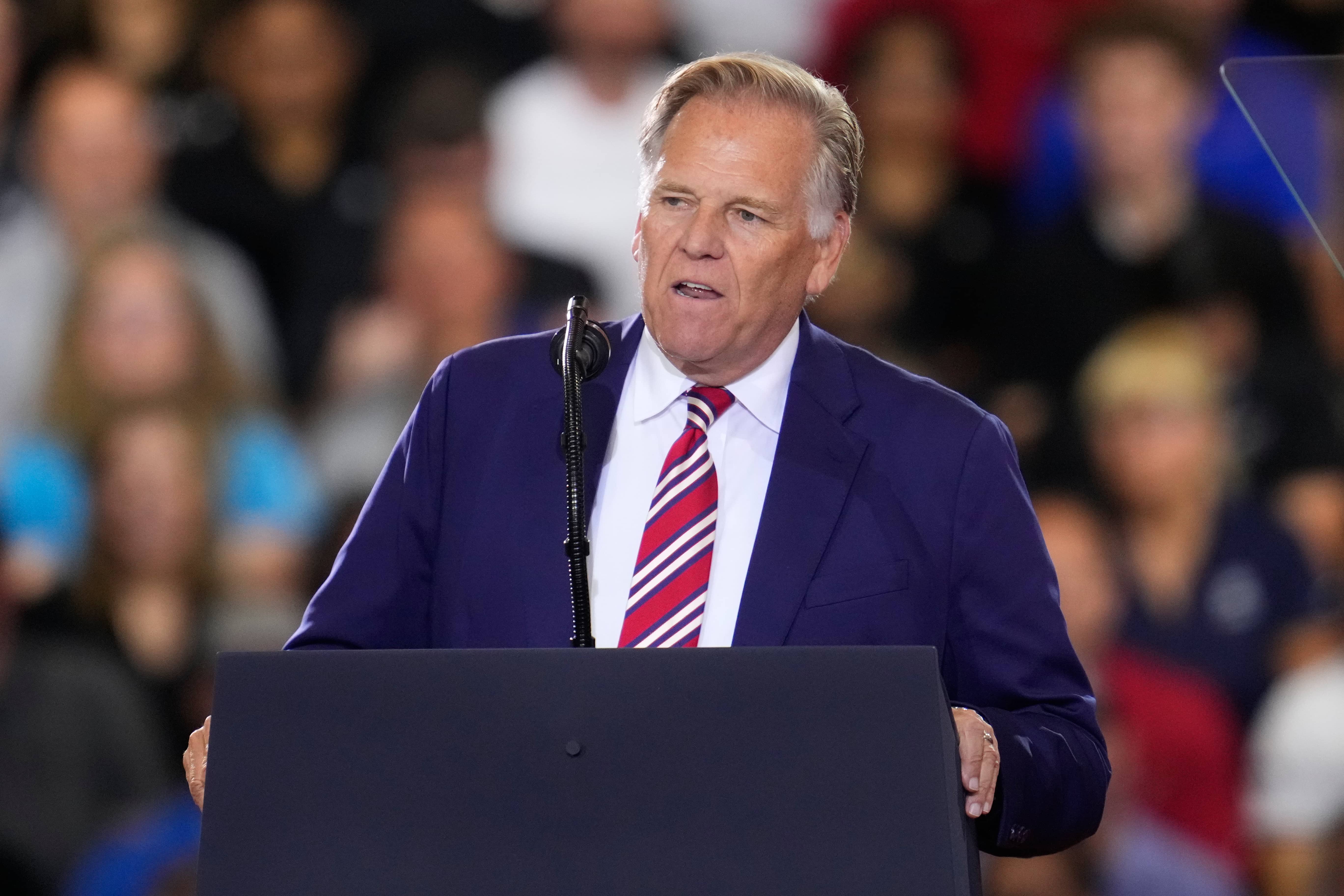

Rogers Challenges Democrats on Ideological Direction
Former Representative Mike Rogers, a Republican from Michigan, is once again seeking election to the U.S. Senate, this time targeting the seat he narrowly lost in the 2024 general election. In a campaign strategy focused on the ideological trajectory of the Democratic Party, Rogers has predicted that the party's shift toward the political left will result in a loss for Democrats in the upcoming November contest.
Rogers, who previously held a seat in the U.S. House of Representatives before running for the Senate, stated that the current direction of his opponents provides Republicans with a "prime opportunity" to flip the Michigan Senate seat red. His comments were reported by Geoff Earle for the New York Post on August 1, 2026.
The former congressman argued that the Democratic Party is being pulled further to the left by prominent members of its caucus. He specifically identified Representative Alexandria Ocasio-Cortez of New York as a key figure in this movement. Rogers described the influence of such figures as part of what he termed a "lefty ‘crazy train,'" suggesting that this ideological acceleration is alienating potential voters in Michigan.
By characterizing the Democratic platform in this manner, Rogers aims to frame the upcoming election as a referendum on the party's current leadership and policy direction. He contends that the gap between the national Democratic agenda and the preferences of Michigan voters is widening due to these influences.
Race Dynamics and Previous Election Results
The context for Rogers' predictions lies in the tight margins of the previous Senate race. In 2024, Rogers lost his bid for the U.S. Senate by approximately 20,000 votes. This narrow defeat suggests that small shifts in voter sentiment or turnout could significantly alter the outcome of the current cycle.
Rogers is leveraging this historical proximity to argue that the Democratic Party's perceived drift toward progressive policies creates vulnerabilities that Republicans can exploit. He posits that the "lefty ‘crazy train'" he attributes to figures like Ocasio-Cortez serves as a liability for Democratic candidates in swing states like Michigan.
The New York Post report highlights Rogers' assertion that the ideological shift is not merely a theoretical concern but a practical electoral threat. He suggests that voters who might have been undecided or leaning toward the GOP are being motivated by the party's leftward movement, thereby turning the Senate seat red in November.
Opposing Views and Party Strategy
The source material does not include direct responses from Democratic officials, Representative Ocasio-Cortez, or the current Democratic candidate for the Michigan Senate seat. The report focuses exclusively on Rogers' assessment of the political landscape and his strategic outlook for the Republican party.
Democratic strategists typically counter such criticisms by arguing that their policy positions reflect broader national trends or specific legislative priorities rather than an extreme ideological departure. However, no such rebuttal was included in the August 1, 2026, reporting by Geoff Earle.
Rogers' campaign narrative centers on the idea that the Democratic Party's leadership is disconnected from the moderate or conservative leanings of many Michigan constituents. By citing Ocasio-Cortez, a high-profile progressive lawmaker, Rogers attempts to link the national party apparatus with policies that he claims are unpopular in his home state.
Implications for the November Election
If Rogers' prediction holds true, the Michigan Senate race could serve as an indicator of broader national political trends. His claim that a "prime opportunity" exists for Republicans to flip the seat suggests that he views the current political climate as favorable for GOP gains.
The reference to Ocasio-Cortez underscores the ongoing intra-party tensions within the Democratic coalition between progressive and more moderate factions. Rogers’ strategy appears designed to capitalize on these divisions by portraying the party as being driven by its most left-leaning members.
As the November election approaches, Rogers continues to emphasize the contrast between his own record and the direction he attributes to his Democratic opponents. His campaign messaging remains focused on the potential consequences of the party's ideological shift, which he believes will ultimately determine the fate of the Senate seat in Michigan.